The ink on the departure stamp was barely dry when Rohan closed his passport at the Bangkok airport. For years, the bureaucratic machinery of travel had treated him like an equation to be solved. Bank statements, employment letters, tax returns, and waiting weeks for a consular officer to nod his approval. Each trip across the ocean required a mountain of paperwork just to prove he intended to return home.
Then, the rules changed.
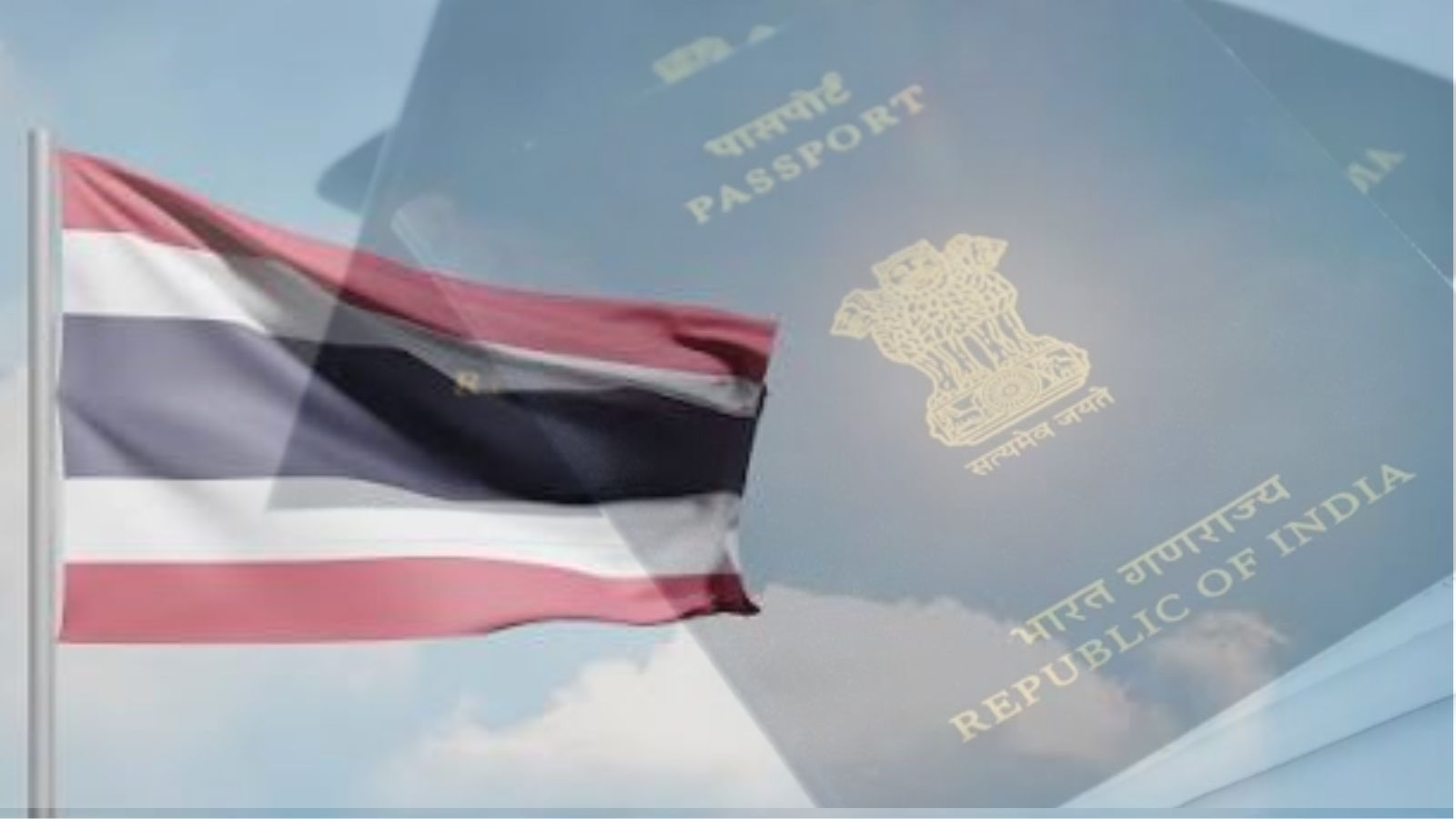
Quietly, without the usual fanfare of international treaties, Thailand rolled open its doors. A thirty-day visa-free entry for Indian passport holders.
Rohan did not realize it yet, but he was standing at the edge of a tidal wave. Economists and tourism boards were already running the numbers behind closed doors, whispering about a staggering projection. Two point seven million travelers. Millions of footsteps echoing across golden temple courtyards, crowding night markets, and filling hotel lobbies from Phuket to Chiang Mai.
Strip away the statistics and the tourism board slide decks, and you find a simple truth. People want to move. They want to cross borders without begging for permission.
The Weight of Paper
Consider what a visa used to mean for an ordinary traveler from Mumbai or New Delhi. It was not merely a stamp. It was an interrogation.
Weeks before a planned vacation, the kitchen table would disappear beneath a blizzard of photocopies. Six months of bank statements showing every cup of coffee and utility bill. Salary certificates stamped by human resources departments. Leave approval letters from managers who looked at your time off as a concession rather than a right. The anxiety was palpable. Would the visa arrive in time? Did the formatting of the bank seal look official enough for a bored bureaucrat three hundred miles away?
Travel, at its core, is supposed to be an act of expansion. Bureaucracy shrinks it.
When a nation drops those barriers, something psychological shifts in the traveler. The decision to pack a bag transforms from a logistical marathon into an impulsive Friday afternoon thought. Let's go. Those two words are the most powerful engine in the global service economy.
The Anatomy of a Surge
Look at the numbers through a human lens. Two point seven million visitors is not an abstract figure generated by a spreadsheet algorithm. It is an ocean of individual choices.
It is a family from Bengaluru celebrating a tenth wedding anniversary by eating spicy papaya salad on a beach in Krabi. It is a group of college graduates taking their first flight outside the subcontinent, pooling their savings for a week of street food and hostel bunk beds. It is a remote software developer setting up a laptop on a balcony in Chiang Mai for a month, trading a cramped urban apartment for the rustle of palm trees.
(Note: These specific scenarios are illustrative archetypes, though they mirror the precise demographic patterns tracked by hospitality analysts.)
When Thailand extended this exemption, aviation analysts watched airline seat capacities tighten almost overnight. Low-cost carriers immediately looked at their fleets. Routes that once operated at modest frequencies suddenly saw requests for daily flights. Economics hates friction. Remove the friction of a visa application fee and processing delay, and demand multiplies.
The economic ripples reach far beyond the airline ticket counters. Every one of those millions of visitors needs a bed, a bowl of noodles, a tuk-tuk ride, and a ticket to an elephant sanctuary or a floating market. Micro-economies in coastal towns and mountain villages feel the pulse of this migration.
The Other Side of the Coin
Growth has weight.
Walk through the crowded alleys of Bangkok's Chinatown on a humid Saturday night, and you can feel the pressure of success. The narrow pathways are shoulder-to-shoulder with tourists from every corner of the earth. Infrastructure strains under the weight of popularity. Water systems work harder. Waste management teams labor through the tropical heat. Coral reefs off southern islands bear the footprints of snorkelers who only wanted a glimpse of turquoise water.
There is a delicate art to managing an open door. Make it too easy, and you risk loving your own home to death. Make it too hard, and the world passes you by.
For years, regional neighbors competed fiercely for the modern Indian traveler. It is one of the most dynamic, youthful, and fast-growing demographic segments in global tourism. Families are upgrading from domestic hill stations to international adventures. Young professionals possess disposable income and a fierce hunger for experiential culture.
Countries noticed. Malaysia joined the movement, opening its own visa-free pathways. Sri Lanka experimented with rapid-entry frameworks. A quiet geopolitical chess match was underway, played not with missiles or tariffs, but with immigration stamps and landing cards.
Thailand simply moved first and moved decisively. The thirty-day window struck a rare balance. It was long enough for a deep, immersive vacation, yet short enough to satisfy immigration authorities that visitors were genuinely transient.
The Journey Home
Back at the airport terminal, Rohan watched his luggage circle the baggage carousel.
His trip had not changed the course of global macroeconomics. He had not analyzed supply chains or calculated tourism GDP contributions. He had simply eaten mango sticky rice under a sudden monsoon downpour, gotten lost in a labyrinth of alleyways near a golden Buddha, and realized that the world felt just a little bit smaller than it did a week ago.
That is what the statistics miss. Behind the projection of two point seven million people lies a quiet transformation of perspective. When borders become porous, curiosity replaces caution.
The passport in Rohan's jacket pocket was no longer a permission slip. It was an invitation. And somewhere in the sky above the Andaman Sea, another flight was descending through the clouds, bringing the next hundred strangers into the warmth of the evening.