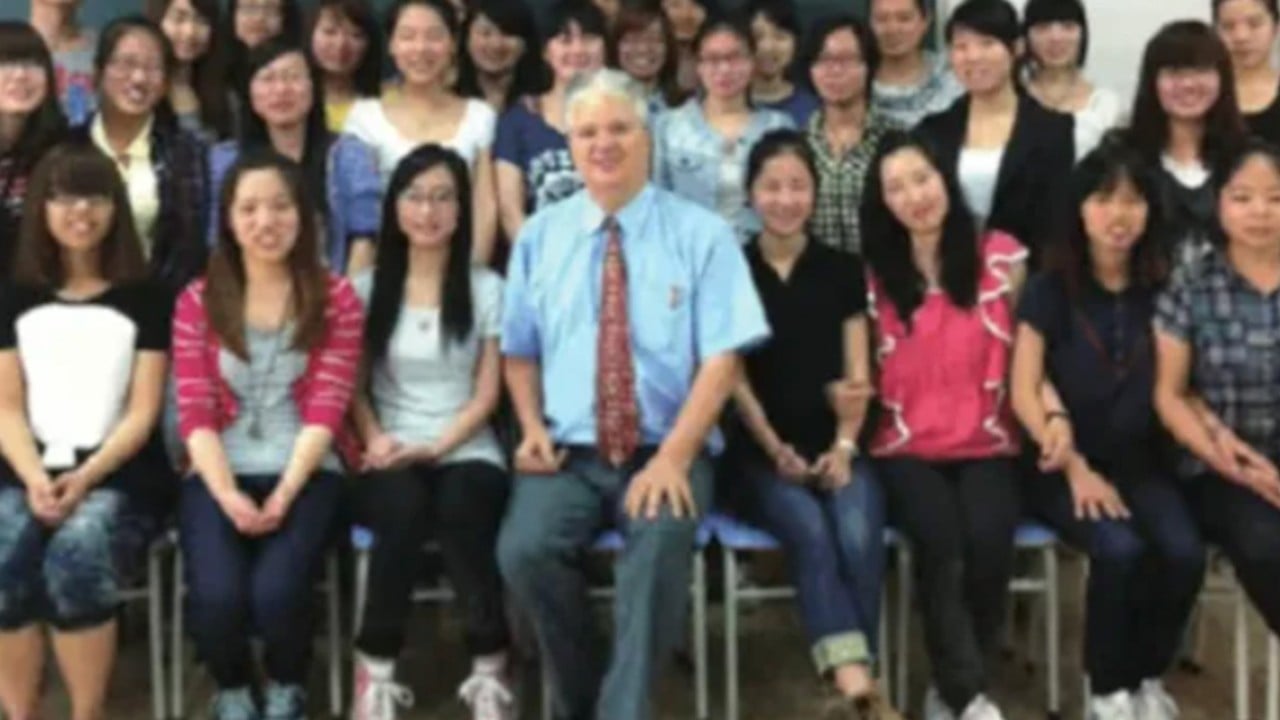
A photograph fades at the edges. Ink bleeds into cheap paper. Decades pass, cities rise from mud and scaffolding, highways stretch over old rivers, and the small room where a child once sat with a stranger vanishes beneath a glass tower.
Then, a single digital spark catches.
A woman in China types a few sentences into a screen. She is looking for someone who has no idea they are being hunted by memory. She is looking for an ordinary foreign tutor who arrived years ago, taught a few vocabulary words, shared a box of foreign cookies, and then dissolved back into the horizon.
What happens next is not a private reunion. It is an avalanche.
Within hours, thousands of strangers are staring at their own old photo albums. They are digging through shoeboxes in dusty closets. They are remembering the young college graduates, the wandering backpackers, the earnest language assistants who drifted into classrooms and living rooms during a time when the world felt larger, sharper, and far more distant than it does today.
Memory is strange. It waits.
Consider the mechanics of childhood devotion. When you are seven years old, an adult from another continent does not look like a visitor. They look like a window. They smell differently—coffee, wool, a faint trace of rain that doesn't smell like local dust. They speak a language that sounds like music played too fast. To a child, they are an ambassador of the impossible.
In this specific viral search, the woman posted a plea to find the person who once sat across a wooden table from her, correcting her pronunciation, expanding her world before she had words to name it. She expected silence. Or perhaps a polite ripple. Instead, the internet did what it rarely does: it softened.
Floodgates opened.
People began sharing fragments of their own pasts. A man in Shanghai remembered an American girl who drew stick figures to explain the word curious. A woman in Guangzhou recalled a British student who brought a battered paperback copy of The Wind in the Willows and read aloud until the summer heat made everyone drowsy. Another posted a grainy polaroid of an Australian man wearing an oversized sweater, sitting on a plastic stool, smiling a tired, brilliant smile.
None of these people stayed. They were never meant to stay. They came for a semester, a year, a contract. They collected their paychecks, ate local dumplings, struggled with tones, bought train tickets, and went home. They assumed they were background noise in a booming nation's soundtrack.
They were wrong.
We underestimate the weight of casual grace. We build monumental theories about cultural exchange, international diplomacy, and geopolitical alignment, as if human connection were a treaty signed by men in gray suits. But true bridges are built by accident. They are constructed out of patience during a rainy afternoon, laughter over a mispronounced vowel, and the simple, radical act of paying absolute attention to a child who is trying to figure out how to say tomorrow in a foreign tongue.
Think about your own life. Who was the transient figure who left a mark?
It might have been a music teacher who told you your hands were too small for the keys, but said it with such tenderness that you kept playing anyway. It might have been a stranger at a bus stop who handed you an umbrella and walked away into the gray before you could say thank you. These moments do not announce themselves as pivotal. They arrive quietly. They leave quietly. Years later, you realize they shaped the architecture of your choices.
The woman searching for her tutor represents something deeper than nostalgia. She represents a collective hunger for continuity.
We live in an era of hyper-acceleration. Digital footprints are wiped clean with an update. Friendships dissolve into algorithmic feeds. Algorithms tell us what to buy, who to vote for, and how to feel, curated to the second. Nothing stays still. Nothing lingers.
Except the ghosts of childhood kindness.
Those do not fade. They harden like amber. When an adult reaches back across twenty years to find a twenty-two-year-old foreign student who taught them English, they are trying to prove something vital to themselves. They are trying to prove that their history was real. That the world was once a place of genuine wonder. That someone cared about them when they were small and unformed.
The digital response to the search reveals a quiet grief. Thousands of comments poured in from adults who realized, all at once, that they had never thanked the people who opened the first door for them. They looked at their own children, or their own empty desks, and felt the sudden, sharp ache of distance.
Distance is geographical. Distance is temporal. Distance is cultural.
Yet a photograph can collapse all three in a single second.
When cultures meet through institutions, tension is inevitable. Policies clash, headlines roar, suspicion lingers in the background. But when cultures meet across a kitchen table over a dog-eared textbook, politics evaporate. There is only the teacher, the student, and the shared struggle to understand each other.
The foreign tutor being searched for likely has no grand legacy. They are living an ordinary life somewhere else now. They have bills, mortgages, laundry, aging parents. They probably do not consider themselves remarkable. If found, they will likely be bewildered. Me? You remember me? I was just trying to pay my rent.
That is the beauty of it.
Grace is rarely intentional on a grand scale. Most of the good we do in this life is accidental. We say a kind word because we happen to be in a good mood. We show patience because we aren't rushed that day. We teach a word because it’s our job. We have no idea that the child sitting opposite us is storing every inflection, every gesture, every ounce of warmth in the bank of their developing mind, ready to cash it out decades later when the world gets cold.
We crave proof that we were seen.
Every shared memory on that viral thread was a quiet rebellion against insignificance. People were saying: Look. I was there. I mattered to someone, and someone mattered to me.
The search continues. The tutor has not yet stepped forward out of the digital mist. Perhaps they never will. Names are forgotten, addresses change, emails bounce.
It almost doesn't matter.
The act of looking has already changed the room. Thousands of people have stopped scrolling, looked up from their glowing screens, and remembered what it felt like to be a child learning how to speak to the world. They remembered the warmth of a stranger who owed them nothing, yet gave them everything that mattered in an hour.
Listen.
Somewhere, out there in the noise of the modern world, an old book is opening. A page is turning. And a voice from across an ocean is still saying, very clearly, very slowly: Again. Try it again.