The sports media machine is currently obsessed with a single, lazy narrative: Paula Badosa is a spent force. They see a former World No. 2 whose ranking dipped outside the top 100, they see a chronic back injury (stress fracture in the S3 vertebra), and they see a few tears on a court in Stuttgart or Madrid and immediately start drafting the obituary for her career.
They are wrong. They are misinterpreting the data, misunderstanding the mechanics of the modern spine, and failing to grasp the psychological shift happening in the WTA.
Retirement at 28? In an era where Novak Djokovic is winning Slams at 37 and Danielle Collins is playing the best tennis of her life in her "retirement year," the idea that a 28-year-old with Badosa’s raw power is "finished" isn't just pessimistic—it's statistically illiterate. The concern-trolling over her ranking fall is a classic case of ignoring the "protected ranking" reality and the math of the tour.
The Fallacy of the Ranking Cliff
Most casual observers and even seasoned analysts treat the ATP/WTA rankings like a credit score. If it drops, you’re "bankrupt." In reality, for a player of Badosa's caliber, the ranking is a lagging indicator of health, not a leading indicator of skill.
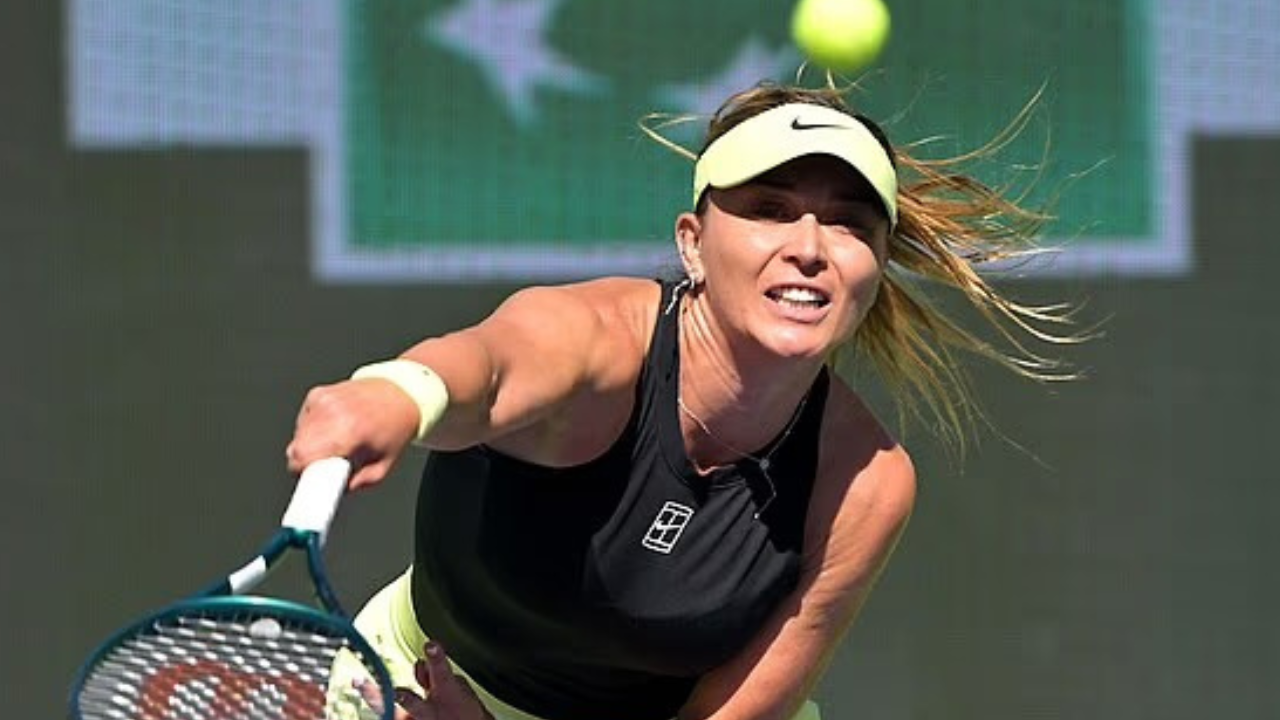
When Badosa fell out of the top 100 in early 2024, the headlines screamed about a "collapse." Nobody mentioned that she wasn't losing to journeymen; she wasn't playing at all. In tennis, your points disappear every 52 weeks. If you don't play, you don't exist. But the skill set—the heavy 180 km/h serves, the aggressive baseline positioning, and the ability to absorb pace—doesn't evaporate because a computer algorithm says you're No. 120.
I have spent years watching players navigate the "injury-comeback-stagnation" cycle. The ones who actually fail are those who lose their weapon. Badosa hasn't lost her weapon; she’s just been waiting for the chassis to support the engine.
The S3 Stress Fracture: A Death Sentence or a Reset?
The "lazy consensus" says a chronic back injury for a power hitter is the end. They point to the S3 stress fracture as a permanent handicap. Let’s look at the actual biomechanics.
The sacrum is the base of the spine. Unlike the L4 or L5 discs—which are the common culprits for career-ending nerve damage in tennis—a stress fracture in the sacrum is often a volume-load issue. It is a signal that the kinetic chain is misfiring. When Badosa took the necessary time off, she wasn't just "resting"; she was re-engineering her movement patterns.
The narrative that she is "fragile" ignores the reality of modern elite athletics. We are seeing a transition where the 20s are no longer the peak; they are the developmental phase for the body to harden for the 30s. By labeling her "injury-prone," the media misses the fact that she is currently undergoing the most rigorous physical recalibration of her life.
The Tears are Not Weakness They are Competitive Fuel
After Badosa’s emotional mid-match retirement against Aryna Sabalenka in Stuttgart, the vultures circled. "She’s mentally checked out," they claimed. "She can't handle the pressure of the comeback."
This is the most egregious misunderstanding of the elite athlete's psyche. Tears in professional sports are rarely about "giving up." They are the result of a massive discrepancy between a player's internal expectation and their physical execution. You don't cry because you want to retire; you cry because you are desperate to compete and your body is denying you the opportunity.
That "emotional message" the headlines referenced wasn't a white flag. It was a roar of frustration. If Badosa were actually ready to quit, she would do what many others have done: fade into the background, collect sponsorship checks, and post "lifestyle" content from Dubai. Instead, she is grinding through qualifying-level entries and wildcards to get back to the top. That isn't the behavior of a retiree.
The "Top 100" Obsession is a Distraction
People also ask: "Can she ever get back to the Top 10?"
The question itself is flawed. In the current WTA landscape, the gap between No. 10 and No. 60 is narrower than it has ever been. On any given day, the power parity is staggering. Badosa doesn't need to be No. 2 again to be a threat; she needs to be healthy for three consecutive weeks.
We see this pattern constantly. A player "disappears," the public moves on to the next teenage phenom (the Mirra Andreeva effect), and then the veteran returns with a simplified game and a chip on their shoulder. Think of Kim Clijsters. Think of Victoria Azarenka.
Why the Critics are Wrong about Her "Peak"
The consensus is that Badosa’s peak was 2021-2022. I would argue she hasn't even hit her actual peak yet.
Tennis intelligence (TQ) usually matures in the late 20s. This is when players stop trying to hit a winner on every ball and start understanding the geometry of the court. Badosa’s early success was built on raw athleticism and aggression. This forced hiatus is forcing her to develop "B-game" tactics—slice, variety, and point construction—that she never needed when she could just blow opponents off the court.
The Danger of the "Burnout" Narrative
Is she burnt out? No. She is bored of the recovery room.
The media loves a burnout story because it’s easy to write. It fits the "child prodigy" mold that Badosa has been unfairly cast in since her junior days. But look at her social media, look at her interviews, and look at her intensity on the practice court. This isn't a woman looking for the exit. This is a woman looking for a fight.
The industry insiders who are whispering about her retirement are the same ones who said Andre Agassi was done in 1997 when he fell to No. 141. They are the same ones who said Rafael Nadal wouldn't play past 25 because of his knees.
How to Actually Watch Badosa in 2026
If you want to know if she's "back," stop looking at the scoreboard and start looking at her footwork in the third set.
- Lateral Recovery: Is she sliding into the corners or stutter-stepping? If she's sliding, the back is holding.
- Second Serve Depth: When the pressure is on, does she shorten the toss to protect the spine? If the toss stays high and the kick is heavy, she's confident in her core.
- The "Sabalenka Benchmark": Watch her matches against heavy hitters. If she is absorbing that pace without wincing, the "injury struggle" is a memory, not a current reality.
Stop asking if Paula Badosa is retiring. Start asking why you’re so eager to push a world-class athlete out the door before she’s even thirty.
The rankings will catch up to the talent soon enough. Until then, the "concern" is just noise from people who don't understand what it takes to rebuild a kinetic machine from the bone up.
Watch the ball, not the headlines. Would you like me to analyze her recent match statistics to show you exactly where the "invisible" improvements are happening?