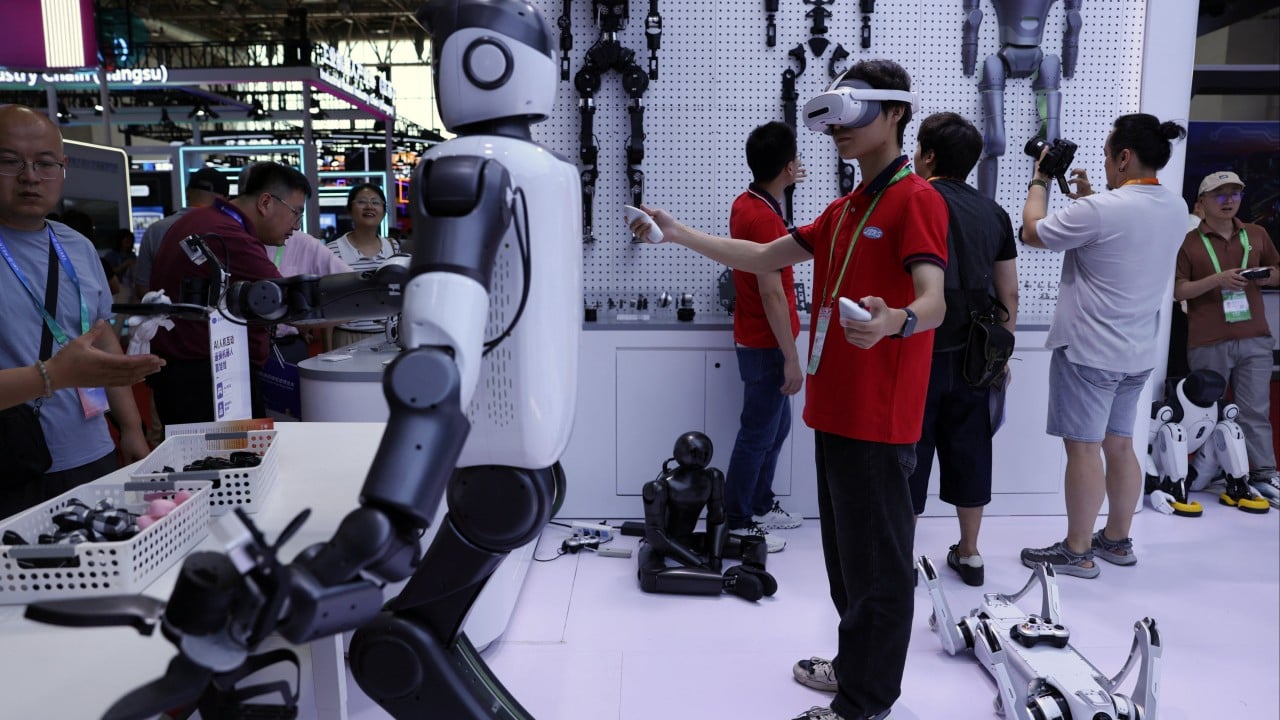
Wall Street just dropped a bomb on the robotics world, and almost everyone is missing the real story. Morgan Stanley recently doubled its 2026 forecast for China humanoid robot shipments, hiking the number from 28,000 units to a massive 50,000.
If you think this is just a minor adjustment to a financial analyst's spreadsheet, think again. It represents an explosive 133% jump compared to the roughly 12,000 units shipped in 2025. By 2030, the bank expects annual shipments in China to hit 446,000 units, scaling into a $15 billion market.
But behind these staggering numbers lies a messy, hyper-competitive reality. While global observers focus on high-profile American projects like Tesla's Optimus or Figure AI, China has quietly built a factory-floor juggernaut. It isn't because their robots are smarter or more agile. It's because they have cracked the code on making them cheap, fast, and in massive quantities.
The Shocking Real Numbers Behind the Humanoid Influx
To understand why Morgan Stanley updated its expectations for the second time this year, look at where the cash is actually flowing. We aren't talking about tech expos or promotional videos anymore. Real commercial orders are hitting the books.
Earlier this year, the State Grid Corporation of China placed a staggering 6.8 billion yuan procurement order. That translates to nearly $1 billion. The purchase order didn't just ask for experimental models. It called for 500 humanoid robots, 3,000 dual-arm variants, and 5,000 quadruped machines. When a single state-owned giant buys five hundred humanoids to inspect grid infrastructure, the experimental phase is officially over.
Logistics giants are moving just as fast. SF Express and China Post are actively integrating bipedal machines from local manufacturer Robotera into their sorting hubs. They aren't doing this for a PR stunt. They need them to handle high-frequency, mind-numbing sorting and handling tasks.
Look at the underlying supply chain economics to see why this is accelerating so quickly. component costs are plummeting. Morgan Stanley noted a 16% drop in part prices recently. Localized production lines in manufacturing hubs have pushed the cost of Chinese-made models down by roughly 20% compared to Western counterparts. Foxconn suppliers like Lingyi iTech, which built their fortunes assembling smartphones, are retooling their lines to manufacture humanoid parts. Their goal is 500,000 units by 2030.
The Dirty Secret of the 23 Percent Satisfaction Rate
Now for the dose of reality that the hype cycles love to ignore. This industry is in a state of chaos. China has over 150 different companies chasing this space right now. That is an absurdly overcrowded market, and a massive shakeout is brewing.
An earlier Morgan Stanley survey led by analyst Sheng Zhong revealed a glaring problem. While 62% of Chinese enterprises said they plan to adopt humanoid robots within three years, only 23% of those surveyed expressed satisfaction with the current models on the market.
Why are buyers so disappointed? The hardware simply isn't living up to the promise yet.
- Terrible Battery Life: Most commercial humanoids top out at two to three hours of operation per charge. If a robot has to sit at a charging station for four hours for every two hours it works, the math for a factory manager doesn't add up.
- Clumsy Dexterity: Moving boxes is one thing. Fine industrial assembly is entirely different. Current models still struggle with highly precise, adaptive tasks.
- The Price Trap: Buyers are incredibly price-sensitive. The survey showed that 92% of corporate buyers demand that the price of a robot fall below 200,000 renminbi (about $28,000) before they commit to full mass adoption.
The pressure is forcing manufacturers into a brutal price war before the technology is even fully mature. Unitree is offering its H2 model below that $28,000 threshold. Kepler is targeting the exact same budget tier. UBTech is churning out its Walker S2 industrial humanoid from a new Beijing facility targeting 10,000 units a year. They are scaling up capacity aggressively, betting that volume will fix their margin issues.
Why Washington Is Terrified of Embodied AI
This isn't just a corporate race. It is a geopolitical battleground. The Chinese government has classified "embodied AI" as a core strategic priority for the next five years. Local authorities are throwing immense resources at the sector, providing direct subsidies for factory land, cheap office space, and R&D grants.
This policy push aims to turn robots into China's next massive export engine, mirroring the playbook used for electric vehicles and lithium batteries over the last decade. Right now, China controls about 15% of total global manufacturing output. Morgan Stanley predicts that aggressive automation and humanoid integration will bump that global share to 16.5% by 2030.
While Western firms focus on building the perfect, general-purpose machine capable of doing everything from folding laundry to manufacturing cars, Chinese firms are focusing on highly specialized, single-use environments. They are willing to accept lower performance metrics today if it means getting thousands of boots on the ground to gather real-world data.
This creates a massive feedback loop. More robots in factories means more data. More data means faster software iterations. Elon Musk recently announced that public sales for Tesla's Optimus won't happen until late 2027. By the time Optimus hits the open market, tens of thousands of Chinese humanoids will already have millions of hours of operational experience under their belts.
How to Position Your Business for the Automation Influx
If you operate in logistics, manufacturing, or supply chain management, you can't afford to sit on the sidelines and wait for the perfect robot to appear. The companies winning this shift are experimenting early, failing quickly, and building the necessary internal infrastructure now.
Audit Your Low-Dextrous High-Frequency Tasks
Don't wait for a robot that can replace a human worker entirely. Look for specific, repetitive workflows where current technological limitations—like a three-hour battery life—won't break the operation. Loading docks, basic palletizing, and simple point-to-point transport are the ideal testing grounds.
Build a Multi-Vendor Software Strategy
The hardware is becoming a commoditized race to the bottom. The real value lies in the software layer that orchestrates these machines. Avoid getting locked into a single manufacturer's ecosystem. Focus your engineering resources on building or adopting agnostic fleet management software that can control a Unitree robot just as easily as an AgiBot or a Western-made machine.
Establish Reality-Based ROI Metrics
Ignore the marketing brochures claiming a 100% replacement of human labor. Factor in the high maintenance costs, the inevitable downtime for battery swaps, and the software integration hurdles. Force your automation partners to guarantee pricing below that critical $28,000 threshold, or walk away from the deal. The market is too crowded for you to pay a premium for unproven hardware.