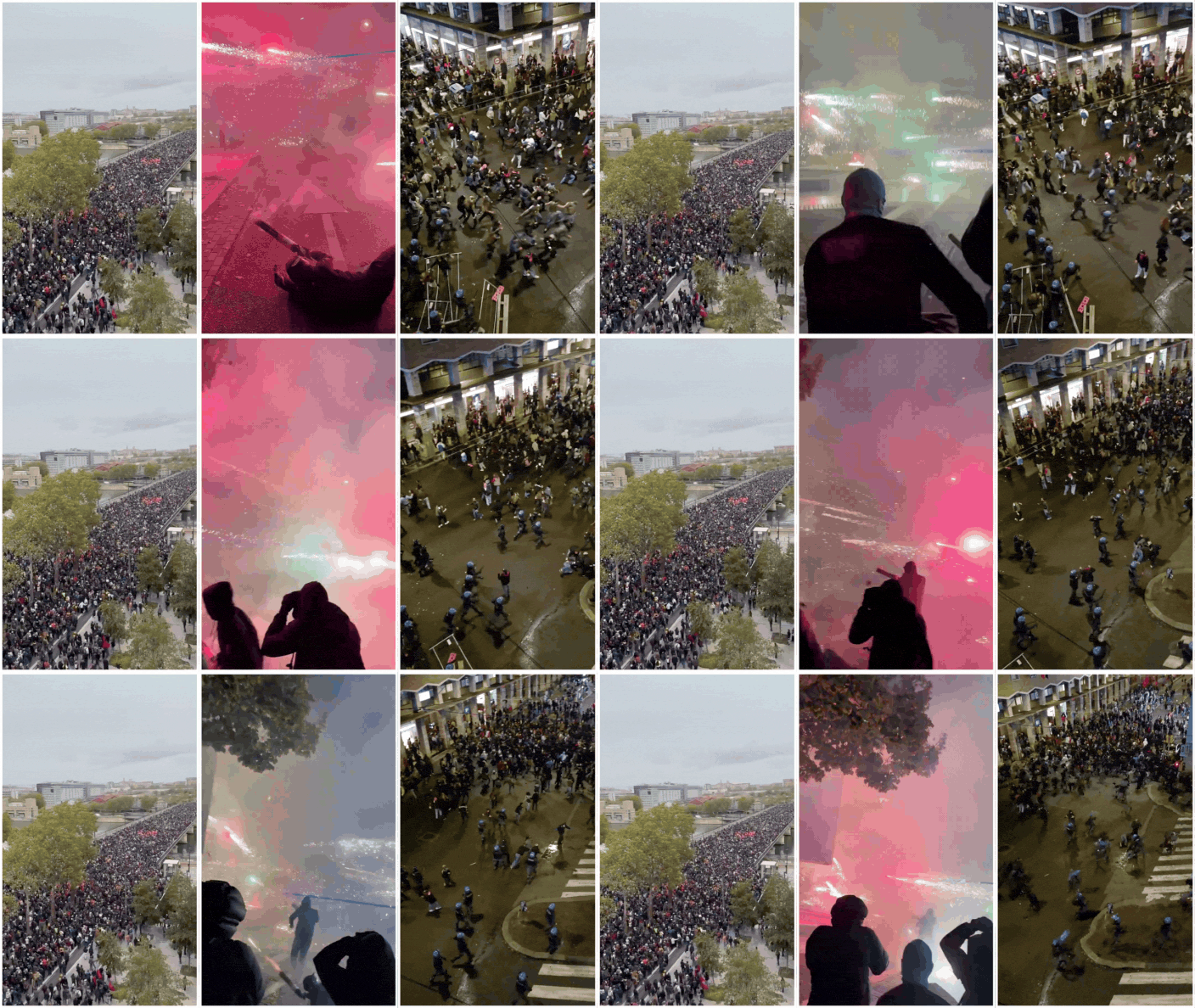
Turn on any news broadcast right now and you'll see burning barricades in Barcelona, tear gas drifting across Tirana, and riot police charging crowds in Paris. Most pundits treat these eruptions across France, Albania, Italy, Spain, and Portugal as one big, messy blob of anti-government chaos. They're missing the point entirely.
What's happening across Europe isn't a single coordinated rebellion, nor is it mindless vandalism. It's a generational reckoning driven by basic math that no longer works for people under thirty. Across five distinct nations, Gen Z students and young workers have hit a breaking point over unaffordable housing, gutted public schools, stagnant wages, and political establishments that refuse to listen.
If you want to understand why millions of Europeans are risking arrest and rubber bullets this autumn, you have to stop looking at the smoke and start looking at the spreadsheets.
The Math Behind Europe's Generational Breaking Point
Forget abstract ideological debates. Young Europeans are angry because the social contract they were promised simply evaporated.
Look at Spain. The country's minimum wage sits at 1,221 euros a month, while the average monthly rent for a standard 80-square-meter apartment has climbed to roughly 1,130 euros, according to figures from the business daily Expansión. Do the subtraction. After paying rent, a full-time worker has less than a hundred euros left for groceries, electricity, transit, and life. Over the last decade, Spanish rents surged by 80% while home purchase prices jumped 63%, driven largely by short-term tourist lets and speculative investment funds.
Portugal tells an almost identical story. Reuters notes that purchase prices and rents for new leases in Portugal have nearly doubled since 2017. In Lisbon and Porto, nurses, teachers, and retail workers are priced out of the very cities they keep running.
Meanwhile, governments across the continent have poured billions into defense budgets while letting public classrooms crumble and university funding dry up. On November 20, 2026, youth activists from more than 50 groups staged coordinated rallies in roughly 400 European cities under a slogan that sums up the mood perfectly: "Fight for our future, not their wars".
Five Countries Five Different Flashpoints
While the economic squeeze unites these movements, each country has its own specific trigger, political dynamic, and street-level reality. Lumping them together blurs what's actually happening on the ground.
France From High School Blockades to Nationwide Riots
In France, the spark wasn't a tax hike or a pension reform—it was dilapidated classrooms. High school students kicked off blockades in September over teacher shortages, overcrowded rooms, and crumbling buildings in lower-income neighborhoods. When students paused for fall break, the powerful CGT labor union and cost-of-living activists stepped in, turning localized school protests into massive nationwide marches.
By October 17, between 410,000 and 800,000 people marched across French cities depending on whether you trust Interior Minister Laurent Nuñez or union organizers. Then things turned ugly. Nearly 2,400 people were arrested over a single weekend as looters targeted roughly 1,500 businesses in Paris, Marseille, Lyon, and Bordeaux, and fires tore through Limoges's 19th-century City Hall.
President Emmanuel Macron rejected Nuñez's offer to resign and blamed ultra-left agitators for hijacking peaceful marches. Yet police union officials and intelligence sources told Reuters they couldn't actually confirm that far-left groups orchestrated the chaos. Now, Macron's government is pushing a controversial "vandals pay" bill through Parliament—legislation Human Rights Watch warns would severely chill peaceful assembly by slapping financial penalties on ordinary demonstrators.
Spain Tent Cities and a Historic General Strike
Spain's housing crisis finally found a human face in September when 87-year-old Maricarmen Abascal was evicted from the Madrid home she had lived in for over seven decades. She died in a hospital two weeks later.
Her eviction triggered an immediate backlash. Protesters erected more than 1,200 tarpaulin tents in Madrid's central Puerta del Sol, with solidarity encampments quickly appearing in Barcelona's Plaça de Catalunya and Málaga's Plaza de la Constitución. Prime Minister Pedro Sánchez's Socialist government tried passing two emergency decree-laws to ban vulnerable-tenant evictions until 2030, block vulture funds from buying property until 2028, and hike taxes on tourist apartments. When right-wing opposition parties PP and Vox teamed up with Catalan separatists Junts to vote the decrees down, Sánchez called a snap general election for November 29.
Workers didn't wait for election day. On November 11, roughly 4 million people—about 17% of Spain's entire workforce—walked off the job in the country's first general strike in 14 years. Pickets shut down highways into Barcelona with burning tires, and hundreds of thousands marched through pouring rain to demand rent controls.
Portugal Tent Camps Meet Riot Police
Next door in Portugal, anger boiled over after Prime Minister Luís Montenegro's right-wing Social Democratic Party coalition introduced legislation to liberalize the rental market, loosen restrictions on landlords, and speed up evictions.
Young demonstrators responded by setting up permanent protest camps in public squares across Lisbon and Porto throughout October and November. Instead of negotiating, the government deployed its elite public-order unit, the Corpo de Intervenção, to clear the squares by force. According to the Portuguese daily Público, seven separate police operations resulted in 99 arrests and dozens of injuries, with widely shared videos showing officers firing rubber bullets at close range and charging retreating crowds. Far from crushing the movement, the crackdown only hardened resolve among young tenants.
Italy Soldiers on the Streets and a Union Alliance
Italy's autumn unrest blends economic desperation, campus occupations, and fierce opposition to Prime Minister Giorgia Meloni's budget priorities.
Following violent clashes in Milan and Bologna on October 17 and 18—where 161 people were injured and property damage hit roughly one million euros—Meloni's government approved sweeping security measures and deployed soldiers alongside riot police in major cities. That heavy-handed posture hasn't cleared the plazas. On November 20, Italy's largest trade union, CGIL, joined forces with student groups for a 24-hour nationwide strike across more than 100 cities. Rail lines, hospitals, and schools ground to a halt as workers and students protested stagnant pay, high fuel costs, and rising defense spending.
Albania The Flamingo Revolution
Albania's protests look different from Western Europe's housing battles, though youth frustration sits at the core. Demonstrations erupted in late May 2026 against a government-backed plan by Jared Kushner to build a luxury resort on Sazan Island, an ecologically protected nature reserve. Activists dubbed it the "Flamingo Revolution".
By October, university students joined the fray over rising tuition, missing financial aid, and bleak job prospects, merging environmental outrage with broader anger against Prime Minister Edi Rama's 13-year rule and persistent corruption allegations. On October 24, thousands marched in Tirana and clashed fiercely with riot police firing tear gas, leaving more than 300 protesters and officers injured.
Why Media Coverage Keeps Missing the Real Story
If you rely solely on cable news clips, you'd think Europe is descending into mindless anarchy. That's a distortion, and it happens for three predictable reasons:
- Cameras follow flames, not numbers. In France, roughly half a million people marched peacefully during the day on October 17. Yet 90% of international airtime focused on a few thousand black-clad rioters smashing shop windows after dark.
- Police crackdowns escalate street tension. Independent observers and local mayors—including Milan's Giuseppe Sala—have pointed out that aggressive crowd-control tactics, stun grenades, and mass detentions of minors often turn tense standoffs into full-blown street battles. France's own Interior Ministry has opened 161 internal investigations into alleged police violence since September alone.
- The protesters aren't fringe radicals. When 74-year-old retirees march alongside 20-year-old waitresses in Madrid because their 43-year-old IT-engineer son still has to rent a room in a shared flat, you aren't looking at an extremist fringe. You're looking at mainstream middle-class collapse.
To be fair, shop owners in Marseille, Milan, and Barcelona have every right to be furious when looters destroy their livelihoods. Small businesses didn't cause Europe's housing bubble or underfund public schools. Condemning arson and looting isn't taking the government's side—it's basic common sense. Still, treating legitimate economic grievances purely as a policing problem has failed in every single country that tried it this fall.
How to Follow and Navigate Europe's Unrest Right Now
Whether you're tracking European politics, managing supply chains, or planning travel across the continent over the coming weeks, here's how to stay ahead of the disruption:
- Watch the calendar for coordinated strike dates. Unlike spontaneous riots, major European labor actions are announced weeks in advance. In Italy, unions have already called national demonstrations and education strikes for December 12 and December 18, 2026. In Spain, political uncertainty peaks around the November 29 snap election.
- Follow local student and tenant unions, not just national headlines. National outlets usually cover protests after tear gas flies. Tracking groups like Spain's Sindicato de Inquilinas, France's UNEF, or Italy's CGIL gives you days of advance warning on transit blockades and square occupations.
- Build buffer time into European rail and city travel. Strikes in France, Italy, and Spain routinely target commuter rail, regional airports, and city-center transit hubs. Always check national rail operators like SNCF, Trenitalia, and Renfe 24 hours before departure, and avoid central plazas like Puerta del Sol, Piazza Duomo, or Place de la République during scheduled afternoon marches.
Europe's streets aren't burning because young people suddenly developed a taste for chaos. They're burning because an entire generation did everything society told them to do—studied, worked, played by the rules—and still can't afford a front door of their own. Until European leaders fix the math, the marches aren't stopping.
Watch Protests sweep across Europe from France to Albania, Italy, Spain for on-the-ground footage of the demonstrations and heavy security deployments across European capitals.


