Federal judges rarely quote Dr. Seuss when halting executive branch construction projects, yet U.S. District Judge Ana C. Reyes had to tell the Department of Justice she wasn't the Lorax. She was speaking for the rule of law. If you've been following the headlines about Donald Trump trying to turn a public Washington, D.C. park into a championship golf destination, you've probably heard two loud, competing stories. One side claims a historic public green space is being stolen for an elitist luxury playground. The other claims a decaying, trash-strewn eyesore is finally getting a free, world-class upgrade.
Both takes miss the actual legal battle happening in federal court. If you found value in this article, you might want to look at: this related article.
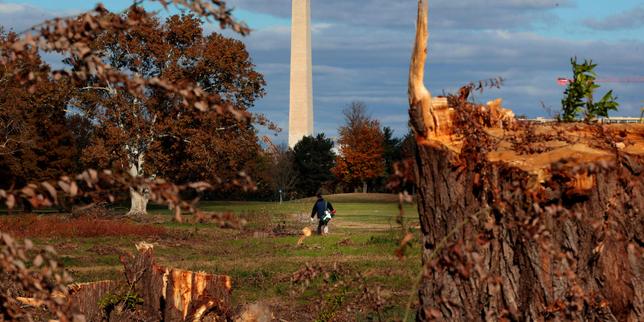
The fight over East Potomac Park isn't really about whether the current golf course needs better maintenance. Almost everyone who plays there agrees the drainage is rough and the seawall needs serious repair. The real issue—and the exact reason Judge Reyes ordered the park to remain open through at least December 12, 2026—is that the administration bypassed federal environmental laws, ignored procedural rules, and contradicted its own courtroom promises while bulldozing hundreds of mature trees.
Why East Potomac Park Is Worth Fighting Over
To understand why local golfers, cyclists, and historic preservationists dragged the federal government into court back in February 2026, you have to understand what East Potomac Park actually is. Sitting on Hains Point—a peninsula wedged between the Potomac River and the Washington Channel—this 106-year-old facility isn't a country club. It's one of the most democratic pieces of real estate in the nation's capital. For another look on this story, refer to the recent update from Al Jazeera.
Walk out there on any given Saturday morning and you'll see a rare cross-section of Washington. Capitol Hill staffers share tee times with retired postal workers, beginner juniors, and tourists renting clubs for the afternoon. Right now, the facility features 36 holes split across three distinct courses—the Blue, White, and Red layouts—alongside a driving range and miles of waterfront paths used daily by runners and cyclists.
When President Trump took control of three public D.C. golf courses in January 2026, he immediately set his sights on East Potomac. His vision is massive. He brought in renowned golf course architect Tom Fazio to redesign the property, aiming to wipe out the existing 36-hole setup and replace it with a single 18-hole championship venue capable of hosting major tournaments like the U.S. Open or the Ryder Cup. Trump has insisted the redesigned facility would remain open to the public, arguing on social media that the current property is in a "terrible state of disrepair" and disparaging the peninsula as "Trash Island".
Here's the catch that regular municipal golfers immediately spotted. You can't shrink 36 holes of affordable, accessible muni golf down to an 18-hole U.S. Open-caliber layout without radically changing who gets to play and how much it costs. Championship conditioning requires higher green fees, stricter pace-of-play rules, and fewer available tee times per day. For locals who rely on East Potomac as an affordable entry point into the game, the overhaul looked less like a public service and more like gentrification with a sand wedge.
How the Government Lost the Judge's Trust
Even if you love the idea of a Tom Fazio course in downtown D.C., the way the administration tried to push it through broke basic rules of federal governance. For months after the D.C. Preservation League and two local golfers filed their lawsuit, Judge Reyes actually stayed out of it. She repeatedly denied the plaintiffs' early requests to freeze the project, hoping both sides could work things out without a federal judge micromanaging a golf course.
Then October happened.
Government attorneys had assured the court that no immediate closure plan existed and that the administration wouldn't make irreversible changes while the case was pending. Behind the scenes, crews moved in and abruptly cut down hundreds of trees on the property without giving notice to the plaintiffs or the court. Around the same time, Trump took to social media on October 18 and October 26 to announce that the entire facility would shut down for 15 months starting November 15 so rebuilding could begin immediately.
Judge Reyes was floored. In her October 26 ruling granting a preliminary injunction against further tree removal, she pointed out the absurd position Justice Department lawyers were putting her in. They were essentially asking a federal judge not to believe the sitting President of the United States when he publicly announced the exact closure and construction timeline his own lawyers claimed didn't exist in court.
"This started as a case about golf. That good walk spoiled. But it has become much more," Reyes wrote. "It now forces the Court to reconcile assertions by President Donald J. Trump with the sworn testimony of multiple government employees and the argument of senior Department of Justice attorneys."
The Pretext Behind the November Closure
When the November 15 shutdown date approached, the National Park Service and Justice Department tried a different angle. Instead of framing the closure around Trump's championship golf redesign, government lawyers argued the park had to close immediately due to urgent safety hazards stemming from a compromised seawall.
Hours before the gates were supposed to lock on November 15, Judge Reyes blocked the closure. She called the administration's safety justification a pretext.
Think about why that legal distinction matters so much. Federal agencies are allowed to close public lands for legitimate, immediate public safety emergencies. They are not allowed to invent an emergency to bypass the National Environmental Policy Act and historic preservation reviews required for a massive, pre-planned construction project. East Potomac Park sits on the National Register of Historic Places, and the original course layout was designed by Walter Travis in the early twentieth century. Ripping up a historic federal park and altering shoreline ecology requires formal environmental assessments, public comment periods, and regulatory sign-offs.
By calling the seawall issue an urgent emergency right on the exact date Trump had already promised to start his golf renovation, the administration tipped its hand. Judge Reyes saw straight through it. She noted that shutting down a historic park enjoyed daily by Washingtonians of all backgrounds would cause irreparable harm to the public while the legal merits were still being decided.
What Happens Next in Court and on the Ground
Following her initial emergency block, Judge Reyes extended the order on November 23, keeping East Potomac Park and its golf courses open through at least December 12, 2026. She also took the unusual step of ordering the acting director of the National Park Service to appear and testify in court on December 8.
There is a subtle nuance in her order that a lot of headlines glossed over. While the Trump administration cannot lock the gates or close the park, the judge ruled the government isn't legally forced to actively manage or staff the golf operations at a high level during the freeze. Meanwhile, the President has already vowed to appeal the decision, and the Justice Department maintains that the temporary injunction doesn't stop officials from continuing behind-the-scenes planning for the Tom Fazio redesign.
You also can't ignore the broader pattern happening across Washington right now. The East Potomac Park fight is playing out alongside separate legal battles over other high-profile capital construction pushes, including a separate judge's 14-day hold on a monumental arch project backed by the administration. In both cases, federal courts aren't telling the executive branch it can never build or renovate public spaces. They're insisting the government follow the statutory playbook—conduct the environmental reviews, respect preservation laws, and stop treating public notice rules as optional suggestions.
How to Track and Engage With Public Land Disputes
If you live in the D.C. metro area—or if you care about how federal agencies manage municipal parks and historic golf courses in your own city—don't rely solely on political soundbites to figure out what's happening. Watching the primary court filings and public comment dockets tells you everything you need to know.
Start by checking the National Park Service's Planning, Environment and Public Comment portal whenever a major renovation is proposed for federal parkland. Federal law requires agencies to open formal public comment windows before finalizing environmental assessments on historic properties. Those comments become part of the official administrative record that judges like Ana Reyes examine when deciding whether an agency acted arbitrarily.
If you're a local golfer or park user in Washington, keep an eye on the December 8 evidentiary hearing in the U.S. District Court for the District of Columbia. That testimony will force National Park Service leadership to explain under oath how much of the seawall concern is genuine infrastructure decay versus a convenient excuse to clear out players before construction crews arrive. Until at least December 12, the gates stay open, the paths remain accessible, and the 36 holes at Hains Point belong to the public.
For further background on how this legal clash escalated over the tree removals, watch this coverage on Judge opens inquiry into DOJ over Trump plan to close East Potomac golf course, which breaks down the courtroom contradictions that triggered the judicial freeze.