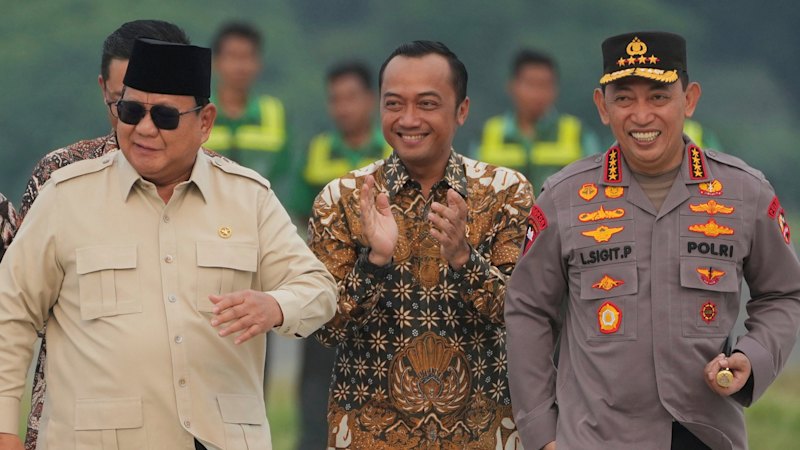
Most headlines treat the Indonesia wiretap scandal like a routine spy thriller, yet the real story isn't about rogue bugs hidden in a presidential desk. It's about an internal surveillance machine turned inward against the country's sitting commander-in-chief.
When Indonesia's National Police Criminal Investigation Agency—known locally as Bareskrim—started naming suspects in early November 2026, Jakarta's political establishment froze. They weren't arresting foreign operatives or shady private hackers. They were arresting the former National Police Chief himself, alongside the very generals tasked with enforcing the law.
If you've only skimmed the surface of this mess, you're missing why markets are jittery, why treason charges are suddenly on the table, and how a technical interception database became the centerpiece of a high-stakes power struggle.
How the Indonesia Wiretap Scandal Actually Started
Forget cinematic images of men in vans wearing headphones. The alleged surveillance operation ran straight through official state infrastructure.
According to Bareskrim chief Asep Safrudin, investigators uncovered a scheme spanning 2025 and 2026 where senior officers bypassed mandatory oversight rules to feed private phone numbers directly into the Lawful Interception Management System (LIMS). That's the government's own platform built to manage legally authorized communications monitoring. Instead of targeting narcotics cartels or terror networks, the system allegedly monitored President Prabowo Subianto, senior cabinet ministers, political figures, business leaders, NGO activists, and journalists.
Eleven phone numbers sat at the center of the initial probe. And the whole thing might have stayed buried if a whistleblower inside the force hadn't stepped forward on October 30, 2026.
That single internal report triggered a rapid chain reaction:
- November 3, 2026: Bareskrim detained and named three initial suspects—former National Police Chief Gen. Listyo Sigit Prabowo (who had just been moved to Presidential Chief of Staff in an October cabinet reshuffle before being abruptly fired), National Police Legal Division Chief Ahrie Sonta Nasution, and Inspector General Eko Hadi Santoso.
- November 5–6, 2026: Police named a fourth suspect, Inspector General Slamet Uliandi (initially referred to by the initials SU), who led the investigation agency's information and technology unit from 2021 to 2026.
- November 23, 2026: Authorities escalated the case dramatically, naming six current and former police officials—identified by initials LSP, SU, EH, ASN, TK, and II—as suspects in an alleged treason plot.
Let's be clear about what happened here. The people accused of running illegal wiretaps weren't operating outside the system. They were the system.
Who Are the Suspects and What Roles Did They Play
You can't understand the political shockwaves without looking at the specific chain of command investigators laid out. Every suspect held a seat where technical access met institutional authority.
Gen. Listyo Sigit Prabowo (LSP)
Listyo isn't related to President Prabowo Subianto, despite sharing a last name. Appointed National Police Chief in 2021 under former President Joko Widodo, Listyo survived two years of cabinet shakeups before moving into the Presidential Chief of Staff role in October 2026. Police allege he ordered the surveillance and received the wiretap reports directly. Following the revelations, he was dismissed from his palace post and scheduled for a police ethics hearing.
Inspector General Slamet Uliandi (SU)
Cyber crime unit director Suhermanto told reporters that Uliandi acted as the technical gatekeeper. Having run the Criminal Investigation Agency's IT unit between 2021 and 2026, Uliandi allegedly gave the green light before the other officers entered targets into the interception system—and approved deleting the interception logs afterward. Health issues delayed his immediate detention when he was first named in early November, though he now faces the expanded treason charges alongside the rest of the group.
Ahrie Sonta Nasution (ASN) and Eko Hadi Santoso (EH)
Both senior officers—Nasution heading the Legal Division and Santoso holding the rank of Inspector General—were among the first three detained at National Police headquarters in South Jakarta. Two suspects in the broader probe have already been dishonorably discharged through internal police ethics hearings.
The Newer Additions (TK and II)
When Bareskrim widened the net to six suspects in late November, investigators included two additional figures identified publicly by their initials, TK and II, linking the surveillance network to a broader effort to undermine the sitting administration.
Why Treason Charges Changed Everything
Initially, the charges sounded like severe cybercrime and abuse-of-power offenses: unlawful interception of private electronic communications, unauthorized computer access, and destruction of electronic data. Under Indonesian law, those violations carry up to eight years in prison. Bad enough for top brass.
Then the legal framing shifted.
By mid-to-late November, State Secretary Prasetyo Hadi, Law Minister Yusril Ihza Mahendra, and Bareskrim investigators began linking the wiretaps to makar—treason. In Indonesia, treason charges are rare and carry the maximum penalty of death.
Why jump from illegal surveillance to treason? Investigators allege the motive wasn't idle curiosity. According to Asep Safrudin, the suspects conspired to weaken public trust in President Prabowo's government so Listyo could retain influence and protect his position as police chief. During raids across 14 locations, police even seized 20 "One Piece" flags—anime symbols that had popped up at anti-government street demonstrations—probing whether the suspects actively exploited public protests against the administration.
Honestly, this is where legal experts urge caution. In Indonesian legal history, treason statutes have occasionally been stretched during tense political moments. Whether prosecutors can prove in open court that unauthorized LIMS entries plus protest-related materials equal an attempted overthrow of the state remains fiercely debated among Jakarta legal analysts.
The Political Rift Nobody Can Ignore
You don't need a degree in Southeast Asian politics to see the elephant in the room.
Listyo Sigit Prabowo was widely recognized as one of former President Joko Widodo's (Jokowi) closest remaining allies inside the security apparatus. While no public evidence links Jokowi himself to the wiretapping—and he isn't implicated in the investigation—the scandal has blown open quiet speculation about friction between Prabowo and his predecessor.
When reporters asked Jokowi about the arrests in early November, he kept it brief: "We should all respect the ongoing legal process, let's wait for the outcome of the investigation".
Meanwhile, the fallout is spilling straight into parliament. Jokowi's eldest son, Gibran Rakabuming Raka, serves as Prabowo's vice president. Lawmakers have begun floating a formal parliamentary inquiry into Raka's eligibility—a move political observers view as a potential opening gambit toward impeachment proceedings.
Add economic pressure to the mix, and you see why Jakarta feels on edge. President Prabowo is already juggling slumping approval ratings, a weakening rupiah, record stock market sell-offs, and warnings of an equities downgrade from index provider MSCI. Officials have tried reassuring investors that the wiretap probe doesn't affect economic fundamentals, yet foreign capital rarely loves watching a G20 nation's police leadership get arrested for spying on the president.
What Most Coverage Misses About Institutional Oversight
Here's the part that gets lost in the palace intrigue: how easily a lawful interception tool was allegedly weaponized without external checks.
Bareskrim noted that the suspects bypassed Internal Regulation No. 5 of 2010, which governs police interception procedures. Notice the wording there. Internal regulation.
When an agency polices its own surveillance logs, technical gatekeepers hold unchecked power. If the head of IT and the chief of police agree to log a number into LIMS and wipe the audit trail afterward, standard administrative safeguards evaporate. Indonesia has dealt with presidential wiretapping controversies before—stretching back to the Habibie era—yet statutory oversight of digital interception tools still lags far behind the technology itself.
Without independent judicial warrants required at the technical entry level, any future administration faces the exact same vulnerability.
How to Follow This Story Without Falling for Rumors
Because Jakarta's political rumor mill runs hot during leadership crises, separating verified legal milestones from partisan noise takes discipline. Keep your eye on three concrete developments over the coming weeks:
- Ethics Tribunal Outcomes: Watch the formal police ethics rulings against Listyo and the remaining suspects. Dishonorable discharge strips pension rights and signals total institutional abandonment before criminal trials even begin.
- Prosecutorial Indictments: Pay close attention to whether the Attorney General's Office keeps the treason (makar) charges intact when transferring case files to court, or narrows the indictment back to Electronic Information and Transactions (ITE) Law violations.
- Parliamentary Maneuvers: Track whether House of Representatives (DPR) commissions actually form a special inquiry committee (pansus)—not just regarding the vice presidency, but over statutory reform of police wiretapping oversight.
Stick to official Bareskrim briefings, court filings, and reputable Indonesian outlets like The Jakarta Post, Jakarta Globe, or Tempo rather than anonymous social media threads claiming coup attempts. The documented facts alone are already historic enough.
For a closer look at how legal analysts responded when the first suspects were named, watch Tribunnews' coverage of experts urging police to uncover the full wiretapping network. This broadcast is relevant because Indonesian legal scholar Abdul Fickar explains why investigators must trace who ultimately ordered and benefited from the intercepted data.


