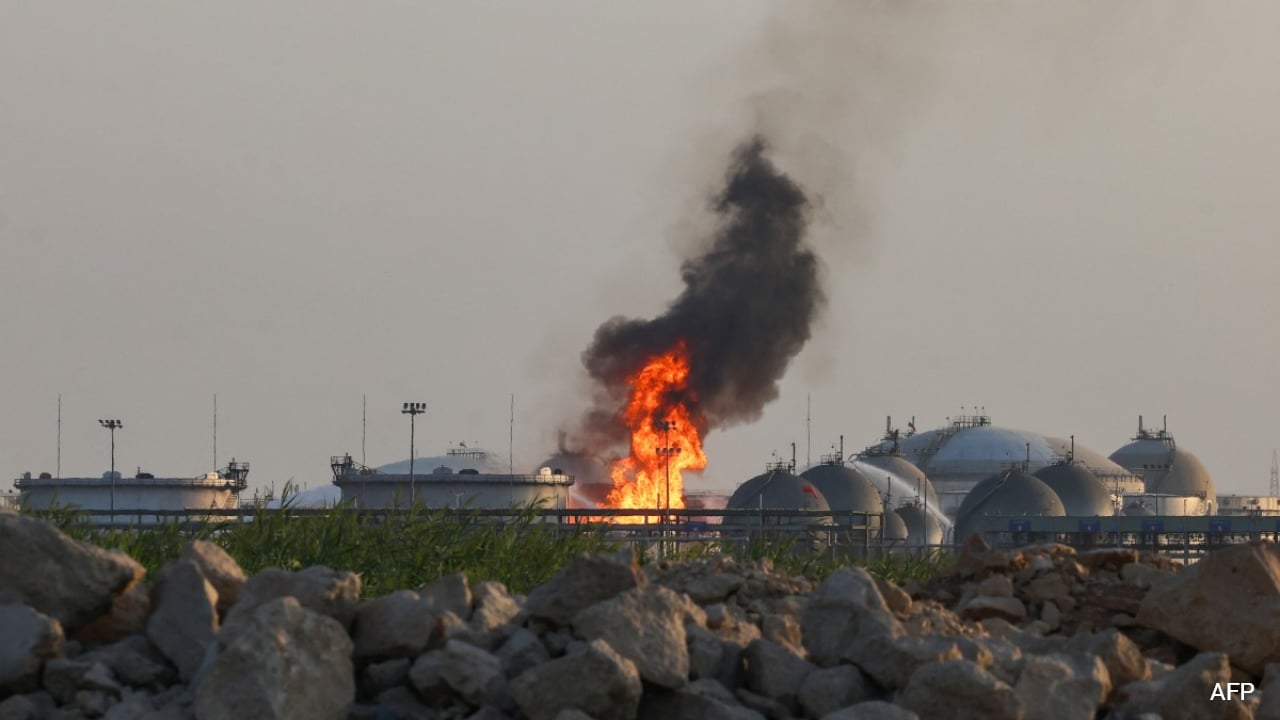
Rumors of Iranian anti-ship cruise missiles slamming into American warships in the Gulf of Oman travel faster than actual warheads. Every few days, pro-Islamic Revolutionary Guard Corps channels broadcast breathless claims that ten or twenty-five U.S.-linked vessels have been hit, while social media fills up with recycled footage and rumors of retaliatory strikes rocking southern Iranian ports like Sirik. If you only read viral headlines, you'd think the Persian Gulf was burning down in an all-out naval battle right now.
It isn't. Meanwhile, you can read related events here: What Most People Get Wrong About Pedal-Pub Injury Lawsuits and Liability Waivers.
What's actually happening between Washington and Tehran in late 2026 is a gritty, asymmetric war of attrition that looks nothing like a Hollywood naval clash. While unverified claims of direct hits on U.S. Navy destroyers make great clickbait, the real story sits in the maritime chokepoints of the Strait of Hormuz, a suffocating U.S. naval blockade, and a high-stakes game of diplomatic chicken that has stretched nearly nine months since Operation Epic Fury kicked off.
Separating Viral Claims From Verified Strikes
Let's look at the actual track record of these viral reports. In mid-November 2026, outlets echoed pro-IRGC media claiming ten anti-ship missiles had been fired at U.S. warships in the Gulf of Oman, paired with unconfirmed reports from Iran's state news agency IRNA about an "enemy" strike hitting a military site in the Hormozgan province port city of Sirik. Days later, another wave of online chatter claimed twenty-five U.S.-linked ships were targeted simultaneously. To explore the full picture, we recommend the recent report by USA Today.
None of those mass-casualty warship strikes were verified by independent maritime monitors or defense officials.
Does that mean the waters are safe? Not even close. Independent bodies like the United Kingdom Maritime Trade Operations (UKMTO) and the Joint Maritime Information Centre (JMIC) have documented a steady, dangerous drumbeat of harassment and projectile strikes against commercial shipping. Between November 16 and late November alone, at least seven commercial tankers were struck by unknown projectiles in or near the Strait of Hormuz. Since the war started on February 28, 2026, the International Maritime Organization (IMO) has confirmed 141 maritime incidents involving commercial vessels across the Persian Gulf, Strait of Hormuz, and Gulf of Oman, resulting in 25 seafarer deaths.
Notice the difference. Tehran isn't sinking American aircraft carriers. Instead, Iranian forces are targeting neutral and commercial oil tankers, laying or threatening sea mines, and putting tugboats on a "Non-Compliance List" to scare crews away from servicing vessels that ignore Iranian routing orders.
Why the Strait of Hormuz Is the Real Battlefield
To understand why Iran exaggerates hits on U.S. warships while quietly lobbing projectiles at commercial tankers, you have to look at the economic chokehold squeezing Tehran.
Following the initial 38-day air and naval campaign of Operation Epic Fury—which saw U.S. and Israeli forces strike over 13,000 targets, kill Supreme Leader Ali Khamenei, and destroy roughly 150 Iranian naval vessels—President Donald Trump shifted tactics. Rather than keeping up a relentless bombing campaign, Washington imposed a naval blockade on Iranian ports in April, paused it briefly over the summer, and locked it back into place in July. By November, U.S. Central Command (CENTCOM) expanded that squeeze with Task Force Iron Gate, an operation designed to choke off weapons and sanctioned goods moving across Iran's land borders and the Caspian Sea.
The economic toll inside Iran has been brutal:
- Domestic inflation surged to roughly 70 percent by autumn as sea trade dried up.
- Shifting cargo from ships to overland trucks created massive bottlenecks, driving up transport costs while spare parts for aging fleets vanished.
- Iranian judiciary officials went so far as to issue domestic court rulings demanding $290 billion in war damages from the United States, using those rulings as legal cover to seize commercial ships.
Iran can't break the U.S. Navy blockade head-on. Analysts at the Institute for National Security Studies (INSS) and the Atlantic Council point out that Tehran's real goal is raising the economic and political pain for Washington. By hitting commercial tankers with drones and unknown projectiles—and claiming the strait is seeded with naval mines—Iran hopes to spike global oil prices and rattle energy markets enough to force Trump to lift the blockade.
So far, energy markets haven't taken the bait. President Trump has flatly dismissed Iran's mine claims as lies meant to inflate crude prices, and the U.S. military declared international shipping lanes clear of mines at the end of October. Even with tankers turning off their Automatic Identification System (AIS) transponders to slip through the southern corridor quietly, U.S.-facilitated transits through the Strait of Hormuz actually climbed to an average of 38 vessels a day in late November. Over 95 percent of ships are still making it through without incident, keeping Brent crude near multi-month lows.
What Trump's Military Buildup Actually Signals
Whenever an explosion gets reported near an Iranian port or a drone hits a target in Kuwait or Bahrain, headlines immediately scream that Trump is unleashing a massive new wave of strikes. The hardware sitting in the region certainly makes that sound plausible.
According to INSS force posture assessments from November 2026, the U.S. naval presence in the Middle East remains roughly at its March war-footing peak. Two aircraft carriers, 13 guided-missile destroyers, and a cruiser are operating directly in the CENTCOM area, backed by four more destroyers in the Mediterranean and roughly 200 aerial refueling tankers. On top of that, the USS Theodore Roosevelt Carrier Strike Group steamed through the Indian Ocean in mid-November heading toward the theater, adding a third carrier into the mix.
Yet capability isn't the same thing as intent.
In late November, Trump publicly stated that renewed large-scale attacks on Iran were "highly unlikely," arguing that Iran was "militarily effectively over" and claiming he was holding the status quo at the request of neighboring Gulf states. Even while warning that American forces remain "locked and loaded," Washington has held back from launching another March-style air campaign. INSS analysts note that executing an air offensive on the scale of early 2026 would require flying in substantial waves of additional bombers and fighter squadrons—deployments that simply haven't happened.
Instead, the administration is leaning on what former National Security Council Mideast director Michael Singh describes as "strategic patience". Maintaining a naval blockade and swatting down incoming drones costs far less—politically and financially—than diving back into an open-ended bombing campaign, especially after Pentagon inspector reports pegged U.S. equipment losses from the war at up to $3.7 billion, including nearly 60 aircraft.
The Traps Both Sides Are Caught In
Here's the part most cable news panels gloss over: neither Washington nor Tehran actually has an easy exit ramp right now.
On the Iranian side, the regime's surviving leadership is trying to project strength to domestic hardliners while avoiding a fight that would wipe out whatever infrastructure they have left. Iranian state TV recently paraded underground facilities housing new dual-missile launchers for liquid-fueled missiles, and Security Council secretary Mohsen Rezae threatened that U.S. military bases in Europe could be targeted if America strikes Iran again. Yet look at where Iran actually aims its calibrated strikes. As Center for Strategic and International Studies (CSIS) expert Mona Yacoubian pointed out, Tehran has hit targets in Bahrain and Kuwait—smaller Gulf states—while carefully avoiding major attacks on Saudi Arabia, the UAE, or Qatar. Tehran is testing boundaries without crossing the red lines that would trigger total retaliation.
Meanwhile, Qatari mediators have been shuttling back to Tehran to see if diplomacy can be revived, and Trump acknowledged in late November that Iran wants a deal—just not one he finds "acceptable". Hardliners in Tehran have hardened their negotiating demands ahead of political calendar pressures, stripping away the kind of face-saving compromise that could end the blockade.
How to Read Breaking News From the Persian Gulf Without Getting Played
When the next alert flashes across your phone claiming Iranian missiles just devastated a U.S. fleet or American bombers just flattened an Iranian port, run it through a quick filter before reacting:
- Check the maritime security advisories first. Before trusting a viral post from a partisan Telegram channel or state broadcaster, look at updates from UKMTO or JMIC. If a warship or commercial tanker actually got hit, maritime watchdogs log the coordinates, vessel type, and damage assessment within hours.
- Watch oil prices, not social media trends. Commodity traders have billions of dollars riding on whether the Strait of Hormuz is genuinely closed. If Brent crude doesn't spike when a "massive missile attack" trends online, the market is telling you the ships are still moving.
- Track aircraft deployments, not carrier headlines. Aircraft carriers moving between the Indian Ocean and the Persian Gulf are standard deterrence rotations. A real resumption of large-scale U.S. strikes requires heavy bomber and tactical fighter surges into regional airbases—something open-source flight trackers spot days in advance.
Pay attention to the blockade numbers and verified UKMTO incident logs rather than unverified missile tallies, and you'll have a far clearer picture of where this conflict is actually heading.