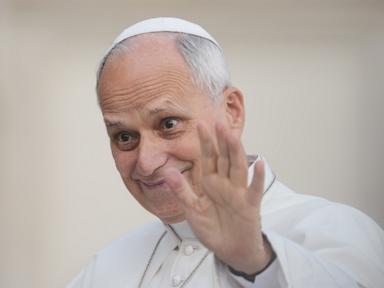
Yes, it really happened. Pope Leo XIV—born Robert Francis Prevost in Chicago, Illinois—cast a ballot in a US election in 2026, making him the first sitting pontiff in history to vote in an American race.
Sounds like a political earthquake. Honestly, most of the noise surrounding it misses the actual point.
Social media exploded the second news broke that the head of the Catholic Church participated in the 2026 US midterm cycle via an absentee ballot from Vatican City. Pundits immediately started guessing who he checked off on the page. Traditionalists worried about papal neutrality, while political operatives tried to spin the move as an endorsement of their side. Everyone seemed to forget how US citizenship, Vatican law, and basic voter registration actually work.
Why Pope Leo XIV Was Able to Vote at All
You don't lose your American citizenship just because you put on the white cassock. Under US law, specifically the Immigration and Nationality Act, accepting a position as a foreign head of state can theoretically trigger a review of citizenship—but it isn't automatic. To lose US nationality, you have to intend to relinquish it.
Cardinal Robert Prevost never renounced his citizenship when he became a bishop in Peru, when he led the Dicastery for Bishops in Rome, or when the conclave elected him Pope Leo XIV in May 2025 following the death of Pope Francis. He's still an Illinois voter on paper.
Under the Uniformed and Overseas Citizens Absentee Voting Act (UOCAVA), any US citizen living abroad—even inside the walled 109-acre sovereign state of Vatican City—retains the legal right to request an absentee ballot from their last state of residence. For Leo XIV, that's Illinois, where he grew up in Dolton, a south suburb of Chicago, and where he maintained ties with the Augustinian order for decades.
It's a legal quirk that never came up before for one simple reason. There had never been an American pope.
Every previous pontiff in the modern era of democratic elections came from Italy, Poland, Germany, or Argentina. While Pope Francis kept his Argentine identity papers current and reportedly maintained his registration in Buenos Aires, he didn't use his position to make a spectacle of domestic Argentine politics. Leo XIV didn't make a spectacle either. He simply exercised a civic right he already possessed, quietly submitting his paperwork through standard overseas channels.
The Papal Neutrality Myth vs. Reality
People love to imagine the papacy as floating completely above earthly politics. That's a nice idea, but history doesn't back it up.
Popes have influenced elections for centuries. Sometimes they did it directly, like when Pope Pius XII made it crystal clear in 1948 that Italian Catholics couldn't vote for communists without risking excommunication. Other times they did it subtly through encyclicals, pastoral letters, and strategic Vatican diplomacy.
What makes Pope Leo XIV voting in a US election different isn't that he suddenly started caring about politics. It's the medium. Casting a secret ballot in a US midterm is private, individual, and legally protected. Unlike an encyclical or a homily from St. Peter's Basilica, nobody knows what's on that ballot except the man who filled it out.
Still, optics matter. When you're the spiritual leader of 1.3 billion Catholics—and a sovereign monarch in your own right—even a private act carries public weight.
What Canon Law Actually Says
If you look inside the 1983 Code of Canon Law, you won't find a rule forbidding the pope from voting in a secular election. Canon 285 prohibits clerics from assuming public offices that entail a sharing in the exercise of civil power. Canon 287 tells priests and bishops not to take an active part in political parties or the direction of labor unions unless church authorities decide it's necessary to protect the rights of the Church or promote the common good.
Notice the distinction. Running for Senate? Banned. Leading a political party? Banned. Checking boxes on an absentee ballot in private? Completely permitted.
In fact, Catholic social teaching actively encourages civic participation. The Catechism of the Catholic Church explicitly states that submission to authority and co-responsibility for the common good make it morally obligatory to exercise the right to vote. If a pope tells millions of American Catholics that voting is a moral duty, there's a quiet consistency in him filling out his own ballot rather than sitting on the sidelines.
Why the 2026 US Midterm Timing Mattered
Timing turns a routine civic act into a headline. The 2026 US midterm elections arrived at a moment of intense polarization among American Catholics, who remain one of the most evenly divided religious demographics in the country.
According to Pew Research Center data from recent election cycles, US Catholics split almost right down the middle between the two major parties, with white Catholics leaning heavily Republican and Hispanic Catholics leaning Democratic—though even those margins have shifted dramatically over the last decade.
When Leo XIV took the chair of St. Peter in 2025, both sides of the American political aisle immediately tried to claim him. Conservatives pointed to his orthodox theological training and steady administrative background. Progressives highlighted his decades of missionary work in Peru, his close alignment with Pope Francis's pastoral priorities, and his focus on marginalized communities.
By voting in the 2026 midterms, Leo XIV didn't hand ammunition to either camp. Instead, he underscored his dual identity. He is the Bishop of Rome, yes, yet he's also a guy from the South Side of Chicago who understands how American democracy works from the inside.
The Dual Citizenship Dilemma in Vatican City
Vatican citizenship is weird. Nobody is born a Vatican citizen, and nobody keeps it forever. It's strictly functional—granted only while you hold an official role in the Holy See, and revoked the moment your service ends.
Because Vatican citizenship is temporary by design, the Lateran Treaty of 1929 explicitly allows Vatican citizens to retain their original nationality. If they didn't, retired diplomats and former Swiss Guards would suddenly become stateless people.
Pope Leo XIV holds Vatican citizenship as the sovereign of Vatican City State, alongside his birthright US citizenship. From a strictly legal standpoint, the US State Department treats dual nationals just like any other American when it comes to voting rights. Living in Rome doesn't erase your ties to Cook County, Illinois, as long as you file the proper Federal Post Card Application (FPCA).
Common Misconceptions Floating Around Online
Whenever religion and US politics collide, bad information spreads faster than the truth. Here's what people are getting flat-out wrong about this story.
- He broke diplomatic protocol. No, he didn't. The Holy See maintains full diplomatic relations with the United States, established under President Ronald Reagan in 1984. Diplomatic immunity and sovereign status don't strip a dual citizen of their right to vote in their home country's elections.
- The Vatican officially announced his vote to send a message. Wrong again. The Holy See Press Office doesn't issue press releases about the pope's personal tax filings or absentee ballots. Details about his registration emerged through routine public record checks and reporting on how an American pontiff navigates US legal obligations.
- He had to pay US income taxes to vote. Voting rights and tax obligations aren't tied together like that. While US citizens abroad do have to file tax returns with the IRS regardless of where they live, your right to an absentee ballot doesn't depend on your tax bracket—especially for a head of state whose financial arrangements fall under specific sovereign and clerical provisions.
- Illinois gave him special treatment. Overseas absentee ballots are processed through standard county clerk procedures. Whether you're a college student studying in Florence, a military contractor in Germany, or the Pope in the Apostolic Palace, your ballot goes through the exact same verification envelope system.
What This Changes for American Catholics
Practically speaking, Pope Leo XIV casting a ballot doesn't alter Church doctrine, rewrite US election law, or tell anyone how to vote. Nobody gets a peek inside his envelope.
What it does is strip away an excuse. American Catholics often complain that politics has become too toxic to touch, or they treat their political party as more authoritative than their faith. Watching an American-born pope quietly fulfill his basic duty as a citizen—without turning it into a partisan rally or a cable news shouting match—sets a pretty clear standard.
You can engage in the democratic process seriously without losing your soul to tribalism.
If you're following how Leo XIV's American background shapes his papacy, pay less attention to rumors about his ballot and more attention to his public appointments and homilies. Look at the bishops he selects for major US dioceses over the next two years, read his actual statements on migration, economic justice, and family life, and verify any viral claims about Vatican politics through primary sources like Vatican News or the US Conference of Catholic Bishops before sharing them. That's where the real story lives.



