Spain runs one of the most envied high-speed rail networks on the planet. Travelers zip between Madrid and Barcelona in two and a half hours, sipping coffee at 300 kilometers per hour without spilling a drop. Because the modern AVE system feels so effortless, people tend to forget that Spain's railways carry a dark, blood-soaked history. When you look closely at Spain's deadliest train disasters, a jarring pattern emerges that has nothing to do with bad luck and everything to do with infrastructure gaps, human error, and political cover-ups.
Most retrospective photo galleries treat these crashes like isolated tragedies. They show twisted metal, grieving families, and solemn politicians laying wreaths before moving on to the next headline. That approach misses the real story. Every major rail catastrophe in Spanish history forced a painful reckoning with how the country built, funded, and regulated its tracks. You might also find this related story useful: When the Street Becomes the Parliament and Serbia’s Outsiders Step Into the Fire.
The Torre del Bierzo Crash and Franco's Information Blackout
If you ask a random commuter in Madrid about Spain's worst rail accident, they will almost certainly mention Santiago de Compostela. They're wrong by a massive margin. The deadliest disaster in Spanish rail history happened on January 3, 1944, inside Tunnel Number 20 near Torre del Bierzo in the province of León.
A mail train traveling from Madrid to A Coruña lost its brakes on a steep downward gradient. Despite the driver's desperate attempts to slow down using sand on the tracks and manual handbrakes, the heavy train barreled into the tunnel and slammed into the rear of a shunting locomotive. Moments later, a coal train coming from the opposite direction plowed straight into the wreckage. Fire erupted immediately inside the confined rock shaft, fueled by wooden passenger carriages and oil lamps. As extensively documented in latest coverage by The Guardian, the implications are significant.
The official death toll published by Francisco Franco's regime was 78. Nobody believed it then, and historians certainly don't believe it now.
Because the dictatorship controlled every newspaper and radio broadcast, the government suppressed the true scale of the carnage to avoid making the state-owned rail monopoly, RENFE, look incompetent. Judicial records from the municipality and testimonies from local rescue workers suggest the real number of dead sat somewhere between 200 and 250 people. Some researchers put the figure even higher because dozens of passengers were traveling without tickets—a common reality during the post-Civil War famine—and their bodies were burned beyond recognition.
It took decades for the truth about Torre del Bierzo to surface. When you look at the few surviving photographs from that winter in León, you aren't just looking at a mechanical failure. You're looking at what happens when an authoritarian government prioritizes public image over basic railway maintenance and transparent safety investigations.
Why Santiago de Compostela Changed High-Speed Rail Forever
Fast forward nearly seventy years to July 24, 2013. Spain was now a modern democracy boasting Europe's longest high-speed rail network. The night before the Feast of Saint James, an Alvia hybrid train carrying 222 people approached the Angrois curve just outside Santiago de Compostela.
The train entered the sharp bend at 179 kilometers per hour. The speed limit for that specific section of track was 80.
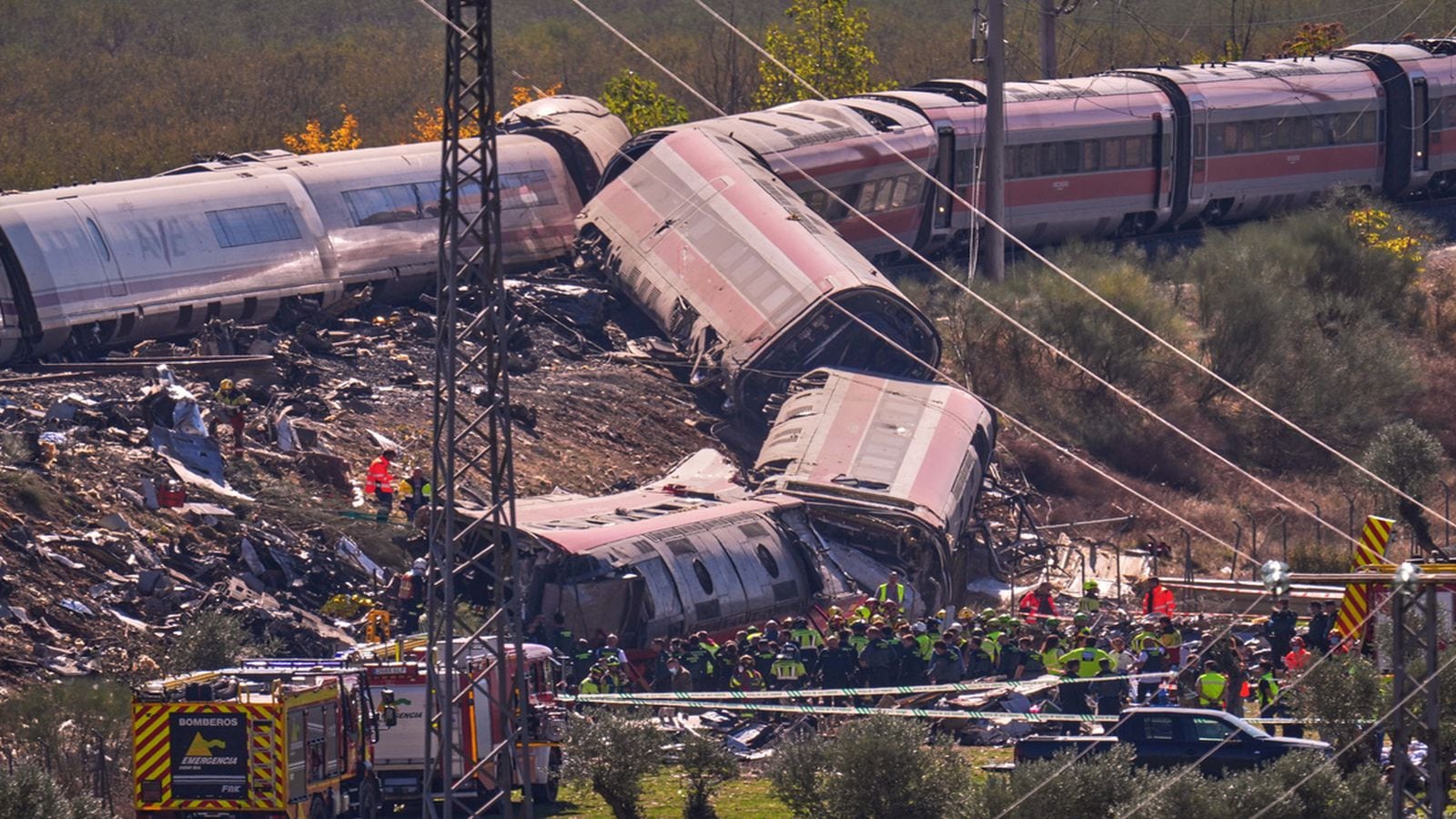
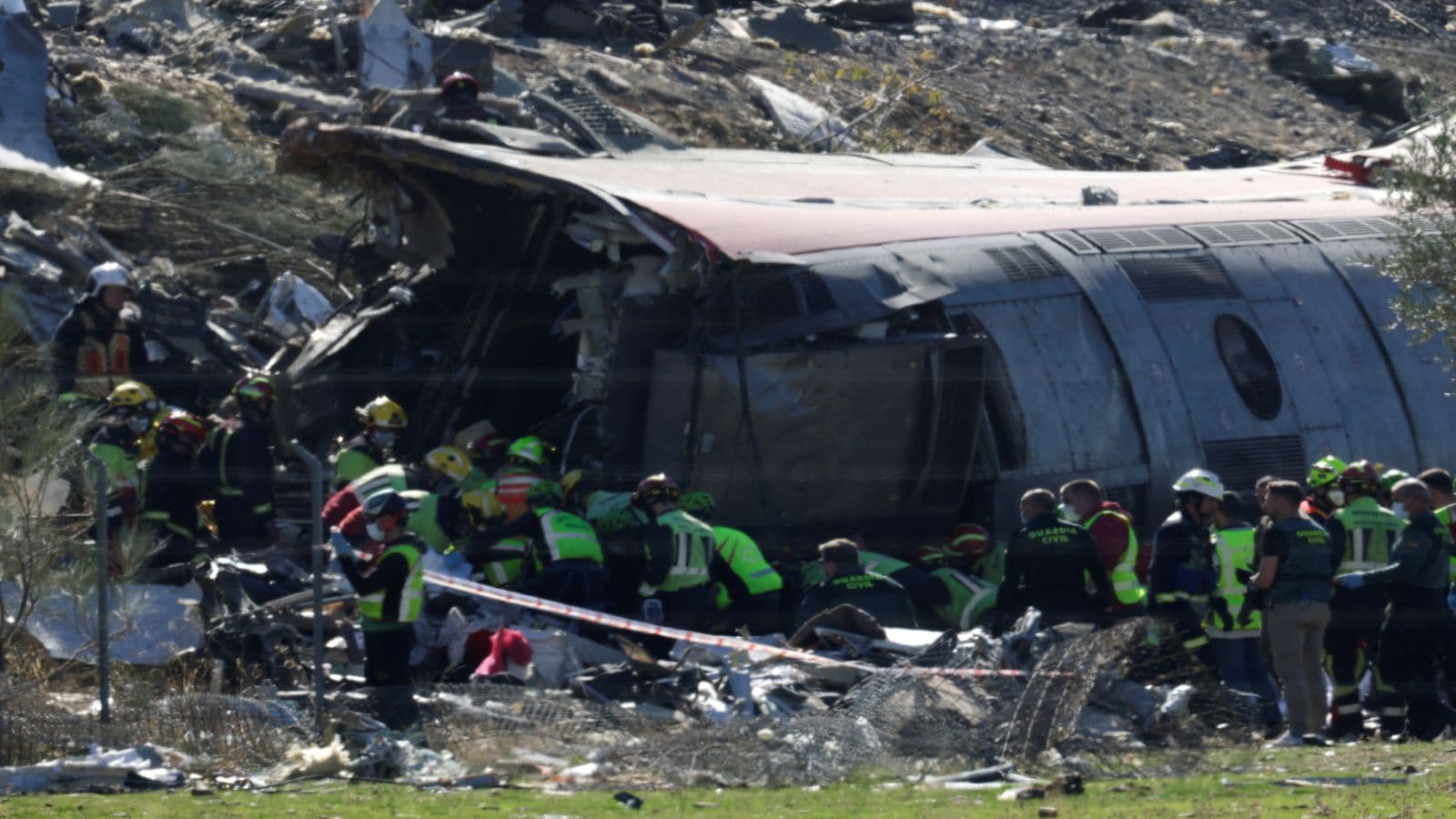
All eight carriages derailed. Four overturned completely, and one was thrown up a concrete embankment, catching fire on impact. Seventy-nine people died at the scene or in the hospital shortly after, and more than 140 suffered serious injuries. The crash was caught on a security camera, producing footage so violent it looked like a Hollywood special effect rather than real life.
People immediately blamed the driver, Francisco José Garzón Amo, who had been distracted by a phone call from the on-board conductor just seconds before the curve. That was the easy narrative. It wasn't the complete truth.
The Missing Safety Net at Angrois
Investigations by Spain's Railway Accident Investigation Commission (CIAF) and later the European Union Agency for Railways revealed a glaring engineering flaw. The high-speed line leading up to Santiago de Compostela was equipped with ERTMS—the European Rail Traffic Management System—which automatically applies the brakes if a train exceeds the speed limit.
Right before the Angrois curve, the ERTMS coverage ended.
The track switched to an older, legacy signaling system called ASFA, which relied entirely on the human driver to notice speed reduction signs and manually slow the train down. There were no automatic braking beacons installed to protect that notoriously tight curve. After years of legal battles, a Spanish court found both the driver and the former safety director of Adif, the state rail infrastructure manager, guilty of reckless homicide and negligence. The tragedy proved that even the most advanced trains in the world are only as safe as the transitions between old and new infrastructure.
The 1972 El Cuervo Collision and Single-Track Nightmares
Between the wartime secrecy of 1944 and the high-tech failure of 2013 lies another catastrophic crash that modern readers rarely hear about. On July 21, 1972, an express train traveling from Cádiz to Seville collided head-on with a local passenger train near the town of El Cuervo.
Eighty-six people lost their lives. More than a hundred were injured.
At the time, large stretches of Spain's southern rail network operated on a single track. Trains traveling in opposite directions had to coordinate passing maneuvers at designated stations, relying on strict adherence to semaphore signals and dispatcher instructions. On that scorching July morning, the driver of the local train ignored a red stop signal—or failed to see it in time—and entered the single-track section directly into the path of the oncoming express.
The impact telescoped the front carriages into one another. Rescue efforts were agonizingly slow because the crash site sat in an isolated rural area with poor road access, and local hospitals were quickly overwhelmed. El Cuervo exposed the lethal vulnerability of single-track operations during peak summer travel months, eventually forcing RENFE to accelerate the installation of centralized traffic control systems and double-tracking across Andalusia.
The 2006 Valencia Metro Derailment Nobody Wanted to Investigate
Not every major Spanish rail disaster happened on cross-country tracks. On July 3, 2006, a commuter subway train on Line 1 of the Valencia Metro derailed inside a tunnel between the Plaza de España and Jesús stations.
Forty-three people died, making it the worst urban transit accident in Spanish history.
The train was traveling at 80 kilometers per hour in a 40-kilometer-per-hour zone when it tipped over on a bend. Just like in Santiago de Compostela seven years later, the track lacked automatic speed-control beacons that would have forced the train to slow down. Instead, the regional government of Valencia rushed through a superficial investigation, blamed the deceased driver entirely, and buried the issue just ahead of Pope Benedict XVI's visit to the city a few days later.
It took years of relentless campaigning by the victims' association, Asociación de Víctimas del Metro 3 de Julio, along with investigative journalism by programs like Salvados, to force the regional parliament to reopen the inquiry. The renewed investigation exposed systemic underfunding, ignored warnings from union drivers about the dangerous curve, and deliberate manipulation of witness testimonies by public officials.
Smaller Crashes That Exposed Systemic Blind Spots
Beyond the headline-grabbing tragedies, several lesser-known accidents highlight recurring weak points in Spain's rail history:
- The 2003 Chinchilla Train Crash: Nineteen people died in Albacete when a Talgo passenger train collided head-on with a freight train. A stationmaster had forgotten to switch a signal back to red after clearing the freight train onto a single track, showing how a single moment of human distraction could still trigger a fatal collision in the 21st century.
- The 1941 Santiago de Compostela Derailment: Long before the 2013 Alvia crash, a train plunged off a bridge in the exact same region during a severe storm, killing dozens of passengers and highlighting the treacherous geography of Galicia's mountainous rail routes.
- The 2010 Castelldefels Beach Tragedy: While not a derailment, twelve young people were killed by a high-speed Euromed train near Barcelona when they crossed the tracks directly instead of using an underground pedestrian passage. The incident forced immediate changes to station crowd-control barriers and public safety signage across commuter hubs.
What Spain's Rail History Actually Teaches Us
Looking at photographs of these disasters shouldn't just be an exercise in morbid curiosity. If you want to understand how modern transit safety works, you have to look at the blood written into the rulebooks.
Spain's rail network today is genuinely one of the safest in Europe. Following the 2013 Angrois disaster, Adif overhauled speed-transition protocols nationwide, installing automatic braking balises before major curves even on legacy tracks. Driver cabin distraction rules were tightened dramatically, and independent oversight bodies gained stronger mandates to audit infrastructure risks before accidents happen rather than after.
If you're researching European rail safety or writing about transport infrastructure, don't stop at surface-level casualty lists. Look up the European Union Agency for Railways (ERA) assessment reports on the Angrois crash, read the declassified municipal records from Torre del Bierzo, and compare how different European nations implement ERTMS across regional lines. The real lesson of Spain's deadliest train disasters isn't that trains are dangerous—it's that cutting corners on signaling transitions and silencing safety critics always carries a lethal price.