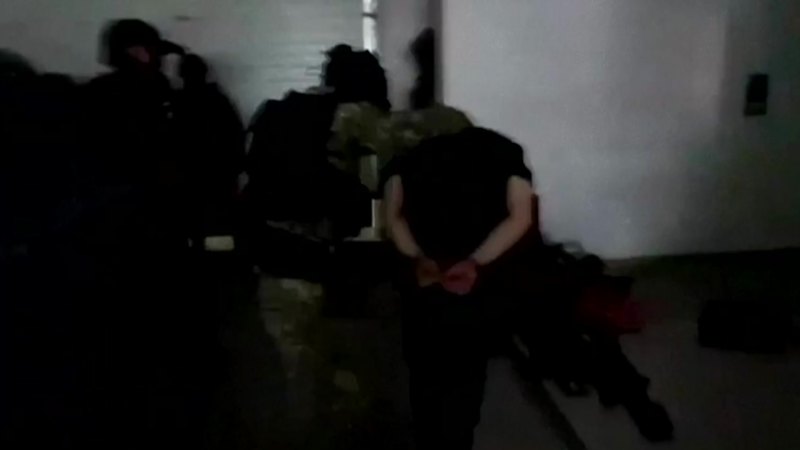
Every few months, the headlines flash the exact same triumph. A top drug kingpin captured by the Mexican Army, paraded past cameras in a tactical vest, flanked by masked soldiers holding assault rifles. Washington applauds. Mexico City claims a historic victory. And within seventy-two hours, bodies start piling up in the streets of Culiacán, Tijuana, or Michoacán.
If you've followed Mexican security policy for more than five minutes, you already know the punchline. Arresting the guy at the top doesn't stop the drugs. It rarely even slows them down.
Most mainstream coverage treats these military raids like the final boss battle in a video game. Take out the leader, and the criminal empire crumbles. That's a comforting fantasy for politicians facing election cycles on both sides of the border, yet it ignores nearly two decades of hard, bloody reality on the ground. Having spent years analyzing cross-border security operations and tracking cartel fragmentation across northern Mexico, I can tell you that high-profile arrests usually trigger the exact opposite of peace. They create power vacuums, splinter disciplined syndicates into desperate street gangs, and force mid-level lieutenants to fight brutal turf wars just to survive.
Let's look at what actually happens behind the curtain when the Mexican Army, known officially as the Secretariat of National Defense (SEDENA), pulls off a major takedown—and why the strategy keeps repeating itself despite decades of evidence showing its limits.
Why Headlines About a Top Drug Kingpin Captured by the Mexican Army Mislead You
When news breaks of a major arrest, press releases focus heavily on tactical brilliance. You hear about months of intelligence gathering, dawn raids in armored vehicles, and zero-casualty extractions. Those operational details are often true. Mexico's military intelligence units, frequently working alongside U.S. agencies like the Drug Enforcement Administration (DEA) and Homeland Security Investigations (HSI), have become remarkably skilled at tracking high-value targets.
What the press conferences leave out is structural economics.
Modern Mexican cartels aren't rigid, top-down monarchies anymore. They operate like decentralized franchise networks. Take the Sinaloa Cartel or the Jalisco New Generation Cartel (CJNG). By the time a leader's face ends up on a DEA wanted poster with a multimillion-dollar bounty, that person is rarely micromanaging daily fentanyl synthesis or coordinating individual tractor-trailer crossings at Nogales. They're figureheads, dispute settlers, and brand managers.
Removing the figurehead doesn't destroy the supply chain. The chemical precursors still arrive at Pacific ports like Manzanillo and Lázaro Cárdenas. The clandestine labs in the Sierra Madre mountains keep cooking. The corrupt customs officials, municipal police commanders, and money launderers stay on the payroll because the money doesn't stop flowing just because one boss is sitting in a maximum-security cell at Altiplano.
Honestly, the biggest misconception is thinking cartels need a supreme commander to function. They don't. Logistics cells run independently, financial operators move crypto and bulk cash through established shell companies, and armed wings defend plazas regardless of who sits in the big chair.
The Kingpin Strategy Trap and How It Backfired
To understand why Mexico keeps chasing high-value targets, you have to look back to December 2006. That's when former President Felipe Calderón launched the "kingpin strategy," deploying thousands of federal troops into Michoacán to dismantle major trafficking organizations by decapitating their leadership.
In raw numbers, the strategy looked wildly successful on paper. Between 2006 and 2012, Mexican security forces killed or captured 25 of the 37 most-wanted cartel bosses on the government's list.
Then came the blowback.
Instead of disappearing, those massive organizations shattered into dozens of smaller, hyper-violent factions. When the Beltrán-Leyva Organization lost its leadership, it fractured into splinter groups like Los Rojos and Guerreros Unidos. When the Gulf Cartel and Los Zetas split and lost their founders, northeastern Mexico descended into years of urban warfare that left thousands dead and tens of thousands missing.
Think about basic organizational behavior. A large, established cartel wants stability because stability is good for smuggling. Mass graves and daylight shootouts bring federal troops, close border crossings, and ruin profit margins. Smaller splinter groups don't have the luxury of thinking long-term. They lack international smuggling routes, so they turn to predatory local crimes to pay their gunmen—extorting avocado farmers, kidnapping local business owners, stealing fuel from Pemex pipelines, and charging protection fees to street vendors.
Academic researchers have documented this phenomenon extensively. Studies from institutions like the Justice in Mexico program at the University of San Diego and the International Crisis Group consistently show spikes in homicide rates immediately following the removal of top cartel leaders. You trade one predictable, business-minded syndicate for five erratic, heavily armed street militias fighting over the scraps.
How the Mexican Army Actually Executes High-Value Captures
None of this means the military operations themselves are simple. Capturing a tier-one target in rural Mexico is closer to counterinsurgency warfare than traditional law enforcement.
Top bosses rarely hide in luxury mansions anymore. They retreat into the "Golden Triangle"—the rugged, mountainous region where Sinaloa, Durango, and Chihuahua meet—or deep into the coastal mountains of Jalisco and Michoacán. These areas have minimal road infrastructure, patchy cell service, and local populations that either support the cartels out of loyalty or stay silent out of pure terror.
When SEDENA moves in, they rely on strict compartmentalization. Local police and state authorities are almost always kept completely in the dark until the helicopters are already in the air. Leaks happen constantly in Mexico, and a single phone call from a compromised municipal officer can turn a surprise raid into an ambush.
Consider what happened during the two captures of Ovidio Guzmán López, son of Joaquín "El Chapo" Guzmán.
In October 2019, a small military patrol detained Ovidio at a house in Culiacán before proper reinforcement perimeters were established. Within hours, hundreds of cartel gunmen armed with .50-caliber Barrett rifles and belt-fed machine guns surrounded the city, blocked highways with burning trucks, took soldiers hostage, and threatened mass civilian casualties. President Andrés Manuel López Obrador ordered Ovidio released to prevent a bloodbath—a humiliating tactical retreat known across Mexico as the Culiacanazo.
Three years later, in January 2023, the Mexican Army came back with an entirely different playbook. They deployed overwhelming force, used Black Hawk helicopter gunships to suppress cartel convoys from the air, cut off city access points before dawn, and extracted Ovidio immediately to Mexico City before local cells could organize a counterattack. Even with flawless execution, that single operation left 10 soldiers and 19 suspected cartel members dead, alongside dozens of burned vehicles and shut-down airports.
That's the real price tag of a capture. It requires deploying an entire military division just to arrest one man.
What Happens Inside a Cartel Seconds After an Arrest
If you want to understand why violence erupts after a capture, put yourself in the boots of a regional plaza boss.
Suppose your supreme leader gets snatched by the Army at 5:00 AM. By 5:15 AM, your encrypted phones are blowing up. Nobody knows for sure how the military found him. Did someone in the inner circle flip and sell his GPS coordinates to the DEA for a reduced sentence in the United States? Was a rival faction feeding intelligence to Mexican military intelligence to clear out competition?
Paranoia takes over immediately.
Within hours, three things happen simultaneously inside the organization:
- Internal purges begin. Lieutenants start executing suspected informants within their own ranks before those people can talk to prosecutors.
- Succession battles turn kinetic. If the arrested boss didn't leave a clear, undisputed heir—or if two ambitious commanders decide they don't want to take orders from the designated successor—factions split and start shooting. Look at the violent civil war that erupted in Sinaloa after Ismael "El Mayo" Zambada was taken into U.S. custody in July 2024, pitting his loyalists against the Los Chapitos faction.
- Rival cartels smell blood. Competing organizations immediately launch incursions into the weakened cartel's territory, trying to seize highways, border crossings, and local drug markets while the defenders are disorganized.
You don't see a peaceful transition of power in organized crime. There are no corporate boards or severance packages. Leadership disputes get settled with armored pickup trucks, improvised drones dropping explosives, and roadblocks made of hijacked semi-trucks.
Why Mexico Keeps Making High-Profile Arrests Anyway
If Mexican generals, intelligence analysts, and U.S. security officials all know that decapitation strikes spark short-term chaos, why do they keep doing them?
Because politics runs on visible wins, not slow systemic reform.
Washington faces relentless domestic pressure over fentanyl overdose deaths, which have claimed tens of thousands of American lives annually in recent years. American politicians demand tangible proof that Mexico is fighting the cartels. Putting a famous kingpin on a DEA plane for extradition to New York, Chicago, or Washington, D.C., delivers dramatic television footage that satisfies congressional critics and voters.
In Mexico City, administrations face a similar bind. Under President Claudia Sheinbaum, who took office in late 2024, security officials have publicly emphasized intelligence-led operations, strengthening the National Guard, and addressing the root causes of violence rather than declaring an all-out war. Yet when cartel violence spirals out of control in states like Sinaloa, Guerrero, or Guanajuato, the federal government still needs to project strength. Showing the public that no criminal boss is untouchable remains the fastest way to prove the state hasn't lost control.
There's also a genuine tactical reason that rarely gets mentioned. Sometimes, capturing a specific leader isn't about ending drug trafficking—it's about stopping a uniquely reckless actor. Certain commanders become so violently unstable or aggressive toward state forces that leaving them free poses an unacceptable threat to public safety and governance. Taking them off the board becomes a necessity, even knowing the messy aftermath that follows.
What Actually Weakens Cartels Long Term
If arresting the boss doesn't fix the problem, what actually works? Security experts, former prosecutors, and economists who study illicit markets point to three areas that hurt cartels far more than military raids—though none of them make flashy evening news segments.
Choking Off Financial Networks
Cartels exist to make money. Yet the vast majority of law enforcement resources go toward chasing gunmen and seizing narcotics, while financial investigations remain chronically underfunded. Cartels rely on complex trade-based money laundering schemes, Chinese underground banking networks, real estate fronts, and corrupt local officials to clean billions of dollars. Freezing assets, prosecuting high-level financial operators, and dismantling the businesses that launder cartel cash paralyzes an organization far more effectively than locking up one aging boss.
Rebuilding Local Police and Courts
The Mexican Army was never meant to be a permanent domestic police force. Soldiers are trained to close with and destroy an enemy, not to gather forensic evidence, interview witnesses, or build airtight court cases. Meanwhile, Mexico's state and municipal police forces remain underpaid, poorly equipped, and vulnerable to cartel bribery or intimidation. Compounding that problem is an impunity rate hovering well above 90 percent for violent crimes across the country. Until local police can investigate homicides and courts can convict mid-level operators without judges being assassinated, military arrests will remain temporary band-aids.
Disrupting Precursor Supply Chains and Weapon Flows
You can't cook synthetic drugs without precursor chemicals, and you can't outgun the Mexican Army without military-grade weapons. Cartels source chemical precursors from overseas suppliers in Asia and smuggle tens of thousands of high-powered firearms south across the U.S. border every year. Tightening port inspections, tracking dual-use chemicals, and cracking down on straw gun purchases in border states like Texas and Arizona attacks the physical inputs cartels need to operate.
How to Read Cartel News With a Critical Eye
The next time you see breaking news about a top drug kingpin captured by the Mexican Army, don't fall for the easy narrative that a cartel just collapsed. Look past the perp walk and watch what happens over the following month.
Pay attention to three specific indicators if you want to know what the arrest actually means:
- Watch the extradition timeline. If the suspect gets put on a U.S. government plane within weeks rather than sitting in a Mexican prison for years, it signals deep bilateral cooperation and means the suspect might flip and hand over intelligence on corrupt politicians.
- Track highway blockades and commercial disruptions. Sudden spikes in burned vehicles, closed schools, or suspended bus routes in states like Sinaloa, Jalisco, or Tamaulipas tell you immediately whether the cartel is fracturing or retaliating.
- Follow the money seizures, not just the drug busts. Look for follow-up announcements from Mexico's Financial Intelligence Unit (UIF) or the U.S. Treasury Department's Office of Foreign Assets Control (OFAC). If arrests aren't paired with frozen bank accounts and sanctioned front companies, the cartel's business operations are still running at full speed.
Military raids make dramatic headlines, and the soldiers carrying them out take extraordinary risks. Still, capturing a kingpin is only the opening move in a much longer, uglier chess match. Until both Mexico and the United States focus as aggressively on dirty money, gun smuggling, and broken local courts as they do on hunting famous fugitives, another boss will always be waiting in the wings to take the call.