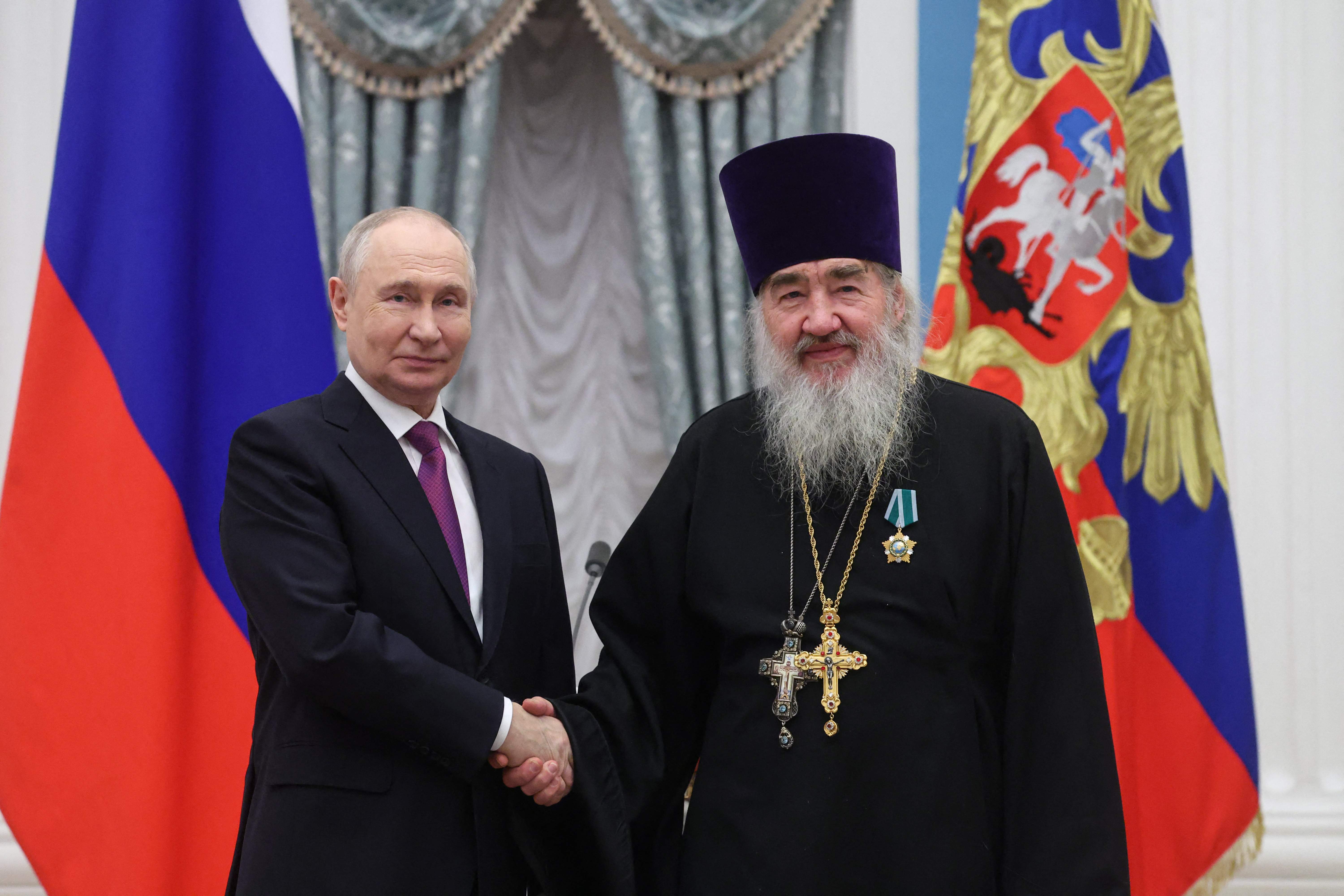
Standing inside the Kremlin's Catherine Hall and accepting a state decoration from Vladimir Putin while Russian missiles strike Ukrainian schools isn't an "apolitical" act. Yet that's the exact defense offered after Mitred Archpriest Vladimir Malchenko, rector of Toronto's Holy Trinity Russian Orthodox Cathedral, received Russia's Order of Friendship in November 2026.
The fallout was immediate. When a Toronto orthodox priest gets criticized for accepting a medal from Putin, most casual observers treat it like a simple clash over diaspora loyalty or bad optics. They're missing the bigger picture. This incident sits right at the intersection of state-sponsored soft power, religious diplomacy, and Canadian foreign policy standards.
What Actually Happened at the Kremlin Ceremony
Let's strip away the rumors and look at the documented timeline. During Russia's National Unity Day celebrations in Moscow in early November 2026, Vladimir Putin hosted a state awards ceremony at the Kremlin. Among the foreign recipients tapped for the Order of Friendship—an honor recognizing individuals who advance relations with the Russian state—was Father Vladimir Malchenko.
Malchenko has led the Holy Trinity Russian Orthodox Cathedral on Henry Street in downtown Toronto for decades, having joined the parish in 1974 and taken over full rector duties in 1986. When Putin pinned the medal on him, the Russian president praised Malchenko for helping parishioners in Canada preserve ties to their historical homeland.
Then came the speech that poured gasoline on the fire.
Addressing the room, Malchenko stated that Russians live "in all cities, in all countries of this world," before adding, "But we have one Fatherland. Russia, Holy Rus." He followed that by praying that God bless "our beloved Fatherland" with prosperity forever. Meanwhile, Putin used the very same ceremony to reference past conflicts where Russia drove invaders from what he termed Russia's "native lands"—classic Kremlin framing used to justify the invasion of Ukraine.
Back in Canada, the backlash hit fast. The Ukrainian Canadian Congress condemned the appearance as disgraceful, pointing out that Malchenko shook Putin's hand just two days after a Russian strike hit a school in Ukraine and killed 55 people.
Why the "Apolitical Church" Excuse Falls Apart
When pressed by reporters about why he accepted the award and didn't bring up the war in Ukraine with Putin, Malchenko insisted the ceremony "really wasn't time for a conversation". He framed the medal as recognition for "fulfilling our Christian duties in Canada," claiming his parish stays out of politics and never discusses the war.
Honestly, that explanation doesn't hold up under even mild scrutiny. Here's why:
- The Order of Friendship is a state instrument. It isn't a church blessing awarded by a bishop or a patriarch. It's a presidential decree issued by the head of the Russian Federation to reward alignment with Moscow's cultural and diplomatic reach.
- "Holy Rus" carries heavy geopolitical baggage. In modern Kremlin rhetoric, invoking "Holy Rus" as a singular Fatherland echoes the ideology promoted by Patriarch Kirill and Vladimir Putin to deny Ukrainian sovereignty and frame territorial expansion as a spiritual duty.
- Silence at a state propaganda event isn't neutrality. Accepting champagne and standing alongside Kremlin-backed figures—including the head of the breakaway region of Pridnestrovie—turns a religious leader into a visual endorsement for domestic Russian television.
I've watched diaspora institutions navigate homeland politics for years, and the line between cultural preservation and state co-optation is always thin. Once you step onto a podium hosted by a leader wanted under an International Criminal Court arrest warrant, claiming neutrality stops being credible.
The History Behind ROCOR and Toronto's Holy Trinity Parish
To understand why this stung so many people in Toronto's Eastern European communities, you have to look at the history of the church itself. Holy Trinity Cathedral belongs to the Russian Orthodox Church Outside of Russia (ROCOR).
ROCOR was originally founded by anti-Bolshevik émigrés who fled the Soviet Union after the 1917 revolution. For decades, the church defined itself by fierce independence from Moscow, refusing to submit to a church hierarchy compromised by Soviet intelligence and state control. Toronto's Holy Trinity parish grew out of that exact post-war refugee wave, welcoming displaced families from European camps in the late 1940s and early 1950s.
That changed in 2007, when ROCOR signed the Act of Canonical Communion, reuniting with the Moscow Patriarchate. While ROCOR retained administrative autonomy on paper, cultural and diplomatic ties to the Russian state steadily warmed.
In Toronto, those ties have been visible long before November 2026. When the parish celebrated its 75th anniversary in late 2024, the Acting Consul General of the Russian Federation in Toronto attended the banquet alongside clergy and parishioners. What started as spiritual reunion gradually blurred into cozy diplomatic appearances—culminating in Malchenko flying to Moscow during an active European war to accept a Kremlin medal.
The Contrast With Malchenko's Canadian Honors
What makes this situation even sharper is Malchenko's own history in Canada. In 2012, the Canadian Conservative government awarded him the Queen's Diamond Jubilee Medal for his community service.
Receiving honors from both Ottawa and Moscow puts a spotlight on an uncomfortable reality. Canada has spent billions supporting Ukraine, welcomed hundreds of thousands of displaced Ukrainians, and joined its G7 allies in condemning Putin's attacks on civilian infrastructure and cultural heritage. Having a prominent Toronto religious leader accept a friendship medal from the architect of those attacks creates a jarring contradiction right in Canada's largest city.
How Kremlin Soft Power Works Through Diaspora Institutions
Most people think Russian influence operations only happen through bot farms, hacked emails, or state media networks like RT. Those are the loud tools. The quiet tools—cultural centers, language schools, and diaspora parishes—often work much better because they wrap political messaging inside community pride.
Think about how the Kremlin uses awards like the Order of Friendship.
- Legitimization at home. Russian state media broadcasts footage of Western citizens—especially clergy, academics, and businesspeople from G7 countries—traveling to Moscow to thank Putin. It tells the domestic audience that Russia isn't isolated at all.
- Narrative laundering abroad. When a local priest speaks of a single "Fatherland" stretching across borders, it reinforces Moscow's claim that Russian-speaking communities worldwide belong to the Russkiy Mir (Russian World) sphere of influence.
- Chilling dissent inside communities. Community members who oppose the war in Ukraine often feel pressured to stay quiet when parish leadership signals alignment with the Kremlin.
As Ukrainian-Canadian outlet Homin noted in its coverage of the controversy, claiming to be above politics cannot excuse remaining silent when an entire nation's existence is under attack. Indifference in the face of state propaganda isn't passive—it actively helps the propagandist.
What Canadians and Parishioners Can Do Next
Global Affairs Canada stayed silent when pressed for comment on Malchenko's trip, and Canadian law doesn't bar private citizens from accepting foreign cultural awards unless specific sanctions are violated. Because government intervention is unlikely, accountability rests on civic transparency and community pressure.
If you're following this story—or belong to a diaspora faith community grappling with similar tensions—take three concrete steps:
- Verify church affiliations before donating. Understand the difference between independent Orthodox jurisdictions (such as the Orthodox Church of Ukraine or parishes under the Ecumenical Patriarchate) and bodies aligned with the Moscow Patriarchate.
- Demand financial and diplomatic transparency from local charities. Registered Canadian religious charities enjoy tax-exempt status. Community members have every right to ask boards whether parish facilities or events are hosting foreign consular officials.
- Contact your Member of Parliament regarding foreign interference rules. Canada's foreign influence registry and sanctions framework continue to evolve; letting elected officials know that state-awarded soft power matters keeps pressure on Ottawa to close diplomatic loopholes.
Religious freedom protects a priest's right to preach, pray, and travel. It doesn't shield anyone from public accountability when they stand under Kremlin chandeliers and bless the Fatherland of a regime at war.