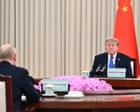
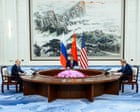
Everyone saw the six-second clip from Shenzhen, and almost everyone missed the actual point of it.
On November 19, 2026, cameras caught U.S. President Donald Trump reaching out his hand to Chinese President Xi Jinping as the two men stepped onto an escalator during the Asia-Pacific Economic Cooperation summit. Social media instantly split into two predictable camps. One side called it a warm display of personal diplomacy. The other mocked it as an awkward, physical fumble where Xi seemed to dodge a handshake by grabbing Trump's arm instead.
Both takes miss the real story. When two leaders of nuclear superpowers meet on the sidelines of an unprecedented three-way summit with Russian President Vladimir Putin, nothing on camera is accidental. That brief escalator ride wasn't just viral internet fodder—it was calculated political theater designed to project strength, manage domestic narratives, and soften the edges of a meeting that produced very few concrete breakthroughs.
Why the Shenzhen Escalator Clip Went Viral Immediately
To understand why the footage blew up within minutes, you have to look at how the two leaders arrived at that escalator. The setting was the APEC forum in Shenzhen, China. Moments earlier, Trump and Xi had been navigating high-stakes discussions involving trade balances, agricultural purchases, the war in Ukraine, energy transit through the Strait of Hormuz, and nuclear arms control alongside Putin.
As they approached the moving stairs, Trump stepped toward Xi, extended his hand, and appeared to say, "Take my hand". Xi didn't clasp his palm. Instead, he lightly held Trump's forearm as they rode upward side-by-side.
Watch the body language closely. It looks hesitant for a split second because their physical instincts collided. Trump treats diplomatic spaces like a stage where personal hospitality equals dominance. Offering a hand to guide another leader—even the host of the summit on his own turf—subtly flips the power dynamic. Xi, conversely, operates inside a political system where every millimeter of posture is scrutinized by state censors and party officials. Taking another man's hand on an escalator looks subordinate to a Chinese audience. Touching the forearm looks collegial and controlled.
The Russian state newspaper Izvestia quickly circulated the clip, and the White House's Rapid Response account amplified it on X with the caption, "ICYMI: @POTUS helps President Xi on the escalator at the APEC Summit". That single post tells you everything about how Washington wanted the moment framed.
How Both Governments Spun the Same Six Seconds
Diplomatic optics rarely tell a single truth. In Shenzhen, Washington and Beijing needed completely different things from the exact same footage.
For the White House, framing Trump as the guy "helping" Xi onto an escalator solved an immediate optics problem. Trump has a long, complicated history with escalators in the public eye. People still remember his famous 2015 campaign launch riding down the golden escalator at Trump Tower. More recently, he publicly complained after an escalator stalled while he and First Lady Melania Trump were stepping onto it at the United Nations General Assembly. By casting Trump as the steady, accommodating figure lending a hand to China's leader, his communications team turned a routine transit between summit rooms into proof of American vigor and personal rapport.
Beijing played a quieter, more deliberate game. Notice that Chinese state media didn't push the "helping hand" framing. Instead, Beijing leaned into the broader choreography of the week. When Trump landed in China on November 18, Xi greeted him personally at the airport—the first time Xi had received a foreign dignitary on the tarmac in more than a decade as China's leader. He even greeted Trump with a hug.
Why would Xi break a ten-year protocol streak for Trump? Because Beijing wanted to signal stability while masking deep structural friction. Just days earlier, tensions had flared over an espionage scandal involving Nvidia CEO Jensen Huang, which Trump notably avoided confronting Xi about during their public remarks. By keeping the visual mood warm—hugs on the tarmac, arm-in-arm rides on the escalator, smiling photo ops—both governments distracted cameras from what wasn't happening behind closed doors.
What Was Actually Happening Behind the Warmth
If you judge the November 2026 Shenzhen meetings solely by body language, you'd think Washington and Beijing were on the verge of a grand bargain. Look at the actual policy outcomes, though, and a very different picture emerges.
The escalator ride happened right around the first-ever trilateral sit-down between Trump, Xi, and Putin. Despite the historic nature of having all three nuclear-armed leaders in the same room, the talks delivered zero major breakthroughs.
- Nuclear Arms Control: The three powers agreed to pursue dialogue on reducing nuclear risks and preventing proliferation, yet they signed no binding treaties or verifiable caps.
- The War in Ukraine: Trump publicly urged Xi to help bring the Russia-Ukraine conflict to an end, claiming he could speak for both of them in wanting it resolved. Xi didn't even mention Ukraine in his official public remarks.
- Middle East Oil Routes: Trump stated that both he and Xi felt strongly about keeping oil flowing through the Strait of Hormuz amid disruptions from the Iran war. Again, Xi avoided endorsing Washington's framing in his own statements.
- Trade and Agriculture: Trump described their bilateral economic relationship as "fair" and balanced, noting he was pressing Beijing to buy more American farm goods. Still, no sweeping new trade pact materialized.
When leaders have thin policy deliverables to show their voters or party elites, personal chemistry becomes the deliverable. That's why Trump repeatedly called Putin and Xi his friends during the summit. Friendship is an easy headline. Compromising on semiconductor export controls, territorial claims, or wartime alliances is hard.
The Personal Diplomacy Trap in U.S.-China Relations
I've watched administrations of both parties fall into this exact pattern over the past twenty years, and it almost always ends the same way. American presidents love believing that personal rapport with a Chinese leader can unlock policy concessions that bureaucrats can't get.
George W. Bush hosted Jiang Zemin at his Crawford ranch. Barack Obama took a long, shirtsleeve walk with Xi at Sunnylands in California. Trump served Xi chocolate cake at Mar-a-Lago during his first term, hosted him in Beijing during their May 2026 summit, and welcomed him to Washington in September 2026 before flying to Shenzhen in November.
Every single time, the cameras capture moments of genuine human warmth. And every single time, the underlying geopolitical rivalry resumes the moment the plane takes off.
Think about why that happens. Trump operates on transactional, person-to-person trust. If he likes you and feels respected by you, he believes a deal is within reach. Xi Jinping doesn't operate that way. As General Secretary of the Chinese Communist Party, Xi views personal warmth as a tactical tool to buy time, lower the temperature, and reduce external pressure while China builds domestic resilience.
When Trump reached out his hand on that Shenzhen escalator, he was practicing his brand of tactile, peer-to-peer salesmanship. When Xi steadied himself on Trump's arm without gripping his hand, he was accepting the courtesy without surrendering an inch of ideological or strategic ground.
How to Read Diplomatic Body Language Without Getting Fooled
Next time a viral clip from an international summit floods your feed, don't buy the instant spin from either side's press shop. Political communications teams cut short clips specifically to trigger emotional reactions—either pride from supporters or ridicule from critics.
You can spot the difference between real diplomatic progress and stagecraft by running any viral summit moment through three quick filters:
- Check who released the angle first. In Shenzhen, Russian state media Izvestia and the White House Rapid Response team pushed the escalator footage immediately. When governments actively distribute candid-looking footage, they aren't embarrassed by it—they're using it as a messaging tool.
- Compare the two official readouts. Never rely on one leader's press conference. After the Shenzhen talks, Trump claimed alignment on ending the Ukraine war and securing the Strait of Hormuz, while Xi's statements omitted both topics and stuck to broad calls for UN Security Council cooperation. The gap between those two summaries tells you where the real disagreements lie.
- Look for written timelines, not adjectives. Words like "incredible," "historic," and "friend" cost nothing. Real breakthroughs come with tariff schedules, inspection mechanisms, dates for working-group meetings, or signed communiqués.
Strip away the memes, and the Shenzhen escalator ride makes complete sense. It was a fleeting, unscripted collision between two very different leadership styles trying to project stability while managing one of the most volatile rivalries on earth. Watch the hands if you want entertainment, but watch the policy readouts if you want the truth.