Four hundred and seventy million dollars. That's how much federal climate funding vanished from Native American tribes after the Department of Government Efficiency swept through agency budgets. Most headlines treat this like another routine Washington budget fight, a line-item trim in an endless spreadsheet war. They're wrong.
When you pull $470 million out of tribal climate programs, you aren't just canceling abstract carbon-offset studies or bureaucratic workshops. You're halting seawalls in eroding Alaskan villages, freezing clean-water infrastructure on desert reservations, and breaking federal trust obligations that predate the modern tax code. I've spent years tracking federal grant allocations across Indian Country, and the sheer speed of these clawbacks caught even veteran tribal administrators off guard.
Why the $470 Million Number Hurts Twice as Hard
Federal grants don't work the same way for sovereign tribal nations as they do for state governments or private contractors. States have massive tax bases, municipal bond markets, and rainy-day funds to cushion a sudden federal freeze. Most tribes don't.
Because reservation land is held in federal trust, tribes generally can't levy property taxes to fund basic infrastructure. They rely directly on federal appropriations—specifically through agencies like the Environmental Protection Agency, the Department of the Interior, and the Department of Energy—to build things every other American town takes for granted. When DOGE targeted climate and environmental justice grants created under the Inflation Reduction Act and the Bipartisan Infrastructure Law, tribal nations took a disproportionate hit.
Here's what actually got frozen or terminated in that $470 million sweep:
- Community-driven relocation grants meant to move entire coastal communities away from collapsing permafrost and rising tides.
- Tribal solar microgrids designed to keep clinics and elders' homes powered during extreme heatwaves and winter storms.
- Water resilience and drought-mitigation projects across the Colorado River Basin and the Northern Plains.
- Forestry and wildfire prevention funding that pays for Indigenous cultural burning and brush clearance before summer fire seasons hit.
Notice a pattern? Almost none of this money was sitting in a slush fund. Much of it was already obligated, meaning tribes had spent months—sometimes years—hiring engineers, drafting environmental assessments, and matching funds to get shovels in the ground. Pulling the plug mid-stream doesn't save taxpayers money; it wastes the millions already spent getting those projects to the starting line.
The Myth of "Wasteful Climate Spending" on Tribal Lands
If you listen to the rhetoric justifying DOGE's cuts, you'd think federal agencies were handing out blank checks for green-energy vanity projects. That narrative falls apart the second you look at the actual geography of Indian Country.
Tribal nations sit on some of the most climate-vulnerable land in North America. Not by accident, either. Historical forced relocations pushed Indigenous peoples onto marginal, arid, or flood-prone territories that nobody else wanted in the 1800s. Today, those exact landscapes are ground zero for extreme weather.
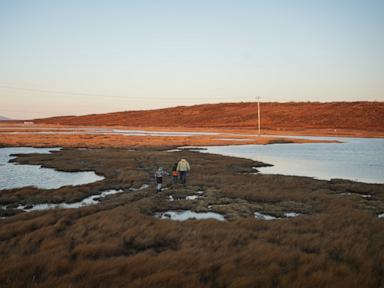
Take western Alaska. Villages like Newtok and Shishmaref aren't debating climate models; they're watching their schools, airstrips, and fuel tanks fall into the Bering Sea as permafrost thaws beneath them. Moving a single village to higher ground costs upwards of $100 million. Without federal grants, there is zero financial mechanism for a community of 350 subsistence hunters and fishers to relocate itself.
Or look at the Navajo Nation, where roughly a third of households still lack running water or reliable electricity. Federal climate and clean-energy grants weren't funding luxury upgrades there. They were paying for off-grid solar systems and water-hauling infrastructure so families wouldn't have to drive two hours for clean drinking water. Calling that "waste" ignores basic human survival.
How Federal Trust Responsibility Clashes With DOGE's Mandate
There's a legal dimension here that almost every mainstream news outlet glosses over. The United States government has a legally binding federal trust responsibility toward federally recognized tribes. This isn't charity, and it isn't a diversity initiative. It's a contractual obligation rooted in hundreds of treaties, Supreme Court rulings, and federal statutes where tribes ceded hundreds of millions of acres of land in exchange for federal protection, healthcare, education, and infrastructure support.
You can't just treat treaty-backed obligations like an underperforming tech startup.
When DOGE officials recommended terminating EPA Environmental and Climate Justice block grants and clawing back unobligated Inflation Reduction Act funds, they treated tribal recipients identically to non-profit advocacy groups. Legal scholars specializing in federal Indian law have pointed out that lumping sovereign governments in with third-party NGOs invites immediate federal litigation. Tribes have already begun challenging these cancellations in court, arguing that arbitrary contract terminations violate both the Administrative Procedure Act and the government's fiduciary duty to protect tribal lands and resources.
Honestly, the legal battles alone could end up costing the federal government tens of millions in court fees and delayed settlements, eating directly into whatever savings DOGE claimed on paper.
What Happens on the Ground When a Grant Vanishes Overnight
People outside the grant world tend to think canceling a federal award just means a project gets postponed until the next administration. In reality, it triggers a chain reaction that sets communities back a decade.
First, tribes lose technical staff. Rural reservations already struggle to recruit civil engineers, hydrologists, and grant compliance officers. When funding dries up without warning, those specialists leave for stable jobs in metro areas. Rebuilding that institutional knowledge takes years.
Second, contractors walk away. Construction windows in places like Alaska, Montana, and the Dakotas are brutally short—sometimes only three or four months before the ground freezes solid. If federal funds are frozen in spring, you miss the entire summer building season. Material prices climb, vendor bids expire, and by the time money is restored, the original budget no longer covers the work.
Third, private capital dries up. Many tribal clean-energy projects use federal grants as seed money to attract private tax-equity investors. When the federal government proves to be an unreliable partner that cancels signed agreements mid-project, private lenders back out or jack up interest rates to cover the political risk.
Real Strategies Tribes Are Using to Survive the Funding Freeze
Tribal leaders aren't sitting around waiting for Washington to change its mind. Across the country, tribal councils and inter-tribal organizations are shifting tactics fast to protect their communities and keep critical infrastructure moving.
Auditing obligated vs. unobligated balances immediately. Under federal appropriations law, there's a massive legal difference between funds merely announced and funds formally obligated through a signed grant agreement. Tribal legal teams are separating their grants into strict tiers—focusing legal challenges on signed, obligated contracts where unilateral termination violates federal procurement rules.
Forming regional tribal consortia. Individual tribes applying alone often get drowned out in federal disputes. Groups like the National Congress of American Indians (NCAI), the Affiliated Tribes of Northwest Indians, and the Alaska Federation of Natives are pooling legal resources and presenting unified regional damage assessments to congressional appropriators.
Pivoting toward state-level and philanthropic bridge funding. While private foundations can't replace $470 million in federal infrastructure money, organizations like the NDN Collective and regional climate funds have stepped in with rapid-response bridge grants to cover immediate payroll for tribal environmental staff so projects don't completely collapse during litigation.
Documenting economic damages for congressional oversight. Even fiscal hawks in Congress pay attention when canceled grants hurt local non-tribal economies. Tribal nations are major regional employers, and the engineering firms, concrete suppliers, and solar installers hired for reservation projects are mostly off-reservation American businesses. Quantifying those lost local jobs gives bipartisan congressional delegations concrete ammunition to push back against executive-branch clawbacks.
If you're working in tribal administration, environmental policy, or infrastructure planning right now, stop assuming signed federal grant agreements are immune from sudden review. Pull every active federal award notice, verify the exact obligation date and statutory authority behind the funding stream, and document every dollar already committed to third-party vendors so your legal team has airtight evidence ready if a termination notice hits your inbox.