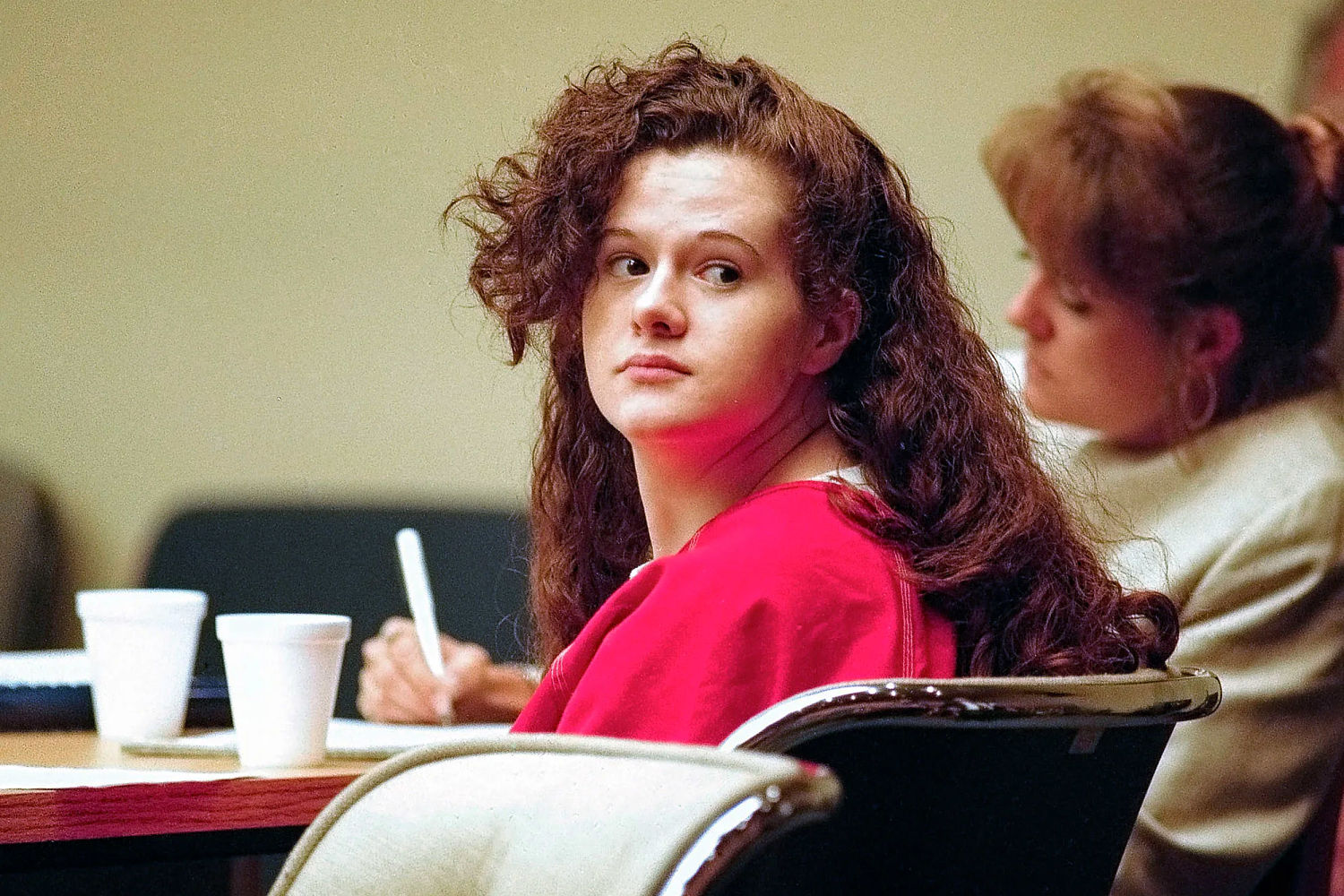
Surviving your own scheduled death sounds like something out of a dark thriller, yet for Christa Pike, that psychological limbo became a literal waking reality. When headlines broke that Christa Pike says there is "pain in my mind and in my soul" one month after a halted execution attempt, most public reaction split instantly down predictable lines. People either pointed back to the brutal 1995 murder that put her on Tennessee's death row, or they argued over lethal injection protocols. Almost nobody stopped to examine what actually happens to a human brain when the state sets an expiration date, prepares the gurney, and then pulls the plug at the last second.
It's messy. And honestly, it's one of the least understood corners of the American criminal justice system.
To understand why Pike's statement carries so much weight—regardless of where you stand on capital punishment—you have to look at the intersection of severe legal delays, botanical trauma, and the specific history of Tennessee's death penalty machinery. You don't need to excuse a horrific crime to recognize that a botched or aborted execution creates a bizarre constitutional and psychological twilight zone.
The Context Behind Christa Pike's Statement
Christa Pike was just 18 years old in January 1995 when she murdered 19-year-old Colleen Slemmer in Knoxville, Tennessee. Both were students at a Job Corps center. The details of the crime were undeniably gruesome, involving hours of torture before Slemmer was killed. A jury convicted Pike of first-degree murder in 1996, making her the youngest woman sentenced to death in the United States during the modern era of capital punishment. For decades, she remained the only woman on Tennessee's death row, housed largely in solitary confinement at the Debra K. Johnson Rehabilitation Center in Nashville.
Fast-forward nearly thirty years. The 18-year-old teenager is now a middle-aged woman who has spent more than half her life inside a cell measuring roughly the size of a parking space.
When an execution date approaches, the prison system shifts into what officials call "death watch." This isn't just a figure of speech. The inmate is moved to a specialized holding cell close to the execution chamber. Every movement is logged. Personal belongings are stripped away. Meals are monitored, last visits are scheduled down to the minute, and the person is measured for burial clothes.
Then, imagine going through that entire psychological dismantling—preparing your mind for the exact hour your heart will stop—only to have a court stay, a protocol failure, or a sudden legal intervention halt the process. One month later, Pike described the aftermath simply as "pain in my mind and in my soul." That isn't just poetic phrasing from a defense attorney's press release. Clinicians who study death row inmates have a specific name for this phenomenon.
What Happens to the Brain During "Death Watch"
Psychologists call it Death Row Syndrome, though the American Psychiatric Association doesn't list it as a formal standalone diagnosis in the DSM-5. Instead, it's recognized by forensic psychiatrists as a severe cluster of trauma responses triggered by prolonged solitary confinement combined with the existential dread of an execution date.
Think about how your nervous system handles acute danger. If a car swerves into your lane, adrenaline floods your bloodstream, your heart rate spikes, and once you avoid the crash, your body gradually returns to baseline. Now imagine that adrenaline surge stretched across weeks, with a ticking clock on the wall telling you exactly when the crash will happen.
When an execution is called off or delayed at the eleventh hour, the brain doesn't just sigh in relief and go back to normal. Instead, prisoners often experience severe dissociative episodes, acute post-traumatic stress, and profound cognitive decline. Dr. Stuart Grassian, a former Harvard Medical School psychiatrist who has spent decades evaluating inmates in extreme isolation, documented how sensory deprivation combined with impending execution causes perceptual distortions, panic attacks, and a fractured sense of self.
Here is what actually happens inside that 72-hour countdown window before a halt occurs:
- Total sensory stripping: Inmates lose access to standard personal items, books, and normal daily routines to prevent self-harm before the state takes their life.
- Forced finality: Saying goodbye to family members through glass or in a final contact visit forces the brain to process grief and death while the body is still fully alive.
- The physiological crash: When a stay or halt arrives, the sudden drop in cortisol and adrenaline leaves the nervous system completely short-circuited, resulting in lingering somatic and emotional pain.
You can't simply press "rewind" on that experience. Even prisoners who actively fight for stays of execution report feeling hollowed out afterward, trapped between the terror of dying and the exhaustion of surviving only to face the exact same countdown months or years later.
Tennessee's Ongoing Execution Protocol Troubles
Pike's ordeal didn't happen in a vacuum. Tennessee has struggled publicly and repeatedly with its lethal injection procedures, turning what the state promises will be a clinical, orderly legal process into a series of high-profile stumbles.
In 2022, Governor Bill Lee halted all executions in Tennessee and ordered an independent investigation after discovering that the Department of Correction had failed to test its lethal injection drugs properly for bacterial endotoxins. Former U.S. Attorney Ed Stanton led that review, and the resulting report was damning. It revealed widespread administrative breakdowns, ignored protocols, and a lack of basic oversight inside the prison system's execution team.
That wasn't an isolated hiccup. Across the country, states have scrambled to source execution drugs like pentobarbital and midazolam as major pharmaceutical companies refuse to let their products be used in capital punishment. When states rush to rewrite protocols, substitute untested drug combinations, or struggle to find medical personnel willing to set intravenous lines, the risk of a botched or aborted execution skyrockets.
According to data tracked by the Death Penalty Information Center (DPIC), 2022 alone saw the highest percentage of botched or visibly problematic execution attempts in modern U.S. history—roughly 35% of all attempts that year involved significant delays, difficulties finding veins, or last-minute halts. When you put human beings through repeated cycles of preparation and cancellation because the state can't get its own paperwork or pharmacology straight, you're creating a secondary punishment that the courts never actually sentenced them to endure.
The Legal Debate Over "Lingering" on Death Row
Does surviving a failed or halted execution violate the Eighth Amendment's ban on cruel and unusual punishment? Legal scholars have fought over this exact question for decades, and the U.S. Supreme Court has largely avoided giving a definitive answer.
Back in 1947, the Supreme Court heard Louisiana ex rel. Francis v. Resweber. Willie Francis, a Black teenager, was placed in Louisiana's electric chair, and when the switch was thrown, the chair malfunctioned. He survived, screaming, "Take it off! Let me breathe!" His lawyers argued that strapping him into the chair a second time would constitute double jeopardy and cruel and unusual punishment. In a narrow 5-4 decision, the Court ruled against him, saying that an "unforeseeable accident" didn't make a second attempt unconstitutional.
Nearly eighty years later, that precedent still casts a massive shadow over modern cases like Christa Pike's.
Critics of the death penalty argue that modern delays aren't "unforeseeable accidents"—they are the predictable result of broken state protocols and decades-long appellate backlogs. Justice Stephen Breyer famously wrote in his 2015 dissent in Glossip v. Gross that excessive delays and repeated execution dates subject prisoners to "unconscionable" psychological torture, undermining any legitimate penological purpose like deterrence or retribution.
On the other side of the aisle, prosecutors and victims' rights advocates point out a hard truth. Most delays on death row happen because defense attorneys file endless appeals, motions, and constitutional challenges to keep their clients alive. From their perspective, you can't spend thirty years filing motions to stop an execution and then complain that the waiting period is cruel.
Both arguments carry real weight, which is why these cases tear communities apart. Colleen Slemmer's family has waited over three decades for the sentence handed down by a Tennessee jury to be carried out. For them, every delay, every botched protocol, and every new headline focusing on Pike's internal pain feels like another slap in the face that erases their daughter's memory.
Why Age and Mental Illness Complicate Pike's Case
There's another layer to Christa Pike's story that sets her apart from almost everyone else on death row in America. She was 18 years and 4 months old at the time of the murder.
If she had committed the exact same crime five months earlier, she wouldn't be on death row at all. In 2005, the U.S. Supreme Court ruled in Roper v. Simmons that executing anyone who was under 18 at the time of their offense violates the Eighth Amendment. The Court relied heavily on neuroscience showing that adolescent brains lack fully developed prefrontal cortexes—the region responsible for impulse control, long-term planning, and emotional regulation.
Brain science doesn't magically flip a switch on a person's 18th birthday. Neuroscientists at institutions like Temple University and Harvard have demonstrated that the human brain continues maturing well into a person's mid-twenties. Pike's legal team has argued for years that she suffered from severe, untreated bipolar disorder, post-traumatic stress disorder, and extensive childhood abuse before she ever walked into those woods in Knoxville in 1995.
None of that changes what happened to Colleen Slemmer. A young woman lost her life in an unimaginably brutal way, and Pike was convicted beyond a reasonable doubt. Yet when we look at why Pike's post-halt statement resonates so strongly in legal circles, it's because her case sits right on the fault line of evolving standards of decency:
- The age cutoff: She missed the juvenile death penalty ban by mere months.
- Extreme isolation: Women on death row often face de facto solitary confinement simply because prisons lack dedicated units for a single female condemned inmate.
- Procedural failure: When the state fails to execute a sentence cleanly, the human toll becomes impossible to ignore.
How to Follow Capital Punishment Cases Without Getting Lost in Sensationalism
When high-profile cases like Christa Pike's hit the news cycle, social media feeds immediately fill up with outrage, partisan talking points, and half-baked legal takes. Most coverage reduces thirty years of complex litigation into a single emotional quote. If you want to actually understand what's happening in Tennessee and across the broader U.S. justice system, look past the viral headlines and track the primary sources directly.
Start by checking the actual court dockets rather than relying on secondary news summaries. Organizations like the Death Penalty Information Center (DPIC) maintain non-partisan, searchable databases tracking every execution date, stay, protocol audit, and clemency petition in the country. If a headline claims an execution failed or was halted, DPIC's state-by-state logs will tell you immediately whether it was due to a federal court stay, a governor's reprieve, or an administrative breakdown inside the prison.
Pay close attention to state Inspector General reports and independent protocol reviews, like Ed Stanton's audit in Tennessee. These public records show the operational reality behind closed prison doors—including supply chain issues with lethal injection drugs and staff training failures—that rarely make it into short cable news segments.
Read both the defense filings and the state Attorney General's responses. Appellate briefs in capital cases are public record, and reading them side-by-side is the fastest way to strip away media bias. You'll see the exact constitutional arguments being tested in real time, alongside the state's duty to uphold jury verdicts and bring finality to victims' families.


