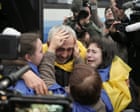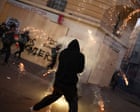
Riot police standing outside Warsaw's top court while a Polish president rushes back from an overseas trip to cry "coup" isn't just another messy political week in Central Europe. It's the collision of a decade-long institutional wreck with a brutal question no democracy has cleanly solved: how do you fix a captured court without breaking the rules yourself?
If you've only skimmed the headlines about Prime Minister Donald Tusk defending his overhaul of Poland's Constitutional Tribunal, the story sounds like standard partisan warfare. One side says they're restoring the rule of law. The other side screams about an illegal takeover. Protesters wave flags outside the building, riot gear comes out, and Brussels issues a statement saying it's watching closely.
Look closer, though. What's happening in Warsaw right now is a live stress test for every democracy trying to unwind years of institutional capture.
Why Poland's Constitutional Court Became a Battlefield
You can't make sense of Tusk's defense without looking at how broken the Constitutional Tribunal actually became. Between 2015 and 2023, the nationalist Law and Justice party (PiS) reshaped Poland's judiciary, starting with the Constitutional Tribunal. Back in 2015, parliament ignored judges lawfully appointed under the previous administration and installed loyalists in their place—a move that triggered years of domestic gridlock and led the European Union to freeze billions of euros in funds.
By the time Tusk returned to power, the court wasn't functioning as an independent referee. It had effectively stalled. Tusk's government stopped publishing the tribunal's rulings in the official journal, arguing the body was illegitimate in the form PiS had left it. Meanwhile, cases piled up—more than 1,100 pending files, with roughly 700 sitting completely unprocessed, and even the court's 2027 budget left unallocated.
That's the context behind Tusk's blunt televised defense. He flatly stated that the tribunal as shaped by PiS "was not a genuine court" and compared the opposition's outrage to a purse snatcher crying victim when the police finally take the bag back. Whether you love his rhetoric or hate it, he's naming the core dilemma. If an institution has been hollowed out from the inside, waiting politely for normal procedures to repair it can take a decade—if it ever works at all.
How the Standoff Boiled Over
Things went from slow-motion paralysis to a full-blown crisis when the battle moved inside the building. Eight judges backed by the current parliamentary majority moved to suspend the tribunal's PiS-era chief justice, Bogdan Święczkowski, along with his deputy. Judge Anna Korwin-Piotrowska stepped up to take over leadership of the court, arguing that without clearing the logjam and establishing a working quorum, the tribunal couldn't even pass its own budget or clear its massive backlog.
The reaction was immediate and fierce.
- Riot police deployed around the perimeter after requests for protection from the prosecutor general and a tribunal judge, leading to tense standoffs with demonstrators and several detentions when protesters threw objects and tried to breach the fence.
- President Karol Nawrocki cut short a trip to Senegal and flew straight back to Warsaw, declaring that Poland's constitutional order had been violated and refusing to recognize the newly appointed judges he hasn't sworn in.
- Święczkowski rejected the suspension outright, branding the eight judges "usurpers" while rallying protesters outside the courthouse gates.
- Criminal charges entered the mix, with the restructured court moving to strip Święczkowski of his immunity over the past purchase of the Hermes spyware system during his time as national prosecutor—a move the European Court of Human Rights declined to block on an emergency basis.
It's messy. Really messy. And if you're trying to figure out who holds the legal high ground, even Poland's top legal minds aren't marching in lockstep.
The Hard Truth Both Sides Avoid
Here's where most coverage gets lazy. Partisan commentators want you to believe this is a simple binary choice between heroic rule-of-law defenders and authoritarian wreckers. Real life isn't that tidy.
On one side, four former presidents of the Constitutional Tribunal—Marek Safjan, Jerzy Stępień, Bohdan Zdziennicki, and Andrzej Zoll—backed Korwin-Piotrowska's move as a necessary step to rescue a paralyzed state institution. Former president Lech Wałęsa also threw his weight behind Tusk. From their vantage point, letting a compromised bench block reforms and hoard over a thousand unresolved cases is its own ongoing violation of the constitution.
On the other side, respected constitutional scholars who are no fans of PiS have raised serious alarms. University of Warsaw legal scholar Ryszard J. Piotrowski called the suspension and physical takeover of the tribunal's building a clear violation of the constitution and the law. University of Gdańsk scholar Piotr Uziębło similarly questioned whether internal violations inside the court actually give anyone legal authority to suspend its leadership this way.
That's the uncomfortable catch-22 at the heart of Poland's overhaul. You can't pass clean legislative fixes when a hostile president—first Andrzej Duda, and now Nawrocki—holds the veto pen and refuses to swear in new judges. Yet if you use executive muscle, parliamentary resolutions, and police cordons to bypass that blockade, you risk normalizing the exact kind of hardball tactics you promised to end.
What About Brussels and the Information War?
Outside Poland, the European Commission has kept its tone cautious, saying it's following events closely. After years of clashing with Warsaw over judicial independence, Brussels knows how fragile this transition is. Pushing Tusk too hard risks handing ammunition to nationalist hardliners ahead of Poland's next parliamentary election; giving him a blank check invites accusations of double standards.
Meanwhile, the online reaction has turned toxic fast. Digital monitoring group Res Futura noted that social media responses following Tusk's address were overwhelmingly hostile, amplified by coordinated networks and foreign accounts pushing a "coup d'état" narrative—something Tusk himself pointed to when warning about Russian interference exploiting Poland's internal divisions. Even left-wing opposition voices like Adrian Zandberg have warned that the escalating standoff could paralyze the state further and spark real street violence if leaders don't find a cross-party constitutional reset.
How to Read What Happens Next in Warsaw
If you're watching this story unfold over the coming weeks, don't get distracted by daily shouting matches between the prime minister's office and the presidential palace. Track these concrete signals instead to see who actually wins control of the court:
- Publication in the official journal (Dziennik Ustaw): Watch which rulings the government formally publishes. In Poland, a court ruling without official publication carries no practical legal weight, making this the real lever of state power.
- Quorum and budget votes: Keep an eye on whether Korwin-Piotrowska's eight-judge bloc successfully passes the tribunal's 2027 budget and begins issuing rulings on the 1,100-case backlog without physical disruption.
- European court responses: Follow rulings from the European Court of Human Rights and the Court of Justice of the European Union. Their willingness—or refusal—to validate petitions filed by suspended PiS-era judges will determine whether Tusk's overhaul holds international legitimacy.
- Presidential swear-ins and vetoes: Watch whether Nawrocki continues refusing to administer oaths to parliament's judicial appointees or blocks related judicial bills, locking Poland into dual legal realities until the next parliamentary vote.
Pay attention to those four benchmarks, and you'll know immediately whether Poland is actually escaping its decade-long constitutional trap—or simply trading one era of judicial warfare for another.