Two hundred and thirty-seven years. That's how long the U.S. House of Representatives existed before a major party nominated a Black lawmaker to hold its top gavel.
On November 18, 2026, House Democrats gathered behind closed doors on Capitol Hill and voted 251–11 to nominate Representative Hakeem Jeffries of New York as the next Speaker of the House. When the 120th Congress convenes on January 3, 2027, he's widely expected to win the full floor vote and make American history. If you found value in this piece, you should read: this related article.
Most headlines stop right there. They treat the vote like a simple victory lap after the November 2026 midterm elections handed Democrats a decisive House majority.
That's a mistake. If you only look at the historic milestone, you miss the brutal political chess game happening underneath it—and the massive headache waiting for Jeffries the second he takes the podium. For another look on this story, see the latest update from Associated Press.
The Secret Ballot Trick Nobody Talked About
Here's something casual political observers completely overlooked. Jeffries didn't have an opponent. Nobody stepped up to challenge him.
Normally, when a party leader runs unopposed in a caucus election, they just take a quick voice vote and call it a day. Jeffries did the exact opposite. He explicitly requested a formal, recorded secret ballot.
Why force a secret ballot when you know you're going to win?
Because Jeffries learned directly from former Speaker Nancy Pelosi, who pulled a nearly identical move in 2018 when incoming freshmen threatened a rebellion. By forcing an early, formal vote right after the midterms, Jeffries locked in his support before progressive skeptics could organize around a rival candidate. Look across the Capitol at the Senate, where Majority Leader Chuck Schumer found himself fending off a formal leadership challenge from Senator Chris Van Hollen of Maryland. Jeffries killed that exact scenario in the House before it could even breathe.
The secret ballot also gave nervous lawmakers cover. Dissenters could register their frustration privately without turning the caucus room into a televised shouting match. Out of 262 ballots cast, with two members absent, 251 went to Jeffries and 11 went against him.
Who Were the 11 Holdouts and What Do They Want
Even with a secret ballot, seven of those 11 "no" votes immediately went public. They didn't hide.
Seven incoming progressive members-elect released a joint statement explaining why they withheld their support:
- Darializa Avila Chevalier of New York
- Adam Hamawy of New Jersey
- Frederick Haynes of Texas
- Melat Kiros of Colorado
- Donavan McKinney of Michigan
- Chris Rabb of Pennsylvania
- Claire Valdez of New York
The identities of the remaining four dissenters haven't been confirmed.
Don't confuse these 11 votes with the chaotic, 15-ballot meltdown House Republicans suffered in 2023 when Kevin McCarthy struggled to claim the gavel. The math isn't remotely similar. Following the 2026 blue wave, Democrats secured well over 250 seats—far above the 218 threshold typically needed to elect a speaker on the House floor. Jeffries has a massive cushion. Even if all 11 holdouts voted against him on January 3, he'd still cruise to victory with dozens of votes to spare.
Still, those seven incoming lawmakers exposed a real nerve inside the party. They told reporters they voted "no" because their constituents demanded aggressive movement on policies like Medicare for All, the war in Gaza, and curbing corporate and foreign influence in elections. Just days earlier, protesters had actually heckled Jeffries during a Democratic conference in Denver.
As New York Representative Alexandria Ocasio-Cortez put it at the Capitol, nobody was questioning who the candidate was—there was only one person in the race. People were asking what his leadership actually promises.
A Generational Overhaul at the Top
When Pelosi, Steny Hoyer, and James Clyburn stepped aside from House leadership after the 2022 elections, they cleared the deck for an entirely new generation. Four years later, that transition is finally taking power in the majority.
Jeffries isn't walking onto the House floor alone. The leadership team elected alongside him on November 18 breaks multiple historical barriers at once:
- Katherine Clark of Massachusetts won unopposed for House Majority Leader, putting her on track to become the first woman to hold that specific post.
- Pete Aguilar of California won unopposed for Majority Whip, making him the first Latino lawmaker to serve in that role.
- Joe Neguse of Colorado, the 42-year-old son of Eritrean immigrants, was elected Assistant Speaker—the fourth-highest position in the chamber and the youngest member of senior leadership.
- Ted Lieu of California won the vote to chair the House Democratic Caucus.
- Lauren Underwood of Illinois became the first Black woman elected Vice Chair of the Democratic Caucus, making her the highest-ranking Black woman in Congress.
Compare that lineup to the leadership table from just ten years ago. It's a night-and-day shift in age, background, and regional representation.
Winning the Gavel Is the Easy Part
Let's be honest about what happens next. Getting nominated by your own caucus is basically a warm-up exercise compared to governing in 2027.
Once Jeffries takes the oath as Speaker, he immediately becomes second in the presidential line of succession, right behind Vice President JD Vance. He'll control which bills reach the House floor, who sits on the powerful Rules Committee, and how congressional oversight operates.
He'll also be staring straight at a Republican White House.
Even with Democrats holding a strong House majority and a 56–44 advantage in the Senate after Mary Peltola's victory in Alaska, President Donald Trump still holds the veto pen. Big progressive priorities—whether on healthcare, voting rights, or economic reform—aren't getting signed into law without brutal negotiations or compromises that will infuriate the party's left flank.
At the same time, Democratic voters didn't hand the party Congress just to watch endless floor speeches. Incoming committee chairs like Representative Robert Garcia at House Oversight are already preparing aggressive investigations into administration officials and business dealings. Meanwhile, freshman members from swing districts need tangible cost-of-living wins before the 2028 presidential cycle kicks into gear.
Jeffries spent his career in Brooklyn and Washington building a reputation as a disciplined, message-focused pragmatist. During his post-vote press conference, he kept repeating a familiar line—that his job is to fight extremism, not fellow Democrats, and to deliver for small-town, rural, urban, and Black and brown communities alike.
That sounds great at a podium. Keeping 250-plus Democrats united when the first tough spending bill or foreign policy vote hits the floor is a completely different sport.
How to Track the Speakership Vote on January 3
If you want to follow how this actually plays out beyond the cable news soundbites, pay attention to three specific moments over the next few weeks:
- Watch the Rules Committee appointments in December. The Speaker handpicks the majority members of the House Rules Committee. Whether Jeffries gives seats to progressive members will tell you immediately if his private talks with those seven holdouts led to real concessions.
- Tune in at noon on January 3, 2027. The Constitution requires the entire House to elect the Speaker by roll-call vote on the opening day of the new Congress. Watch whether the seven dissenters switch to "yes" or vote "present" on the public record.
- Read the opening rules package. Before the House passes a single bill in 2027, it has to adopt its internal operating rules. Look for changes to the "motion to vacate"—the mechanism used to oust speakers in recent years—to see how secure Jeffries really is in the chair.
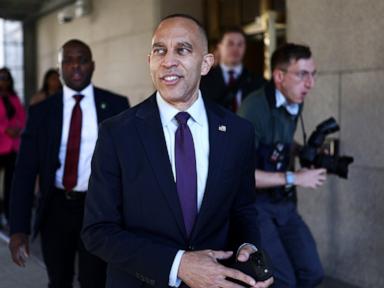
Hakeem Jeffries wins House Speaker nomination
This broadcast clip captures the immediate announcement of Hakeem Jeffries' historic nomination by House Democrats and sets up the upcoming January floor vote.