Three oil tankers took hits around the Strait of Hormuz on a single Saturday, and Tehran chose that exact moment to broadcast footage of an underground dual-missile launcher. Most headlines treat those events like isolated flare-ups in an endless Middle East news cycle. They aren't.
If you look closely at what happened on November 21, 2026, you're seeing a calculated squeeze designed to break a months-long American naval blockade without triggering an all-out regional collapse. Wire reports from that weekend stitched together three separate threads—tanker attacks in the Persian Gulf, a subterranean hardware reveal by the Islamic Revolutionary Guard Corps, and a deadly Israeli airstrike on a food truck in Gaza City. Reading them side by side exposes how military signaling, energy chokepoints, and stalled ceasefire talks are colliding right now. If you liked this article, you should read: this related article.
Why Iran Hit Three Tankers Around the Strait of Hormuz
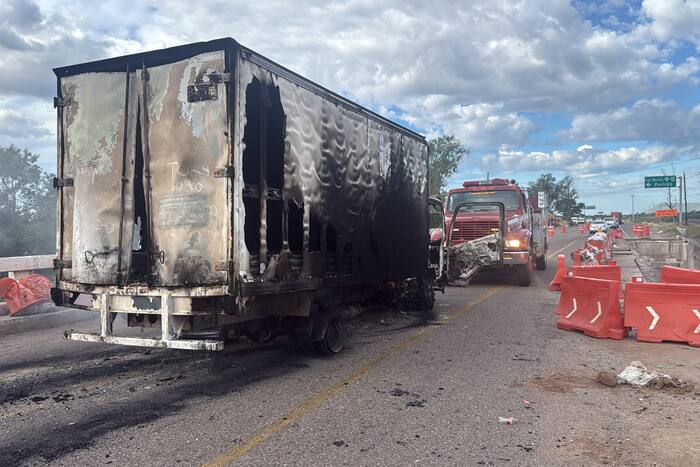
Naval mines and projectiles don't appear in the world's most critical oil corridor by accident. Early on November 21, two commercial oil tankers exiting the Persian Gulf through the Strait of Hormuz were struck separately by projectiles. According to the United Kingdom Maritime Trade Operations Center (UKMTO), one vessel took damage to its stern while the other was hit directly in the engine room. Neither strike caused crew casualties, which is telling in itself.
Hours later, before noon, a third oil tanker struck a naval mine east of the strait and caught fire, according to a statement from the Iranian Navy carried by state media. Tehran's broadcasts described the overnight push as the military's most "intense and varied" operation yet to halt vessels and frustrate U.S. Navy escort missions through the narrows. For another look on this event, check out the latest update from NPR.
Why target the engine room and stern instead of sinking ships outright? Because the goal isn't mass casualties—it's insurance panic and energy inflation.
Iran has been squeezed by a U.S. naval blockade on its ports that first launched on April 13, 2026, briefly paused in June during a tentative diplomatic understanding, and snapped back into place on July 14 after talks fell apart. By late November, that blockade had passed the 130-day mark. Cut off from exporting crude oil by sea, Iran's domestic economy has absorbed punishing inflation—hovering near 70% by autumn—alongside severe currency depreciation and supply bottlenecks.
- Strangling export revenue: American forces, backed by maritime monitoring via the Joint Maritime Information Center, even expanded enforcement in mid-November to target vessels receiving Iranian oil through ship-to-ship transfers.
- Raising the political price for Washington: Tehran knows it can't defeat the U.S. Fifth Fleet in a conventional naval battle. Instead, every damaged tanker drives up global crude prices and forces Western consumers to feel the sting of Washington's blockade.
- Testing U.S. escort credibility: By hitting ships while American forces actively patrol the corridor, Iran is trying to prove that a U.S. Navy escort doesn't guarantee safe passage.
When you track maritime security incidents in the Gulf, you learn quickly that precision strikes on propulsion systems send an unmistakable message to shipping conglomerates. Lloyd's insurers and tanker operators don't wait for a ship to sink before rerouting fleets or spiking war-risk premiums.
Inside the Underground Dual-Missile Launcher Reveal
While smoke rose near the Gulf of Oman, Iranian state television aired carefully choreographed footage from an undisclosed underground "missile city". The star of the broadcast was a new launcher operated by the Revolutionary Guard capable of firing two liquid-fueled missiles simultaneously.
On the surface, military parades and cave videos look like routine propaganda. Look at the propulsion specs, though, and the technical shift becomes clear.
Previously, Iran relied on dual launchers designed for solid-fuel missiles. Solid-fuel rockets are great for rapid "shoot-and-scoot" deployment because they don't need fueling right before launch. Liquid-fuel systems work differently. They deliver higher specific impulse—meaning greater efficiency and payload capacity—and allow operators to throttle or adjust a missile's speed and trajectory mid-flight. Pairing two liquid-fueled missiles on a single underground rail system signals that Tehran has solved complex fueling and containment hurdles inside hardened subterranean bunkers.
Brig. Gen. Seyyed Majid Mousavi, commander of the Revolutionary Guard's Aerospace Force, didn't mince words during the broadcast. He claimed Iran's strike capabilities had expanded substantially and warned that the military had integrated "surprises" into its combat structure.
The timing had a specific audience in Washington. U.S. officials had previously claimed that American strikes degraded or destroyed major components of Iran's missile infrastructure. Showing off intact, upgraded launchers buried deep under mountain rock was Tehran's way of saying those claims were premature—and warning that any fresh wave of U.S. airstrikes would meet immediate retaliation.
Talking While Shooting
Here's the detail most casual observers miss. Even as missiles rolled out on state TV and tankers burned in the strait, backchannel diplomacy hadn't actually died.
On that very same Saturday, Iranian Deputy Foreign Minister Kazem Gharibabadi confirmed that Tehran remained in active contact with Qatari mediators who had visited Iran just a day earlier. The stated purpose of the Qatari trip was to test "whether another opportunity can be given to diplomacy".
That dual-track playbook—escalating kinetic pressure at sea while keeping a Qatari mediator on speed dial—is classic Tehran statecraft. Iran wants the blockade lifted, frozen assets released, and sanctions eased. By demonstrating that it can choke global oil transit and survive underground, it tries to walk into indirect talks with leverage rather than desperation.
The Gaza Food Truck Strike and Ceasefire Fragility
Further west, the same weekend brought a grim reminder that a formal ceasefire doesn't mean the shooting stops.
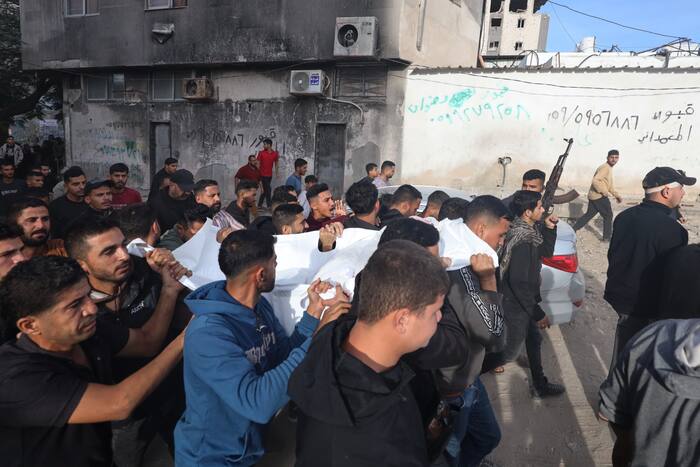
In Gaza City's Tel al-Hawa neighborhood, an Israeli airstrike obliterated a pickup truck carrying food, killing three men inside. Mohamed Abu Selmiya, director of Shifa Hospital where the bodies were brought, confirmed the deaths to the Associated Press. Footage from the scene showed the truck reduced to twisted metal, with boxes of cooked rice scattered across the street.
The conflicting accounts of that single strike capture the reality on the ground in Gaza more than a year after the October 2025 ceasefire took effect:
- The humanitarian reality: Over two million residents in Gaza remain displaced and heavily reliant on food distributions coordinated by the United Nations and international aid groups. Striking a vehicle loaded with cooked meals immediately raises alarms among relief workers trying to prevent famine.
- The military justification: The Israel Defense Forces stated later that day that the strike targeted Palestinian Islamic Jihad militants using an unmarked vehicle to move food and logistical supplies to fighters. An Israeli military official, speaking on condition of anonymity, added that one of the three men had previously been dismissed from an aid organization after Israel flagged his militant ties, and accused the group of planning recent attacks.
- The cumulative toll: Despite the October 2025 truce, near-daily Israeli strikes have killed more than 1,650 people in Gaza over the past thirteen months, according to the Gaza Health Ministry. While U.N. agencies and independent researchers view the ministry's overall casualty figures as reliable, its tallies don't separate combatants from civilians—though officials note that women and children account for roughly half of those killed.
Honestly, this is where regional reporting often fails readers by treating Gaza, Lebanon, and the Persian Gulf as separate news items. They're connected by the exact same deterrence vacuum. In southern Lebanon, Hezbollah has refused to disarm while Israeli troops continue to hold positions inside Lebanese territory. In Gaza, low-grade attrition grinds on daily. And in the Strait of Hormuz, economic warfare via naval blockade has morphed into direct attacks on commercial shipping.
Common Misconceptions About the Current Mideast Escalation
When multiple fronts flare up over a single weekend, armchair analysts tend to jump to extreme conclusions. Three assumptions in particular don't hold up under scrutiny.
First, people assume Iran's tanker strikes mean the Strait of Hormuz is completely closed. It isn't. Roughly a fifth of the world's petroleum liquids pass through that narrow waterway, and shutting it entirely would cut off Iran's remaining regional neighbors—including China-bound shipments that Tehran relies on diplomatically. Harassment, limpet or naval mines, and targeted engine-room hits achieve maximum economic disruption without forcing an immediate, existential military response from every major importer on earth.
Second, many observers treat an underground missile unveiling as proof that Iran is about to launch a massive barrage tomorrow morning. In reality, revealing hidden bunkers on state television sacrifices operational secrecy for deterrence. You don't show cameras your subterranean tunnels if you're trying to achieve tactical surprise; you show them when you want Washington and Jerusalem to recalculate the cost of bombing you.
Third, commentators frequently talk about the Gaza ceasefire as if it collapsed overnight. What's happening in Tel al-Hawa is actually the entrenched status quo since late 2025—a fragile freeze where major ground invasions are paused, yet targeted airstrikes and militant logistics battles remain a daily occurrence.
How to Read the Next Phase of the Crisis
If you're watching energy markets, supply chains, or diplomatic breakthroughs over the coming weeks, stop tracking every noisy press conference and watch four concrete indicators instead.
- Tanker insurance rates and ship-to-ship transfer interdictions. Watch whether commercial shipping companies suspend transits through the Strait of Hormuz following the November 21 mine and projectile strikes, and whether Tehran follows through on staging tankers at Kharg Island to run the U.S. blockade.
- Qatari shuttle diplomacy readouts. Keep an eye on official statements from Doha and Iranian Foreign Ministry officials like Kazem Gharibabadi. If Qatari envoys return to Tehran within days, Washington and Iran are actively bargaining over terms to pause maritime attacks in exchange for blockade relief.
- CENTCOM force posture in the Gulf of Oman. Watch how the U.S. military responds to the mining incident east of the strait. Deploying additional minesweepers signals containment; moving strike groups closer to Iranian coastal batteries signals preparation for direct retaliation.
- Aid corridor verification protocols in Gaza. Monitor whether U.N. agencies and Israeli military coordinators establish stricter deconfliction rules for unmarked food vehicles after the Tel al-Hawa strike, or if aid deliveries stall across northern Gaza.
Stay focused on shipping lane movements and Qatari diplomatic traffic over the next ten days—those two signals will tell you immediately whether November's tanker strikes were a bargaining chip or the opening salvo of a wider war.