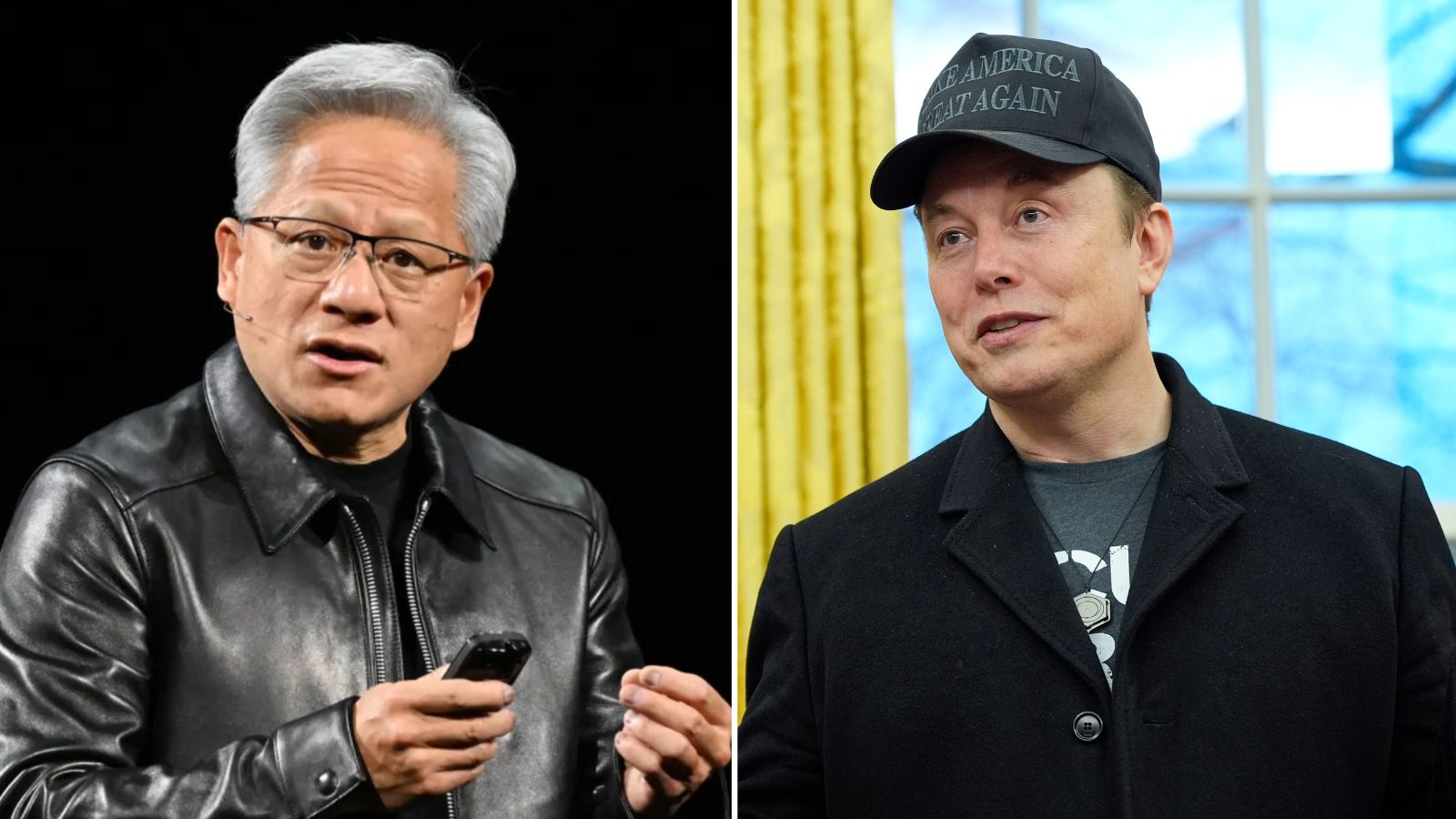
Honey traps sound like leftover Cold War theater until the chief executive of the world's most valuable AI chipmaker gets tangled in one.
In late October and November 2026, reports surfaced linking Nvidia CEO Jensen Huang to an extramarital affair involving Alice Huang, a former executive at Singapore-based data center firm Megaspeed, whom U.S. intelligence agencies reportedly scrutinized over suspected ties to Chinese intelligence. Huang acknowledged infidelity in early November, resigned on November 12 amid widening reports of additional affairs, and then returned as CEO, president, and board member on November 23 after board deliberations and assurances from senior administration officials that his reinstatement posed no national security risk. China's government rejected the spy allegations as baseless smears, while Megaspeed denied export control violations.
Watching that unfold makes one thing painfully clear. Sexpionage isn't some dusty archive curiosity. It's a pressure point that collides directly with modern supply chains, export controls, and boardroom governance.
At the same time, people tend to rush straight to spy-thriller conclusions whenever romance and geopolitics overlap. Honestly, that's usually where the real facts get fuzzy. Intelligence agencies look at patterns, contacts, and leverage, yet even senior officials and reporters noted that proof of active tasking or stolen secrets wasn't established publicly in the Nvidia episode.
How Sexpionage Evolved From Embassy Traps to Tech Supply Chains
Sex and espionage have overlapped for centuries because human attachment bypasses standard security checks. A badge reader can stop an unauthorized visitor at the door. It can't stop someone from sharing a drink, trading personal stories, or letting their guard down over months of dinners and travel.
Historians and intelligence analysts often point to World War I figures like Mata Hari, whose guilt and actual intelligence value remain debated by historians despite her execution by French authorities in 1917. During the Cold War, intelligence services industrialized the tactic far more systematically. Soviet intelligence trained operatives colloquially known as "sparrows" and "ravens" to cultivate relationships with diplomats, military personnel, and foreign officials. Former CIA officer Jason Matthews wrote about Soviet training programs—including facilities in Kazan—designed to teach covert cultivation and compromise, while former CIA officer Jonna Mendez spoke publicly about how Cold War operatives like Karl and Hana Koecher used social and personal ties in Washington.
The 1986 Moscow embassy scandal involving Marine Sgt. Clayton Lonetree remains a textbook case study in how personal vulnerability gets worked. As historians and intelligence observers note, initial attraction or romantic interest often serves as an entry point rather than the whole operation. Secrecy itself creates leverage. Once someone hides an affair or an improper contact, an adversary doesn't always need a dramatic blackmail demand to nudge behavior; quiet emotional dependency and fear of exposure do plenty of heavy lifting.
Today, the target list looks different from 1970s embassy cables. When the stakes are advanced AI accelerators, export-controlled compute clusters, and global semiconductor supply chains, a high-level relationship doesn't need to involve stealing paper blueprints from a safe to matter. Proximity to decision-makers, commercial deal flow, and partner networks carries real strategic weight.
Why Honey Traps Work Differently Across Cultures
Not every honey trap lands the same way. Culture shapes what counts as a career-ending secret versus a shrug.
Former intelligence officials have pointed out that in societies where extramarital relationships carry heavy social or professional stigma—or where strict rules govern personal conduct—secrecy creates sharper leverage. By contrast, intelligence commentary on countries like France has long noted that when personal infidelity is treated with more social cynicism or less moral scandal, it can offer weaker kompromat value.
That nuance matters in corporate life too. A public company CEO isn't just managing a private marriage; they're managing fiduciary duties, board trust, employee morale, and investor confidence. Even when intelligence officials say there's no proof of compromised secrets, a messy personal scandal can still trigger a governance crisis overnight.
What the Nvidia Controversy Reveals About Modern Espionage
The Nvidia story caught fire because it sat right at the intersection of two huge anxieties: AI hardware dominance and U.S.-China tech competition.
When reporting connected Huang's admitted affair to Alice Huang and Megaspeed—a company tied to multi-billion-dollar Nvidia chip purchases and subject to U.S. export control scrutiny—observers immediately asked whether personal intimacy had crossed into foreign influence or trade violations. Subsequent reporting added more layers rather than a neat movie ending. Some accounts noted intelligence contacts involving Alice Huang and her husband, Kang Wei, while others stressed that intelligence assessments did not establish she had been tasked as a spy to extract secrets from Jensen Huang. Meanwhile, federal probes into chip export compliance, congressional inquiries, and boardroom reversals kept the story churning day after day.
Here's what gets lost in fast-moving headlines: suspected intelligence contact is not the same thing as proven espionage.
In counterintelligence, agencies track foreign nationals, business networks, and potential intelligence ties for long stretches without publicly proving every link. Sometimes investigators hold back warnings to avoid tipping off a broader counterintelligence or export-control probe. Sometimes leaks push raw intelligence concerns into public view before facts are settled.
That creates a weird gap for the rest of us. People read "suspected spy" and picture James Bond gadgets, dead drops, and stolen chip schematics. In reality, modern counterintelligence cases often look like overlapping puzzles involving shell companies, customs paperwork, server financing, and personal blind spots.
The Gap Between Affairs, Leaks, and Proof
If you've followed tech scandals for long, you know how quickly rumors snowball once a high-profile executive admits to personal misconduct. Once the first affair is confirmed, every adjacent connection gets viewed through a magnifying glass.
That doesn't mean the concerns are imaginary. When an executive at a company central to national tech policy has a close personal relationship with someone tied to a firm under export-control scrutiny, boards and lawmakers are going to ask hard questions. Still, fairness and accuracy demand separating three distinct things:
- Personal misconduct: Breaking marital vows or violating workplace boundaries, which can hurt trust even without a crime.
- Counterintelligence risk: Whether a foreign service sought access, leverage, or information through a relationship or associate.
- Criminal or statutory guilt: Whether actual laws—like export controls or espionage statutes—were broken, which requires concrete evidence rather than speculation.
Where the Law Draws the Line on Honey Traps
A common misconception is that "honey trapping" itself is a standalone crime in the United States. It usually isn't.
As legal analysts have pointed out, seducing someone, starting a fake romance, or trying to extract information through charm isn't automatically illegal on its own. Where things turn criminal depends on who's involved, what information or property is targeted, and how the conduct crosses specific federal statutes.
Under U.S. law, several major frameworks come into play depending on the facts:
- The Espionage Act (18 U.S.C. §§ 793 and 794): Targets gathering, transmitting, or losing national defense information that could harm the U.S. or aid a foreign nation.
- Economic Espionage Act of 1996 (18 U.S.C. §§ 1831 and 1832): Criminalizes stealing or misappropriating trade secrets, with Section 1831 specifically addressing acts intended or known to benefit a foreign government, instrumentality, or agent.
- Foreign Agent Rules (18 U.S.C. § 951 and FARA, 22 U.S.C. § 611 et seq.): Address acting as an undisclosed agent of a foreign government or failing to register foreign principal representation where required.
- Export Control Laws: Restrict transferring controlled dual-use or advanced technologies and compute hardware without proper authorization or in violation of sanctions and blocklists.
Notice the difference between a messy affair and a federal prosecution. Even when a relationship looks suspicious from the outside, prosecutors still have to prove the elements of a specific statute. And even when no espionage charge is brought, civil liability, shareholder lawsuits, regulatory scrutiny, and reputational damage can still hit hard.
Practical Lessons for Leaders, Teams, and Anyone Watching the Headlines
You don't need a top-secret clearance to pick up useful habits from sexpionage history and the Nvidia saga. Most real-world breaches of trust don't start with a master spy handing over a thumb drive in a rainstorm. They start small.
If you run a company, advise leadership, or manage sensitive projects, a few practical steps actually help:
- Separate personal loyalty from governance oversight: Boards and leadership teams shouldn't rely solely on a founder's charisma or past track record when conflicts of interest or personal entanglements surface. Independent reviews exist for a reason.
- Tighten partner and customer vetting: When your products sit in high-stakes global supply chains, commercial partners, distributors, and adjacent associates deserve serious due diligence—not just sales enthusiasm.
- Watch for secrecy as a risk multiplier: Whether in corporate compliance or personal conduct, hidden relationships and off-the-books side channels create leverage and blind spots that hurt organizations when they surface.
- Read spy and scandal coverage with patience: Early leaks and rapid reversals happen constantly in high-stakes stories. Wait for verified filings, official findings, and documented facts before locking in your verdict.
History shows that sexpionage adapts to whatever era we're in—from Cold War embassies to modern AI supply chains—while human nature stays stubbornly the same. Keeping a clear head about what's proven versus what's merely dramatic is the best defense you've got.