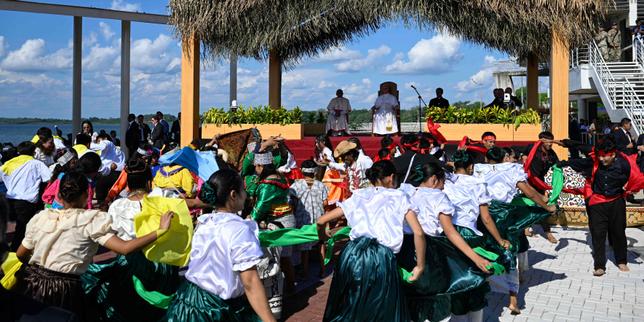
Most coverage of papal trips focuses on grand ceremonies and polite diplomatic handshakes. Not this time. When Pope Leo XIV touched down in Pucallpa, a bustling port city on the banks of the Ucayali River in Peru's Amazon basin on November 15, 2026, he didn't bring soft diplomatic platitudes. He brought a blunt indictment of state neglect, organized crime, and rampant environmental destruction.
If you only skimmed the headlines about his visit, you might think this was just another routine church appeal for tree planting and climate awareness. It wasn't. Leo XIV spent two decades living and working in Peru—first as a missionary and later as a bishop—before eventually acquiring Peruvian citizenship alongside his American roots. He knows the territory. More importantly, he knows the exact mechanisms driving the destruction of the rainforest and the abandonment of its Indigenous guardians.
During his meetings with Indigenous leaders and a massive open-air Mass in Pucallpa, the 71-year-old pontiff connected dots that politicians in Lima and consumers in Europe and North America routinely ignore. The crisis in the Peruvian Amazon isn't a vague ecological tragedy. It's a violent economic war fueled by global gold prices, cocaine trafficking, and deliberate political inaction.
Why Leo XIV's Peruvian Background Changes Everything
To understand why Leo XIV's words carried so much weight in Pucallpa, you have to look at his biography. Unlike foreign dignitaries who fly into the Amazon for a four-hour photo opportunity in a feathered headdress, Leo XIV lived in Peru for twenty years. He understands local governance, regional corruption, and the daily realities of rural communities.
When he stood before crowds in the Ucayali region, he wasn't reading from a generic Vatican script. He directly called out the hypocrisy of slow government responses against rapid criminal expansion. "Very little has been done—and very slowly, at that—while the means to exploit and pollute creation have accelerated," he told the assembly.
That distinction matters. Environmental destruction in the Amazon is often framed as an accidental byproduct of economic growth or poverty. Leo XIV rejected that framing completely. He pointed toward an "insatiable thirst for domination" and irresponsible extraction driven by external actors. By linking the survival of the forest directly to the survival of its original inhabitants, he echoed and sharpened a core tenet of his predecessor, Pope Francis: you can't separate the cry of the Earth from the cry of the poor.
The Illegal Gold Rush Replacing Cocaine
Here is what most casual observers get wrong about Amazonian deforestation in 2026. People still assume logging companies or cattle ranchers are the sole villains clearing the trees. While agricultural expansion remains a massive driver, a far more toxic economy has taken over the Peruvian rainforest.
Illegal gold mining has surged to become what social anthropologist Beatriz Huertas describes as "the new cocaine." According to Raphael Hoetmer, Western Amazonia program director at Amazon Watch, global geopolitical instability and wars have pushed international gold prices to record highs. That spike in demand translates directly into thousands of makeshift suction dredges tearing up riverbeds across Peru.
The math behind this destruction is staggering:
- Between 2001 and 2024, Peru lost roughly 3.2 million hectares of humid Amazonian forest—an area equivalent to the entire country of Belgium.
- Illegal gold operations alone have wiped out over 140,000 hectares of Peruvian rainforest, turning lush river ecosystems into barren lunar landscapes.
- Miners dump massive quantities of toxic mercury into waterways to separate gold from sediment, poisoning fish stocks and entering the human bloodstream.
Once mercury enters a river system, it doesn't just wash away. It accumulates in the organs of local residents. Pregnant women pass the neurotoxin directly to their unborn children, creating generational health crises in communities that lack even basic medical clinics.
Abandonment and Assassinations on the Frontlines
When Indigenous communities push back against illegal miners, loggers, and coca traffickers, they don't get backup from the state. They get targeted by hired hitmen.
During his Pucallpa visit, Pope Leo XIV demanded justice for environmental defenders murdered while protecting their ancestral lands. "The blood of these brothers cries out," he declared, confronting a reality that Peruvian authorities have largely failed to curb. Over the past decade, dozens of Indigenous leaders in the Peruvian Amazon have been assassinated after reporting illegal airstrips, clandestine mining camps, and timbermafias to government agencies.
Indigenous representatives from organizations like ORAU (Regional Organization of AIDESEP Ucayali) handed the pontiff an urgent statement detailing this exact abandonment. Their core complaint wasn't abstract. It was about basic legal security. Without formal land titles and active state enforcement, Indigenous territories remain open hunting grounds for organized crime syndicates.
Even more precarious is the fate of Indigenous Peoples in Isolation and Initial Contact, known in Peru as PIACI. These are uncontacted tribes living deep within the forest who have zero immunity to outside diseases and zero ability to negotiate with armed invaders. Anthropologists like Beatriz Huertas have spent years mapping territorial corridors to keep outsiders away from PIACI buffer zones. Yet mining and logging roads continue to slice through these protected areas while lawmakers debate weakening protective legislation.
What Happens When Oil and Roads Enter the Equation
Illegal syndicates aren't the only threat. State-sanctioned infrastructure projects and oil extraction continue to fracture the Peruvian Amazon from within. Leo XIV explicitly flagged oil pollution alongside illegal mining during his remarks, acknowledging decades of unresolved toxic spills across northern and central Peru.
Consider how deforestation actually spreads on the ground. It rarely starts with a massive corporate bulldozer leveling ten thousand acres at once. Instead, it begins with a single dirt road—often built illegally for logging or pushed through by local politicians promising "development."
Once a road cuts through intact canopy, everything changes within months:
- Informal settlers and land traffickers move in along the new corridor.
- Small-scale forest clearing begins for illicit coca cultivation or cattle pasture.
- Armed criminal groups establish control over transit routes, intimidating local Indigenous patrols.
- Government agencies arrive years later, if at all, often to formalize the illegal land grabs rather than reverse them.
Fernando Carteiro, an Indigenous leader in Pucallpa interviewed ahead of the papal visit, described watching the forest around his home vanish within a single generation. Where trees and sloths once surrounded his cabin, cleared land and conflict now dominate. His wish—a quiet Amazon free from violence—sounds simple, yet current economic incentives make it nearly impossible without structural intervention.
How Global Supply Chains Feed the Crisis
It's easy to blame corrupt local officials or desperate wildcat miners in Ucayali. That's only half the story. Nobody digs up riverbeds with suction dredges and handles raw mercury for fun. They do it because international supply chains eagerly absorb the output.
Illegal Peruvian gold moves through shadowy intermediaries, gets melted down in regional hubs, and enters legitimate global markets—ending up in jewelry stores, electronics, and central bank reserves across Europe, North America, and Asia. Similarly, illicit timber and cocaine flow directly toward wealthy consumer markets abroad.
Leo XIV's three-nation South American tour—the longest of his pontificate—was designed to force international eyes onto this supply-and-demand loop. When the head of the Catholic Church stands in Pucallpa and condemns an economic model built on extraction, he's speaking directly to governments and financial institutions in the Global North that turn a blind eye to dirty supply chains.
You might wonder whether a papal speech actually changes anything on the ground. Honestly, speeches alone don't stop hitmen or dismantle dredging operations. In 2018, Pope Francis visited Puerto Maldonado in southern Peru and delivered a similarly fiery warning about Amazonian destruction, yet deforestation rates climbed in the years that followed. Skepticism is completely justified.
Still, ignoring the political leverage of the Catholic Church in Latin America would be a mistake. In regions where the Peruvian state is practically invisible, Catholic dioceses, missionary networks, and organizations like the Pan-Amazonian Ecclesial Network (REPAM) provide the only consistent legal, medical, and logistical support Indigenous communities receive. Leo XIV's personal history in Peru gives him the credibility to mobilize Church resources and pressure international donors in ways an outsider never could.
Practical Ways to Support Amazonian Protection
Reading about deforestation and feeling vaguely guilty achieves nothing. If you want to counter the economic forces Leo XIV called out in Pucallpa, focus on actions that target supply chains and fund frontline defenders directly.
- Audit your gold and electronics purchases: Look for electronics brands and jewelers certified by the Responsible Jewellery Council (RJC) or initiatives that trace minerals back to verified, mercury-free mines. Avoid uncertified gold bullion or jewelry with opaque sourcing.
- Fund Indigenous land titling directly: Research shows that forests managed by Indigenous communities with secure legal titles experience significantly lower deforestation rates than state-managed parks. Organizations like Rainforest Foundation Norway and Amazon Watch channel funds directly to local federations working on territorial governance and PIACI corridor protection.
- Support environmental journalism in Latin America: Investigative outlets like Mongabay Latam and OjoPúblico consistently expose illegal mining networks and timber mafias in Peru, creating the documented evidence needed for international sanctions and prosecutions.
- Back supply-chain due diligence laws: Support legislation in your own country that forces importers to prove their timber, agricultural goods, and minerals weren't sourced from deforested or contested Indigenous lands.
Pope Leo XIV's message in Pucallpa stripped away every comfortable excuse surrounding the Amazon crisis. The rainforest isn't dying of natural causes, and its Indigenous peoples aren't disappearing by accident. Both are being pushed to the brink by profitable, traceable, and preventable human choices—and stopping that destruction starts with holding both local governments and global buyers accountable.


