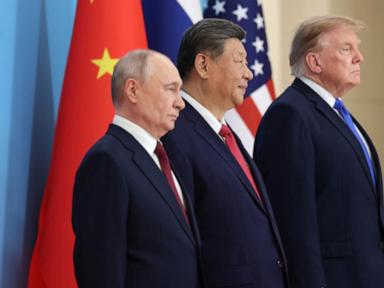
Every time Donald Trump steps up to a microphone after a high-stakes summit and calls Vladimir Putin or Xi Jinping his "friends," Washington loses its collective mind. Cable news panels erupt. Foreign policy pundits clutch their pearls and warn about the collapse of democratic alliances.
They're falling for the oldest trick in the book.
When Trump calls Putin and Xi his friends after meeting them, he isn't confessing deep personal affection or handing over the keys to American security. He's running a very specific, transactional negotiation play that he has used since his days building towers in Manhattan. If you take those words literally, you completely miss what's actually happening behind closed doors.
I've watched foreign policy messaging evolve over the last two decades, and the biggest mistake analysts make is measuring Trump against traditional diplomatic norms. Traditional diplomats speak in careful, sanitized code. Trump speaks like a real estate developer trying to butter up a tough counterparty right before asking for a massive concession.
Why Trump Calls Autocrats Friends
To understand the rhetoric, you have to look at the mechanics of personal diplomacy. Standard statecraft relies on institutions, treaties, and predictable alliances. Trump rejects almost all of that. He views global politics as a series of one-on-one deals between strongmen.
In his mind, if you insult the guy across the table, you've already killed the deal before negotiations even begin.
Think about how he operates in public. He rarely criticizes foreign leaders personally while he's actively trying to extract something from them. Instead, he showers them with praise—calling Xi "brilliant" or describing his relationship with Putin as "very good." He's trying to create an atmosphere where the other leader feels respected, hoping that personal rapport will soften their stance on trade deficits, nuclear arms, or regional conflicts.
It's a classic carrot-and-stick approach, except the carrot is public flattery.
Does it always work? No. Honestly, authoritarian leaders like Putin and Xi are seasoned operators who don't easily fold because someone called them a friend at a press conference. They have long-term strategic goals that outweigh personal flattery. Still, Trump's calculation is simple: praising them costs him zero political capital with his base, and there's always a slim chance it buys him leverage at the negotiating table.
The History Behind Trump Calling Putin and Xi His Friends
This isn't a new development. If you look back at his first term and his subsequent return to the political spotlight, the pattern is remarkably consistent.
Take his relationship with Xi Jinping. During the 2017 summit at Mar-a-Lago, Trump famously served Xi chocolate cake while informing him of missile strikes in Syria. Afterward, Trump repeatedly referred to Xi as a "very good friend." Yet, just months later, the Trump administration slapped hundreds of billions of dollars in tariffs on Chinese imports, kicking off a massive trade war that permanently altered global supply chains.
The rhetoric was warm. The policy was brutal.
You can see the exact same dynamic with Vladimir Putin. Following their 2018 summit in Helsinki, Trump stood next to Putin and appeared to side with the Russian leader's denials regarding election interference over the findings of U.S. intelligence agencies. Critics blasted him for being soft on Moscow. However, if you look at the actual policy record from that era, the administration expelled dozens of Russian diplomats, closed Russian consulates, imposed sweeping sanctions on Russian oligarchs, and approved the sale of lethal Javelin anti-tank missiles to Ukraine—something the previous administration had refused to do.
The Gap Between Rhetoric and Policy
This disconnect is where most commentators get tripped up. They focus entirely on the soundbite from the press conference and ignore the executive orders signed the following Tuesday.
- Trade tariffs on China remained aggressive even while Trump praised Xi's leadership style during Phase One trade talks.
- NATO defense spending surged because Trump publicly berated European allies while simultaneously boasting about his rapport with Putin, creating strategic ambiguity that forced Europe to pay up.
- Energy sanctions targeting Russian pipeline projects like Nord Stream 2 moved forward despite Trump's friendly public tone toward the Kremlin.
When you separate the words from the actions, a clearer picture emerges. The friendly labels are a smokescreen. They keep adversaries guessing and prevent them from rallying domestic anti-American sentiment at home. If Trump attacks Xi personally, Xi has to look tough for the Chinese public. If Trump calls Xi a friend, Xi has room to maneuver.
What Putin and Xi Actually Think of the Praise
Let's be clear about one thing. Neither Vladimir Putin nor Xi Jinping is naive.
Both men rose to the top of ruthless political systems. Putin spent years in the KGB before consolidating power in post-Soviet Russia. Xi survived the turmoil of the Cultural Revolution to become China's most powerful leader since Mao Zedong. They view international relations through a cold, realist lens.
When Trump calls them friends, they don't mistake it for genuine allegiance. According to analyses from institutions like the Carnegie Endowment for International Peace and the Council on Foreign Relations, Beijing and Moscow view Trump's personal warmth as an opportunity to exploit divisions between the United States and its traditional allies.
For Putin, having an American president call him a friend is a massive propaganda win inside Russia. It signals to the Russian public and the developing world that Russia isn't isolated, regardless of Western sanctions or conflicts in Eastern Europe. It legitimizes his rule on the global stage.
Xi Jinping plays a slightly different game. Beijing values predictability above almost everything else. While Xi appreciates the lack of ideological lecturing from Trump—unlike traditional U.S. presidents who frequently bring up human rights or democratic values—Chinese officials remain deeply wary of Trump's unpredictability. They know the "friend" label can vanish overnight if a trade deal goes south or a geopolitical crisis flares up in the South China Sea.
Why Traditional Diplomats Hate This Strategy
If you talk to career diplomats at the State Department, most of them will tell you this approach is dangerous. Their concerns aren't just about etiquette; they're rooted in how alliances actually function.
Alliances like NATO and bilateral security treaties with Japan and South Korea run on trust. When an American president speaks more warmly about autocratic rivals than about democratic allies, it creates panic in capitals like Berlin, Tokyo, and Seoul.
Imagine being a defense minister in Eastern Europe. You rely on the American nuclear umbrella to deter Russian aggression. Then you turn on the TV and hear the U.S. president calling Putin a great friend while questioning whether the U.S. should defend NATO members who don't meet spending targets. Even if the underlying U.S. military posture hasn't changed, the psychological doubt weakens deterrence.
Adversaries probe for weakness. If Moscow or Beijing believes that personal rapport with the White House might stop the U.S. from intervening in a regional crisis, they might take risks they otherwise wouldn't. That's the real danger of transactional diplomacy—not the words themselves, but the miscalculations they can trigger in foreign capitals.
How to Read Foreign Policy Headlines Without Getting Played
The next time a viral clip drops showing Trump praising an authoritarian leader after a summit, don't react to the clip. React to the follow-through.
Political media thrives on outrage. A ten-second soundbite of Trump calling Xi or Putin a friend generates millions of clicks and hours of cable news debate. It's easy content. Analyzing a forty-page Treasury Department sanctions list or a Pentagon troop deployment schedule is boring, so it rarely makes the evening news.
If you want to understand what's actually happening in global politics, change how you consume the news.
- Ignore the press conference adjectives. Words like "friend," "smart," "tough," and "great" are filler in Trump's vocabulary. They carry zero binding weight.
- Track capital flows and tariffs. Look at what the Commerce Department and Treasury Department do in the thirty days following a major summit. Money and trade restrictions tell the real story.
- Watch allied reactions, not just adversarial ones. Pay attention to how leaders in Tokyo, Warsaw, and London respond. Their policy shifts reveal whether American deterrence is holding firm behind the scenes.
- Separate campaign rhetoric from governing actions. What a leader says to rally a crowd or flatter a counterpart rarely matches the classified directives handed to military commanders.
Stop taking political theater at face value. Look at the incentives, watch the money, and judge every administration by the policies it enforces rather than the compliments it hands out on camera.