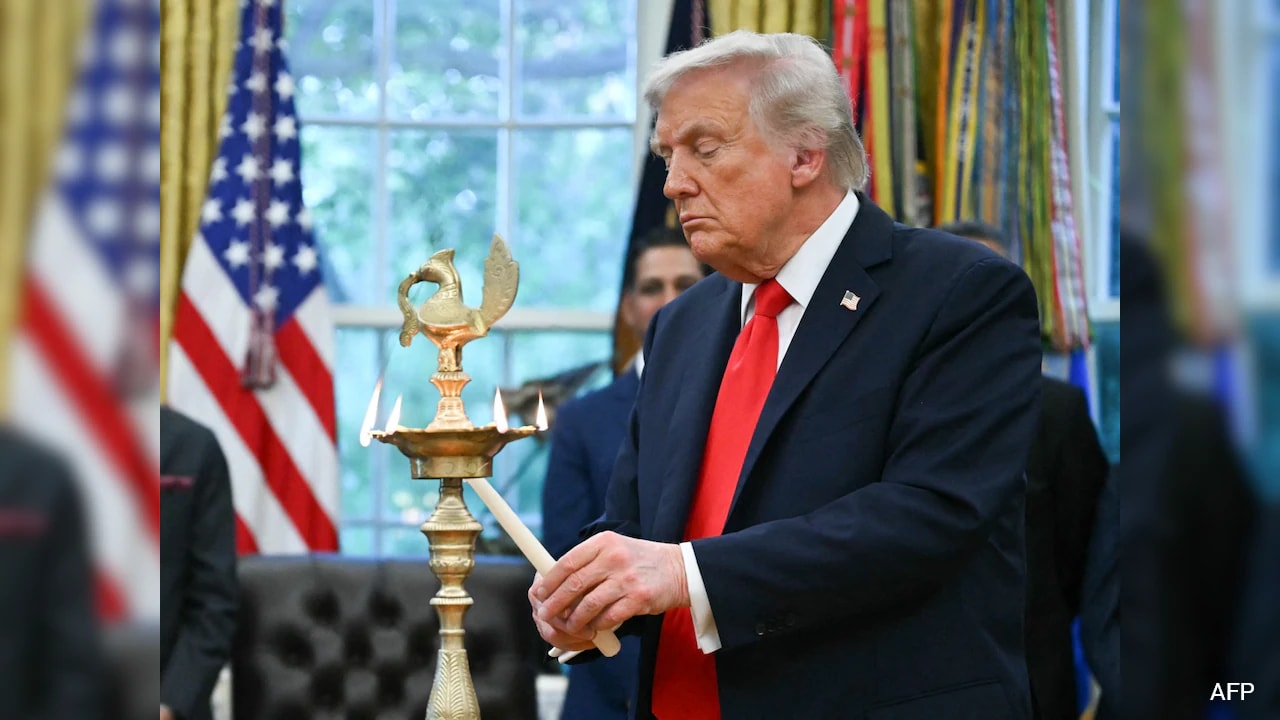
Most mainstream coverage treats a White House Diwali celebration like a routine photo-op. Politicians light a lamp, smile for the cameras, and issue a boilerplate press release about diversity.
That's a lazy read of what actually happened when President Donald Trump hosted the Festival of Lights in the Oval Office on November 6, 2026. If you look closely at who stood in that room and what changed hands, you see a clear picture of modern American political power, diplomatic signaling, and the growing clout of the Indian diaspora.
Inside the Oval Office Celebration
The 2026 event wasn't tucked away in a side reception hall. Trump held the ceremony directly inside the Oval Office, surrounded by top administration officials, diplomats, and major business figures.
India's Ambassador to the United States, Vinay Mohan Kwatra, stood alongside high-ranking Indian-American appointees from Trump's own cabinet and agencies. FBI Director Kash Patel and National Institutes of Health Director Jay Bhattacharya were both in attendance. So were heavyweights from the private sector, including IBM CEO Arvind Krishna, renowned chef Vikas Khanna, and Indian tech entrepreneur Vishal Gondal.
Gondal actually created one of the most talked-about moments of the afternoon by gifting Trump a copy of the Hanuman Chalisa. He shared a traditional blessing—Jug Jug Jiyo, meaning "may you live for ages"—wishing peace, good health, and longevity for the world.
It was personal. It was deliberate. And it carried way more diplomatic weight than a standard state dinner toast.
How White House Diwali Traditions Evolved
To understand why an Oval Office diya-lighting matters today, you have to look at how far this tradition has come over the past two decades. Many people assume presidents have always hosted grand Diwali parties at 1600 Pennsylvania Avenue. They haven't.
- 2003 under George W. Bush: The Bush administration started the tradition, which was a genuine milestone at the time. However, Bush never attended those early ceremonies himself, and officials held them next door in the Eisenhower Executive Office Building rather than the main White House residence.
- 2009 and 2016 under Barack Obama: Obama changed the optics permanently. In 2009, he became the first sitting president to personally light a ceremonial diya inside the East Room. Seven years later, in 2016, he brought the lamp directly into the Oval Office for the first time.
- 2021 to 2024 under Joe Biden: Biden leaned into scale and joint appearances. In 2021, he and First Lady Jill Biden lit a lamp together. By 2024, his administration hosted some of the largest Diwali receptions in White House history.
- 2025 and 2026 under Donald Trump: Trump kept the ceremony intimate and high-powered inside the Oval Office. During his October 2025 celebration, he highlighted the symbolic meaning of light over darkness and knowledge over ignorance alongside officials like Tulsi Gabbard and Kash Patel. His November 2026 gathering doubled down on that exact formula, blending cabinet leadership with tech CEOs and Indian diplomatic brass.
Why Both Parties Fight for This Room
Let's be honest about Washington. Presidents don't clear their Friday afternoon schedules in November out of pure nostalgia.
The Indian-American community numbers over five million people. More importantly, it represents one of the highest-earning, most politically active, and fastest-growing voting blocs in battleground states. When a president invites IBM's chief executive and Indian diplomats into the Oval Office to celebrate Diwali, every major news outlet in New Delhi and every diaspora household from New Jersey to Texas sees the footage.
There's also a sharp geopolitical angle here. U.S.-India relations rely heavily on personal rapport at the top. Having Ambassador Vinay Mohan Kwatra standing right next to the president during a major Hindu festival sends an unmistakable message to New Delhi that the bilateral partnership remains a priority, even when trade negotiations or global conflicts create friction.
Common Misconceptions About White House Cultural Events
Whenever photos of these ceremonies hit social media, the same predictable arguments break out online. Usually, critics get the basics wrong.
First, some pundits claim these events are brand-new partisan inventions. As the timeline from Bush to Obama to Trump proves, celebrating Diwali has been a bipartisan fixture across four consecutive presidencies spanning more than twenty years.
Second, people confuse a cultural reception with a state-sponsored religious endorsement. Lighting a diya in the Oval Office functions just like the National Christmas Tree lighting, the White House Passover Seder, or Eid receptions. It recognizes the heritage of millions of American citizens who pay taxes, run major tech companies, and lead federal agencies.
How to Read Political Optics Like an Insider
If you want to understand what is actually happening in Washington beyond cable news shouting matches, stop listening to pundits and start tracking who gets invited into the Oval Office.
Pay attention to three specific details whenever the White House hosts a cultural or diplomatic event:
- The physical location: An event in the Eisenhower building is polite recognition. An event in the East Room is formal inclusion. An event inside the Oval Office is inner-circle access.
- The guest list mix: Look beyond politicians. When tech CEOs like Arvind Krishna and cultural icons like Vikas Khanna share floor space with the FBI Director, you're looking at the administration's core coalition.
- The unscripted exchanges: Gifts like the Hanuman Chalisa or off-the-cuff remarks tell you far more about the real mood in the room than any prepared statement from the press secretary's office.
Watch the guest lists, check the room assignment, and ignore the partisan noise.
For a closer look at the ceremony and the presentation of the Hanuman Chalisa, watch Donald Trump Celebrates Diwali At White House, which captures the Oval Office gathering with members of the Indian diaspora.