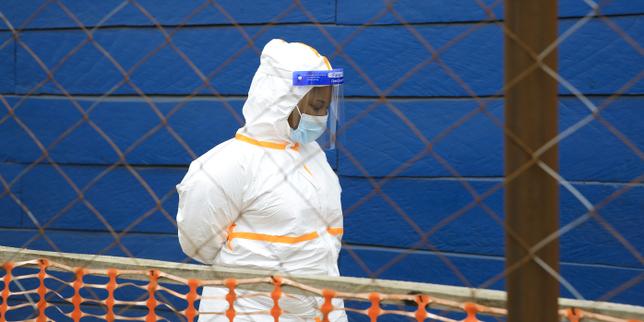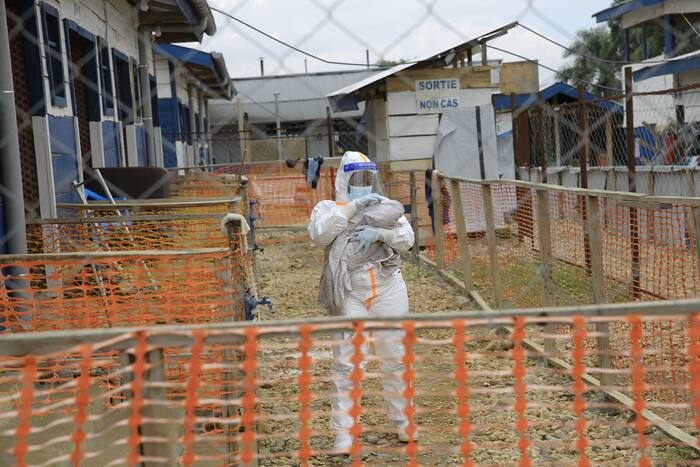
Most people saw the headline when the 2014–2016 West African Ebola epidemic hit 28,000 cases, then promptly stopped paying attention to the virus. That's a massive mistake. While the global media cycle moved on, the Democratic Republic of the Congo (DRC) fought through a brutal, complex crisis from 2018 to 2020 that became the country's deadliest Ebola outbreak on record—and the second-largest in human history.
By the time the World Health Organization (WHO) and Congolese health officials finally declared the Kivu epidemic over, the virus had infected over 3,470 people and killed 2,287. Wait—why did headlines at the time scream about "11,000 cases" in Congo? Let's clear up the confusion right away. During the height of the 2018–2020 Kivu crisis, the DRC wasn't just fighting one virus. They were fighting three. Alongside Ebola, a massive measles outbreak infected hundreds of thousands, and cholera swept through displaced communities. On top of that, early epidemiological tracking often bundled suspected, probable, and confirmed cases together in regional surveillance alerts, while West Africa's earlier toll sat at 11,310 deaths. When you look at the actual confirmed numbers in eastern Congo, the sheer lethality is staggering: a 66% case fatality rate in the middle of an active war zone.
If you want to understand how modern infectious disease response actually works on the ground, you can't just look at lab results. You have to look at what happened in North Kivu and Ituri provinces.
Why the Kivu Outbreak Was Different From Every Epidemic Before It
Previous Ebola outbreaks in the DRC—and there had been nine of them since the virus was first discovered near the Ebola River in 1976—followed a predictable pattern. They happened in remote, isolated villages. Health teams would fly in, set up quarantine zones, trace contacts, and choke off the virus within a few months.
North Kivu broke every rule in the public health playbook.
Declared on August 1, 2018, this tenth outbreak hit one of the most densely populated, mobile, and politically unstable regions in Central Africa. People didn't stay in isolated villages. They traveled constantly across porous borders into Uganda, Rwanda, and South Sudan for trade, family visits, and safety.
The Active Conflict Factor
You can't do contact tracing when someone is shooting at your ambulance. Over 100 armed militia groups operated in the Kivu region during the epidemic. Between January and December 2019 alone, the WHO documented more than 390 attacks on healthcare facilities and workers, killing 11 responders and patients and injuring 83 others.
When an Ebola treatment center in Katwa or Butembo got burned down by militias, patients fled into the community. Sick people hid in their homes. Contact tracers had to suspend operations for days at a time, giving the virus an open runway to spread silently through neighborhoods. I've seen plenty of emergency response plans that look brilliant in a Geneva conference room, and almost none of them survive contact with an active insurgency.
Deep-Rooted Mistrust and Political Timing
The outbreak collided head-on with the DRC's chaotic 2018 presidential election. When the government delayed voting in Beni and Butembo—two opposition strongholds—citing the Ebola risk, local residents didn't see a public health precaution. They saw political disenfranchisement.
Rumors exploded overnight. Many locals believed Ebola wasn't real, or that it was a biological weapon engineered by the government and foreign NGOs to wipe out opposition voters and steal mineral wealth. Armed with that suspicion, communities rejected outside medical teams. Safe burial protocols—which required trained teams in full protective gear to handle bodies without letting families touch or wash them—were viewed as cruel violations of cultural tradition.
What Actually Worked When Traditional Quarantine Failed
When brute-force containment fails, epidemiologists have to adapt fast. The turning point in Congo didn't come from stricter lockdowns. It came from science and humility.
First, the medical breakthroughs. During the 2014 West African crisis, doctors only had supportive care—IV fluids, electrolyte management, and fever reducers. In the DRC, responders deployed the rVSV-ZEBOV-GP vaccine (marketed as Ervebo) on a massive scale using a "ring vaccination" strategy. Instead of trying to vaccinate millions blindly, teams tracked down every known contact of an infected person, plus the contacts of those contacts, and vaccinated them immediately. Over 300,000 people received the shot. It worked. Data showed the vaccine was roughly 97.5% effective at preventing infection when administered before symptoms appeared.
Second, treatment actually started curing people. Health teams ran the PALM randomized controlled trial right in the middle of the war zone, testing four experimental drugs. Two monoclonal antibody treatments—mAb114 (Ebanga) and REGN-EB3 (Inmazeb)—cut mortality rates dramatically. For patients who arrived at treatment centers early while their viral loads were still low, survival rates jumped to nearly 90%. Once people saw their neighbors walking out of Ebola treatment units alive instead of leaving in body bags, the stigma began to crack.
Third, the WHO and UNICEF finally stopped sending foreign spokespeople to lecture locals. They hired community leaders, local religious figures, and recovered Ebola survivors to lead the outreach. Survivors were immune to the Zaire ebolavirus strain, meaning they could care for sick children inside treatment centers without bulky protective suits, proving to skeptical families that the disease was real and survivable.
The Hidden Aftermath Nobody Tracks
Declaring an outbreak "over" after 42 days without a new case—twice the virus's maximum 21-day incubation period—is a bureaucratic milestone, not a medical reality.
Ebola doesn't just vanish when the cameras leave. The virus hides in immune-privileged sites in the human body, including the eyes, the central nervous system, and testicular tissue. Survivors frequently suffer from Post-Ebola Syndrome, dealing with chronic joint pain, severe headaches, uveitis that can lead to blindness, and crushing psychological trauma.
Even worse, persistent viral reservoirs in survivors can spark new flare-ups years later. In February 2021, a new Ebola case emerged in North Kivu. Genetic sequencing proved it wasn't a new spillover from an animal host like a fruit bat. It was linked directly to the 2018–2020 strain, likely transmitted from a survivor who had carried dormant virus fragments for over a year.
How to Read Outbreak Data Without Getting Misled
When major disease headlines hit your feed, the raw numbers almost always confuse more than they clarify. Case counts get inflated by overlapping regional crises, testing backlogs skew daily death tolls, and media outlets frequently mix up cumulative historical statistics with active transmission numbers.
If you want to track global health threats accurately without falling for sensationalized headlines, rely directly on primary epidemiological dashboards rather than secondary news aggregators:
- Check the WHO Disease Outbreak News (DONs) portal for verified laboratory-confirmed cases versus suspected cases.
- Cross-reference regional surveillance updates through the Africa CDC to see how neighboring countries are handling cross-border screening and vaccination deployment.
- Look at the Case Fatality Rate (CFR) alongside the reproduction number (R0)—a high fatality rate means nothing for global spread if the R0 drops below 1.0, which signals that each infected person is passing the virus to fewer than one other person.
Understanding the difference between a headline number and on-the-ground epidemiological reality is the only way to separate genuine global health emergencies from media noise.