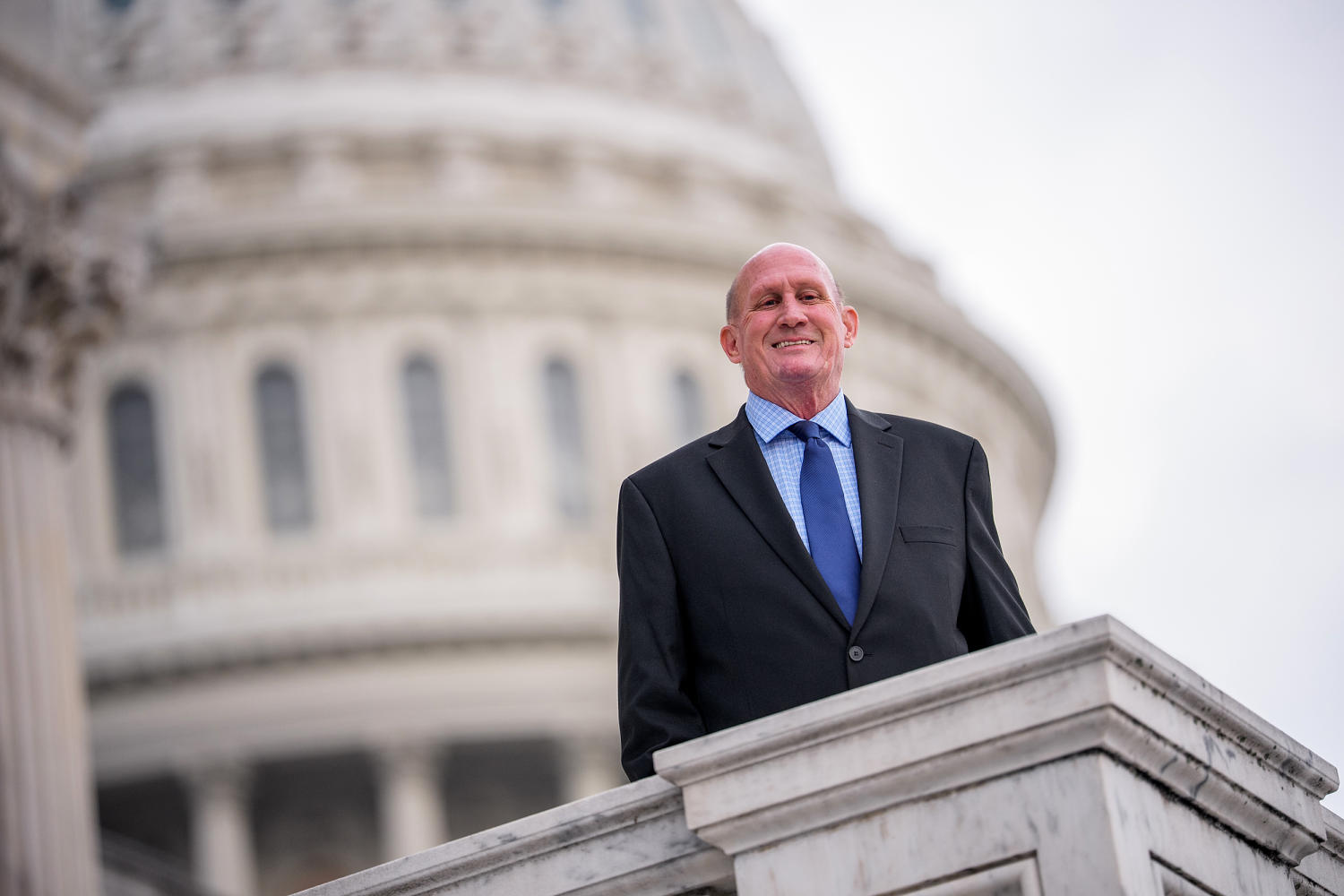
Most political pundits treat election recounts like bureaucratic afterthoughts that never actually change the scoreboard. They're usually right, which is why the news that Democrat Chuck Hubbard won his recount and flipped a North Carolina U.S. House seat hit Washington like a cold bucket of water.
You can't fake those kinds of margins. When a race comes down to a razor-thin tally in a battleground state like North Carolina, every single provisional ballot, machine calibration check, and hand-to-eye audit stops being theoretical. It becomes the entire ballgame.
Honestly, if you only followed the initial election night headlines, you walked away with the wrong story. The real takeaway here isn't just that Chuck Hubbard pulled off a stunner or that Democrats picked up a crucial seat in the House of Representatives. It's how fragile modern congressional margins have become—and why local ground games in districts people write off as "safe" or "settled" end up deciding control of Congress.
How Chuck Hubbard Flipped the North Carolina Seat
Let's look at what actually happened when the dust settled on the initial count. On election night, the margins were tight enough to trigger North Carolina's statutory recount rules, which kick in automatically or upon candidate request when the difference between the top two finishers falls within a tiny fraction of a percent of total votes cast.
In North Carolina, statewide and congressional recounts are governed by strict rules set by the North Carolina State Board of Elections (NCSBE). Under state law (N.C.G.S. § 163-182.7), a candidate in a congressional district race can demand a recount if the margin is 1% or less of the total votes cast in that race.
Here is where the amateur analysts get tripped up. A recount doesn't mean election workers sit around guessing who voters meant to pick. It's a methodical, multi-stage verification process:
- County boards of elections re-tabulate ballots through high-speed optical scanners that have been tested and certified beforehand.
- Bipartisan teams examine ballots that the machines couldn't read—things like stray pen marks, torn corners, or voters circling a name instead of filling in the oval.
- Provisional ballots from voters whose registration status or precinct assignment had to be verified after Election Day get adjudicated and added to the official tally.
- Absentee-by-mail ballots postmarked on time and cured for minor signature or witness discrepancies are factored into the final canvass.
When those county-by-county canvasses and recount audits wrapped up, Chuck Hubbard had erased the initial deficit and taken the lead. Flipped. Just like that.
Why Recounts Rarely Flip Races—And Why This One Did
I've watched dozens of post-election challenges over the years, and 95% of them are pure political theater. Usually, a machine recount shifts a total by a few dozen votes at most. High-speed optical scanners are remarkably consistent when ballots are printed properly and marked with standard black or blue ink.
So why did Chuck Hubbard's recount actually move the needle enough to flip a U.S. House seat?
It comes down to two things: razor-thin initial margins and post-election ballot curing. When thousands of ballots separate two candidates, finding 40 uncounted provisional ballots in one county and 25 cured mail-in ballots in another doesn't matter. When the gap is tiny, those exact batches decide who gets sworn in on Capitol Hill.
Think about how voters actually fill out paper ballots in North Carolina. Some folks use red ink that optical sensors miss. Others cross out a mistake and write "NO" next to a bubble, which forces the scanner to kick the ballot out for human review. Under North Carolina election law, bipartisan teams look at those kicked-out ballots to determine "voter intent." If a voter clearly circled Chuck Hubbard's name instead of filling in the bubble, that vote counts during a hand-to-eye review even if the scanner skipped it on election night.
The Bigger Picture for North Carolina Politics
North Carolina has always been a political knife fight. You have rapid urban and suburban growth around Raleigh, Charlotte, and the Triad colliding with deeply conservative rural counties in the east and west. Add years of court battles over congressional district maps, and you get a state where partisan leanings can look clear on paper while behaving wildly unpredictably on the ground.
Hubbard's victory proves that nationalized media narratives miss local dynamics every single cycle. National commentators love to paint entire regions with one broad brush. They look at past presidential margins, slap a "likely" or "lean" label on a district, and move on to flashier races.
Meanwhile, candidates who actually show up in rural diners, county fairs, and local town halls build a cushion of crossover support that doesn't show up in cheap automated polls. You don't flip a North Carolina House seat in a recount by accident. You do it because your campaign squeezed out every last vote in precincts your opponent ignored.
What Happens After a Recount Victory
Winning the recount isn't the end of the road—it's the start of a legal sprint. Once county boards finish their recount tabulations, the results go to the State Board of Elections for official certification.
During that window, the trailing candidate still has narrow legal avenues to file formal election protests under North Carolina law. However, those protests require hard, documented evidence of specific irregularities—not vague complaints that the count took too long or went the wrong way. Without proof of actual statutory violations that could alter the outcome, the State Board certifies the winner and issues the Certificate of Election.
For Congress, the stakes are immediate. Every single seat in the U.S. House of Representatives carries massive weight when party majorities are separated by single digits. One flipped seat changes committee ratios, alters whip counts on tight floor votes, and forces party leadership to rethink their legislative calendar.
What Voters and Campaigns Should Take Away From This
If you're a voter, stop buying the lie that your individual ballot gets lost in the noise. In Chuck Hubbard's race, individual cured ballots and properly adjudicated provisional votes literally decided who represents the district in Washington.
If you're involved in local politics or campaign organizing, take notes on what actually wins close races:
- Ballot curing isn't optional. Having volunteers contact voters whose absentee or provisional ballots were flagged for minor errors is the highest-ROI activity in modern elections.
- Observer training matters. Having well-trained, calm observers at county canvass meetings ensures state rules are followed without creating chaos.
- Never concede early. Campaigns that pack up their field offices at 11:00 PM on election night leave winning votes on the table.
Keep an eye on the official certification filings from the North Carolina State Board of Elections and the U.S. House Clerk's office as Hubbard prepares to take the oath—because in a divided Congress, one flipped seat changes everything.