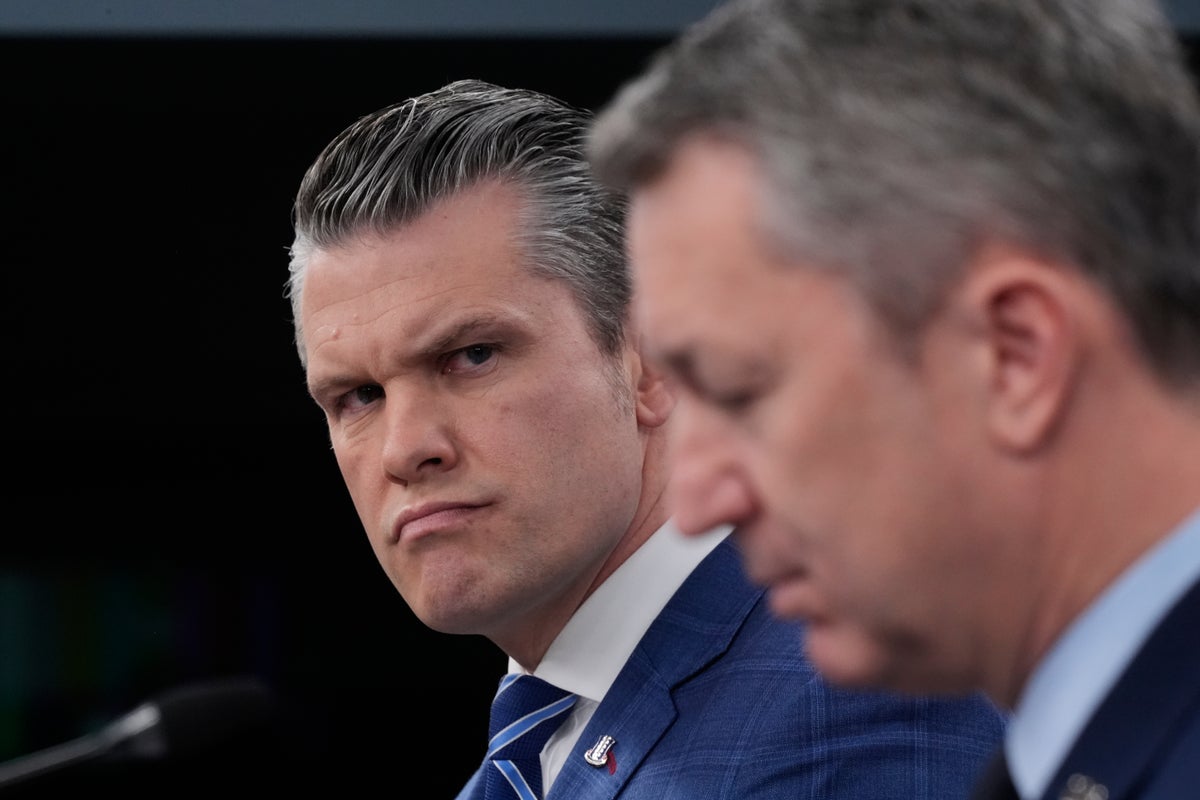
Pete Hegseth isn't great at keeping secrets. During a recent press briefing regarding the fragile ceasefire in Iran, the Defense Secretary essentially dropped the mask on what the administration actually wants. It’s not just about stopping the missiles. It’s about who sits in the chairs of power in Tehran. Most observers expected the usual diplomatic jargon about "regional stability" and "de-escalation," but Hegseth took a different path. He spoke with a bluntness that suggests the U.S. doesn't just want a pause in the fighting; they want a total transformation of the Iranian state.
The ceasefire was billed as a humanitarian necessity. Millions of civilians are caught in the crossfire of a conflict that has drained global markets and pushed the Middle East to a breaking point. But when you look at the subtext of Hegseth’s remarks, the humanitarian side looks like a convenient cover for a much more aggressive geopolitical play. He didn't hide it. He said the quiet part out loud.
Why the Iran ceasefire is a Trojan horse
Most people think a ceasefire is an end to hostilities. In this case, it feels more like a strategic pivot. Hegseth pointedly mentioned that the "maximum pressure" campaign wouldn't stop just because the guns fell silent. If you're wondering why that matters, it's because it signals that the economic strangulation of Iran is the primary weapon now. The ceasefire gives the U.S. and its allies breathing room to reorganize their assets while the Iranian economy continues to crater under the weight of sanctions.
Think about the timing. Iran is facing internal dissent unlike anything we’ve seen in decades. The protests aren't just about headscarves or fuel prices anymore. They’re about a fundamental rejection of the clerical establishment. By pushing for a ceasefire while maintaining brutal economic restrictions, the U.S. is essentially betting that the Iranian government will collapse from the inside. They're starving the beast and waiting for it to die.
Hegseth’s rhetoric moved past the idea of containment. He didn't talk about "managing" Iran. He talked about a "future Iran" that looks nothing like the current one. That’s code for regime change. Plain and simple. It’s a risky gamble that has backfired for the U.S. in the past, yet here we are again, watching the same playbook unfold in real-time.
The Hegseth doctrine and the end of diplomacy
For years, the State Department handled the heavy lifting on Iran. Now, the Pentagon is clearly in the driver's seat. Hegseth’s background as a media personality and a veteran influences his communication style—he’s direct, combative, and remarkably transparent about his biases. He doesn't see the Iranian leadership as a partner for peace. He sees them as an obstacle to be removed.
This shift represents a massive departure from the JCPOA era. Back then, the goal was a nuclear deal that integrated Iran back into the global community, at least partially. Hegseth’s comments imply that those days are dead. There is no "deal" coming. There is only a demand for total capitulation.
- The U.S. is prioritizing regional allies over direct negotiation.
- Sanctions are being used as a precursor to internal revolution.
- Military posture remains high despite the "peace" agreement.
I’ve watched these briefings for a long time. Usually, there’s a dance. A spokesperson says something vague, and the press corps tries to pin them down. Hegseth didn't dance. He walked straight to the mic and told everyone that the current Iranian leadership is "incompatible with a peaceful world." When a Defense Secretary says that during a ceasefire announcement, you should believe him. He’s telling you the war isn't over. It’s just changing shape.
What the media got wrong about the briefing
If you read the mainstream headlines, you saw words like "breakthrough" and "hope." That’s a fundamental misunderstanding of the situation. The media tends to treat ceasefires as binary—either we're at war or we're at peace. That’s not how modern conflict works. We're in a gray zone.
The "quiet part" Hegseth said out loud was that the U.S. is using this period to embolden the Iranian opposition. He practically invited it. By linking the ceasefire to the "aspirations of the Iranian people," he’s signaling to every dissident in Tehran that Washington has their back. That's a dangerous game. It puts a target on the backs of the very people the U.S. claims to support.
People also missed his comments on the "regional architecture." Hegseth hinted at a new security alliance that looks suspiciously like a "Middle East NATO" designed specifically to isolate Iran. This isn't about stopping a war in 2026. It’s about setting the stage for the next twenty years of American dominance in the region.
The risk of a cornered Iran
When you tell a regime that you won't stop until they're gone, you take away their incentive to behave. That's the part Hegseth seems to ignore. If the Iranian leadership believes that the U.S. will never accept them, why would they honor a ceasefire? Why would they stop their nuclear program?
History shows that cornered regimes don't usually go quietly. They lash out. They double down on repression. They seek out desperate alliances with other "pariah" states. By being so open about the goal of regime change, Hegseth might be making the very conflict he’s trying to "pause" much more inevitable and much more violent.
You have to look at the internal politics of the U.S. as well. Hegseth is playing to a base that wants a "strong" foreign policy. He’s not talking to the diplomats in Brussels or the leaders in Tehran. He’s talking to voters who want to see Iran defeated. This performance was as much about domestic optics as it was about international relations.
Understanding the shift in American foreign policy
We're seeing a move away from the "liberal international order" toward something much more transactional and aggressive. Hegseth is the face of this change. He doesn't care about the traditional rules of engagement. He cares about results. And in his mind, the only result that matters is a pro-Western government in Tehran.
This approach ignores the complexities of Iranian society. It ignores the fact that even those who hate the current regime might not want a U.S.-installed puppet. It’s a simplified, almost cinematic view of the world. Bad guys vs. Good guys. But the Middle East doesn't work that way. It's a mess of competing interests, historical grievances, and shifting loyalties.
Hegseth’s "quiet part out loud" moment reveals a lack of nuance that should worry anyone hoping for long-term stability. If the goal is truly regime change, then the ceasefire is a countdown, not a solution.
Identifying the red flags in the briefing
Watch the footage again. Pay attention to his body language when he’s asked about the duration of the ceasefire. He smirks. He knows this isn't meant to last. He’s looking past the current crisis toward a post-Revolutionary Iran.
- The focus on "Internal Dynamics": Hegseth spent more time talking about the Iranian people’s "will" than the actual terms of the ceasefire.
- The Sanctions Loophole: He made it clear that "economic pressure" remains on the table, which effectively nullifies the relief a ceasefire should bring.
- The Military Readiness Clause: He stressed that U.S. forces in the region are staying put. They aren't going home.
This isn't peace. It’s a siege.
Practical steps for following the Iran situation
If you want to understand what's actually happening, stop looking at the official statements and start looking at the maps and the markets. Watch the price of oil. Watch the movement of carrier strike groups in the Persian Gulf. Those tell a much truer story than a press secretary’s prepared remarks.
Follow independent journalists who have boots on the ground in the region. They see the effects of the sanctions that Hegseth brushes off. They see the reality of the "regime change" rhetoric on the streets of Shiraz and Isfahan.
Don't take Hegseth’s word for it. He’s a salesman for a specific brand of American power. He told you exactly what he wants to happen. Now you have to watch and see if the rest of the world lets him get away with it. The coming months will be some of the most volatile we’ve seen in years. Stay skeptical of any "peace" that looks this much like a preparation for war. Keep an eye on the Red Sea and the Strait of Hormuz. That’s where the real story will break.