Seventy billion dollars. Every single year. That's what climate damage to Philippine ports could cost the country by 2100 if coastal infrastructure stays built for yesterday's weather.
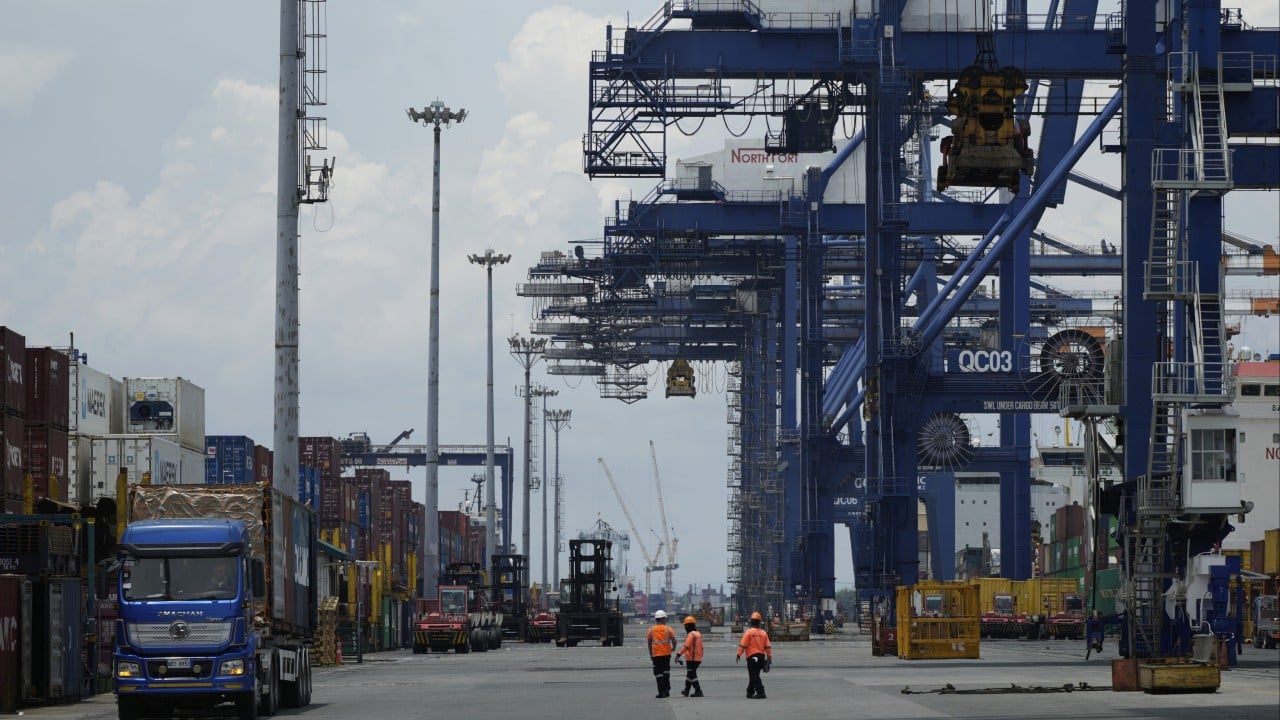
Most people read a headline like that and file it away under distant environmental problems. Big mistake. When you live in an archipelagic nation of over 7,600 islands, your ports aren't just concrete docks and gantry cranes. They're the literal arteries keeping food on tables, factories running, and exports moving. If Manila, Cebu, or Davao goes underwater during a super typhoon, the economic shockwave hits every province within days.
And here's the part that keeps maritime logistics planners awake at night. That $70 billion annual price tag isn't just about fixing broken seawalls or replacing flooded cranes. It's the compounding cost of halted supply chains, stranded cargo, and trade rerouting away from Southeast Asia's busiest shipping lanes.
Where the $70 Billion Estimate Actually Comes From
Let's get clear on the numbers so we aren't guessing. Research from the Environmental Change Institute at the University of Oxford—specifically work led by Dr. Jasper Verschuur and Dr. Jim Hall—mapped global port vulnerability against extreme weather and sea-level rise. Their modeling on maritime infrastructure risk showed that the Philippines ranks among the most exposed countries on earth.
Why? Geography and economics collide here in the worst possible way.
The Philippines sits directly in the Western Pacific typhoon belt, absorbing an average of 20 tropical cyclones every year. Five or six of those typically hit destructive intensity. At the same time, sea levels in parts of the Philippine archipelago are rising at roughly three times the global average, driven by shifting ocean currents and land subsidence in heavily populated coastal basins like Manila Bay.
When Oxford researchers combined physical asset damage with downstream economic disruption—what happens when a port shuts down and manufacturers can't get raw materials—the projected annual losses for Philippine ports under high-emissions scenarios climbed toward that $70 billion mark by the end of the century.
Direct Damage vs. Economic Cascading
People always underestimate the indirect losses. Honestly, repairing a damaged berth is the easy part. You bring in marine engineers, pour reinforced concrete, and write a check.
The real bleeding starts when vessels sit anchored outside a closed harbor for ten days.
- Demurrage fees pile up fast. Shipping lines charge thousands of dollars per day when containers can't be unloaded on schedule.
- Perishable exports rot. Philippine bananas, pineapples, and seafood bound for Japan, South Korea, and the Middle East lose value by the hour if cold-chain terminals lose power.
- Just-in-time manufacturing grinds to a halt. Electronics and semiconductor plants around Calabarzon depend on predictable customs clearance through the Port of Manila and Batangas. One week of storm-induced backlog scrambles global component deliveries.
If you've ever watched a single typhoon paralyze North Harbor, you know how fragile the buffer really is. There isn't much slack in the system.
Why Philippine Ports Are Uniquely Exposed
You can't talk about Philippine maritime infrastructure without acknowledging how old much of it is. Many regional ports operated by the Philippine Ports Authority (PPA) were engineered decades ago using historical storm surge baselines that no longer apply.
Back in the 1980s and 1990s, engineers designed breakwaters for what they considered a "1-in-100-year" storm. Today, warmer ocean surface temperatures are supercharging storms faster than meteorologists used to think possible. Typhoon Haiyan (Yolanda) in 2013 proved what happens when extreme wind speeds meet shallow coastal bathymetry—storm surges exceeded five meters in Tacloban, wiping out port facilities overnight.
The Manila Bay Bottleneck
Roughly 70 to 80 percent of the country's containerized cargo still funnels through the Manila port complex, split mainly between the Manila International Container Terminal (operated by ICTSI) and Manila South Harbor (operated by Asian Terminals Inc.).
That concentration is a massive single point of failure.
Manila Bay is shallow, semi-enclosed, and bordered by sinking land. Excessive groundwater extraction across Metro Manila and Bulacan has caused parts of the coastline to sink by several centimeters per year. When sinking land meets rising seas and a Category 5 typhoon pushing water into the bay, storm surge defenses get overwhelmed.
Even without a direct typhoon hit, routine southwest monsoon rains (habagat) combined with high tides regularly flood access roads like R-10 (Radial Road 10). A port can have the best cranes in Asia, and it won't matter if container trucks can't reach the gate because four feet of seawater covers the highway.
What Most People Get Wrong About Port Adaptation
Whenever climate risk comes up in infrastructure meetings, someone inevitably suggests building higher concrete walls. Just raise the seawall by two meters and call it a day.
That's bad engineering, and it's bad economics.
Water doesn't disappear when it hits a vertical wall; it gets deflected, scouring out the seabed underneath the structure or flooding the neighboring community instead. Worse, rigid gray infrastructure locks you into fixed assumptions. If sea levels rise faster than projected, your expensive wall becomes obsolete halfway through its lifespan.
Smart port operators are moving toward adaptive, layered resilience rather than single-wall defenses.
- Elevating critical electrical substations and automated control rooms. Water touching a concrete pier is fine. Saltwater hitting high-voltage switchgear destroys port operations for months. Raising electrical gear above worst-case surge levels is cheap insurance compared to full terminal reconstruction.
- Restoring coastal mangroves as natural wave buffers. Studies across Southeast Asia consistently show that dense mangrove belts can reduce wave energy by 50 to 70 percent before water ever reaches man-made breakwaters. In places like Iloilo and parts of Mindanao, pairing mangrove rehabilitation with engineered seawalls cuts maintenance costs while absorbing storm surge force.
- Decentralizing cargo volume. Relying on Manila for almost everything makes zero strategic sense. Expanding capacity and direct international shipping routes at Batangas, Subic Bay, Cebu, and Cagayan de Oro spreads physical risk across different weather corridors.
The Financing Gap Nobody Wants to Admit
Here's the uncomfortable truth. Upgrading dozens of commercial and municipal ports across the Philippines to withstand 2100 climate projections requires tens of billions of dollars upfront.
Where does that money come from?
The Philippine government already juggles competing infrastructure priorities—railways, bridges, flood control in urban centers, and energy grid upgrades. Public budgets alone won't cover full climate-proofing for every port in the archipelago.
Private terminal operators like International Container Terminal Services, Inc. (ICTSI) have the capital and technical sophistication to harden flagship terminals. They've already invested heavily in raised quay walls, modern drainage, and resilient crane designs at major facilities.
Smaller provincial ports tell a completely different story.
Municipal ports in Eastern Visayas, Bicol, and Northern Luzon—the exact regions taking the brunt of Pacific typhoons—operate on razor-thin margins. They handle roll-on/roll-off (Ro-Ro) ferries that move local produce and passengers between islands. When a typhoon wrecks a small Ro-Ro ramp in Samar or Catanduanes, local trade stalls for weeks, driving up food prices for low-income families who have zero financial cushion.
Green Bonds and Blended Finance
To bridge that gap, multilateral lenders like the Asian Development Bank (ADB) and the World Bank have pushed blended finance models—combining concessional climate loans with private sector investment.
It sounds great on paper. In practice, getting smaller port projects bankable takes too long. Local government units often lack the technical staff to run detailed climate stress tests or draft engineering proposals that meet international green-bond standards. Until national agencies standardize climate-resilient design templates for secondary ports, money sits on the sidelines while storms keep hitting.
How Global Supply Chains React to Unreliable Ports
Shipping companies aren't sentimental. If a port develops a reputation for frequent weather closures, damaged cargo, or unpredictable turnaround times, carriers adjust their routes.
We've already seen how fragile global maritime networks are. Between Red Sea diversions, Panama Canal droughts, and pandemic port congestion, major container lines actively price climate and disruption risk into their schedules.
If Philippine ports fail to adapt over the next two decades, three things happen quietly before 2100 ever arrives:
- Higher freight insurance premiums. Maritime insurers adjust rates based on updated catastrophe modeling. Every percentage point increase in insurance eats directly into the competitiveness of Philippine exports.
- Loss of transshipment opportunities. Neighbors like Vietnam, Malaysia, and Singapore are pouring billions into next-generation port capacity. If shippers view Philippine terminals as high-risk bottlenecks, regional hub traffic bypasses the archipelago entirely.
- Supply chain nearshoring away from vulnerable hubs. Multinational manufacturers looking to diversify factories across ASEAN check infrastructure resilience scores before breaking ground. Unreliable ports mean lost foreign direct investment.
You don't have to wait until the year 2100 to feel the financial pain. Markets price future risk into present-day investment decisions.
Practical Moves That Actually Reduce Port Risk Right Now
Waiting for global carbon emissions to drop won't save a pier during next November's typhoon season. Adaptation has to happen on the ground, terminal by terminal, starting with decisions made in current budget cycles.
If you're in logistics, manufacturing, or supply chain management: Stop single-sourcing your customs clearance through Manila. Qualify secondary ports like Subic or Batangas in your standard operating procedures now, before a storm forces you to scramble at spot-market rates. Build an extra 5 to 7 days of inventory buffer during peak typhoon months from July through December.
If you're working in infrastructure planning or public policy: Mandate forward-looking climate stress testing—using 2050 and 2100 sea-level baselines rather than historical weather averages—for every new port concession and breakwater repair. Prioritize elevating power infrastructure and hinterland access roads first, because an undamaged dock is useless if trucks can't reach it.
If you're evaluating coastal real estate or industrial park investments: Pull the latest Project NOAH hazard maps and local land subsidence data before signing long-term leases near port zones. Elevation by even two or three meters makes the difference between minor cleanup and total operational shutdown when storm surge hits.
The $70 billion figure is a warning shot, not an inevitable destiny. Concrete can be raised, power grids can be elevated, and cargo routes can be diversified—provided the people funding and running Philippine ports stop building for the climate of 1985.