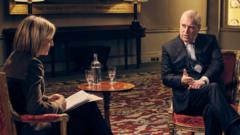
When the history of public relations disasters is written, one high street restaurant will forever hold a legendary spot. You don't even need to be a royal watcher to know the name. The Woking branch of Pizza Express became global news for all the wrong reasons when Prince Andrew dragged it into the spotlight during his infamous 2019 BBC Newsnight interview with Emily Maitlis.
He claimed he couldn't have been with Virginia Giuffre in London on March 10, 2001, because he was spending the afternoon at a children's birthday party in a quiet Surrey town. It was an alibi that immediately triggered widespread disbelief. The idea of a senior royal using a casual dining chain to counter serious allegations felt completely absurd.
But behind the internet memes and the thousands of troll reviews that flooded Google, the "Pizza Express defense" collapsed under its own logic. When you look at the actual facts, the timing, and the way royal security works, the story never stood a chance of protecting him.
The Timeline Problem That Nobody Could Fix
The biggest issue with the Duke of York's Woking defense isn't just that it sounded bizarre. It's the basic math of the timeline.
Virginia Giuffre's allegations centered around an evening out at Tramp, a highly exclusive nightclub in Central London, followed by a trip to Ghislaine Maxwell’s home in Belgravia. Prince Andrew countered this by stating he was at the Woking pizzeria at roughly 4:00 PM or 5:00 PM to take his daughter, Princess Beatrice, to a party.
Let's look at the actual geography. Woking is roughly 30 miles away from Central London. Even with normal traffic on the A3, driving between the two locations takes less than an hour. If a senior royal is traveling with a police escort, that time drops significantly.
An alibi is only useful if it proves you couldn't physically be at the scene of the crime. Being at a kids' party in Surrey at 5:00 PM doesn't mean you can't be in a London nightclub by 10:00 PM or 11:00 PM. The timeline left a massive window of several hours completely unaccounted for. Instead of shutting down the allegations, the detailed memory simply highlighted the gap in the rest of his evening.
The Missing Paper Trail
When a member of the Royal Family moves anywhere, they don't just hop into a car and drive off unannounced. Every single journey involves intense planning, personal protection officers, and detailed logs.
If the Woking visit happened exactly as described, there should have been a definitive paper trail. The Metropolitan Police's royalty protection branch keeps strict duty records. Royal diaries are planned months in advance. Yet, no official documentation was ever publicly produced to corroborate the specific date of that party.
Years after the interview, public records requests revealed that the Met Police had long since destroyed the relevant duty logs and annual leave records from 2001, following standard data retention policies that only require keeping those documents for a few years. While this destruction was entirely standard procedure, it meant the physical evidence needed to prove the alibi was completely gone.
Without those logs, the claim rested entirely on the Prince's memory. And relying on memory alone is incredibly dangerous when the details are this specific.
Why the Specificity Backfired
During the interview, Emily Maitlis asked a very straightforward question: why would someone remember a random children's party from nearly two decades earlier so clearly?
The answer given was that going to a Pizza Express in Woking was a "very unusual thing" for him to do. He claimed he had only been to the town a couple of times.
In theory, remembering an unusual event makes sense. In practice, building a legal defense around a highly specific, unverified memory backfires if no one else can back it up. Journalists immediately went to Woking to interview locals, former staff, and business owners near the restaurant. Nobody could recall seeing a prince eating pizza in their neighborhood.
Even within the royal household, the story found little support. Biographers later noted that Princess Beatrice herself had no clear recollection of the specific party taking place on that exact date. When your own family and the local community can't validate the core piece of your defense, the strategy falls apart.
The Corporate Silence
While the public laughed at the internet memes, the situation was a massive headache for the restaurant chain itself. The Woking branch was suddenly a tourist attraction for pranksters.
Internal emails leaked later showed that the company had to issue strict warnings to its staff, especially around the Prince's birthday, telling them to avoid commenting to undercover reporters posing as customers. The brand had to navigate being linked to a massive global scandal without taking a side or alienating the public.
Ultimately, the pizza alibi failed because a good defense requires two things: it must make physical sense, and it must be backed by undeniable evidence. The Woking claim had neither. It couldn't account for the later hours of the night, and it lacked the official documentation to prove it even happened on March 10. By trying to offer a relatable, human detail to clear his name, the Duke ended up creating the very symbol of his reputational downfall.