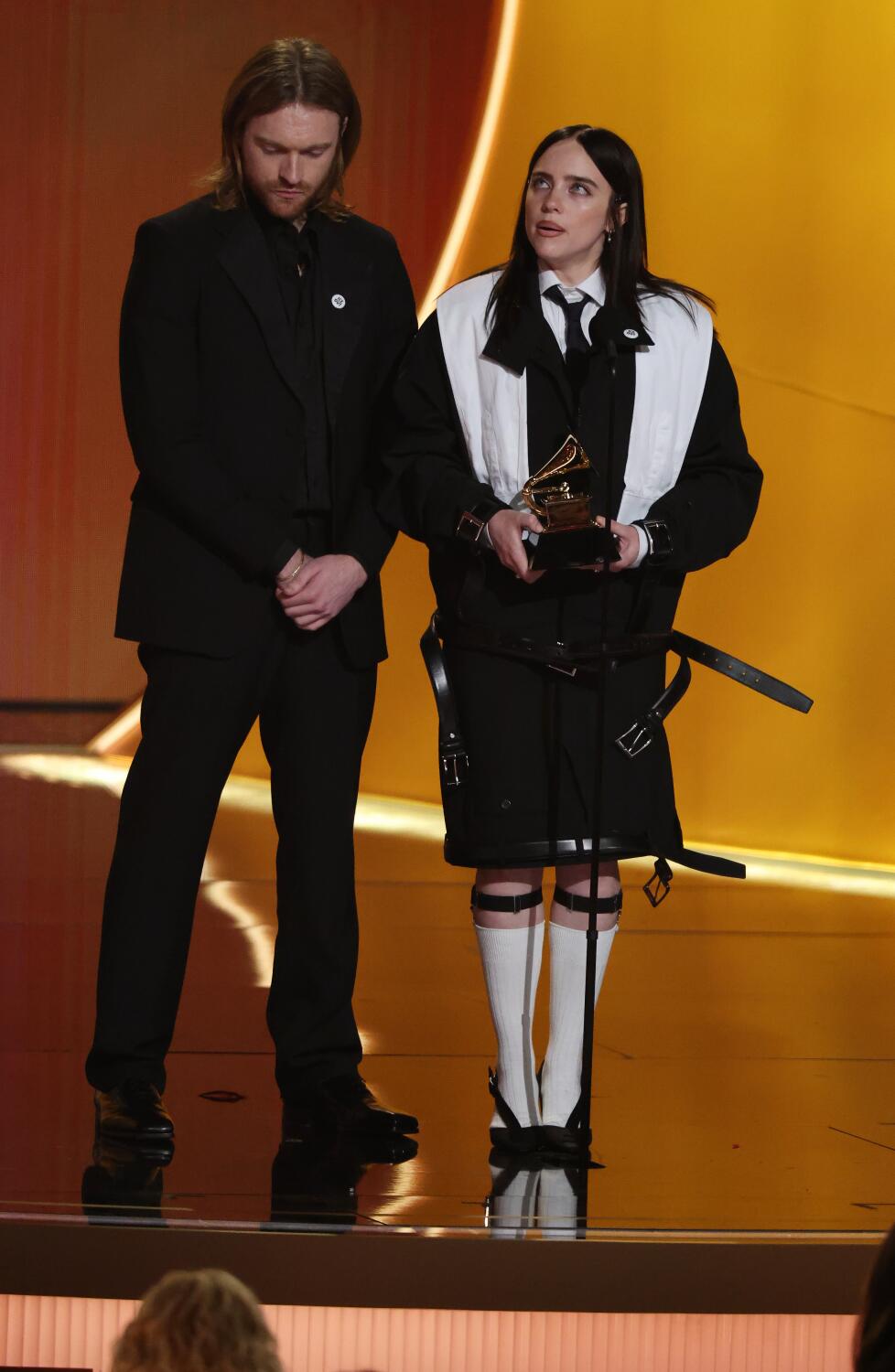
When Billie Eilish and Finneas O’Connell took the stage at the 68th Annual Grammy Awards, the industry expected a standard victory lap. They had just secured another sweep, cementing a decade of dominance that has seen them redefine the sonic architecture of modern pop. Instead, the siblings pivoted. Standing before an audience of the most powerful figures in global media, they used their platform to deliver a message that went far beyond the Recording Academy’s usual platitudes about the "power of music." By declaring that "no one is illegal on stolen land," Eilish didn’t just accept an award; she signaled a fundamental shift in how A-list celebrities navigate the intersection of art and activism.
This was not a scripted corporate endorsement. It was a calculated disruption of the awards show format. For years, the Grammys have struggled with a reputation for being out of touch, often insulating their winners in a bubble of high-fashion and self-congratulation. Eilish and Finneas broke that seal. Their statement addressed two of the most volatile issues in contemporary discourse—immigration and Indigenous rights—forcing a room full of millionaires to confront the geopolitical realities that exist outside the Staples Center.
The Strategy Behind the Soundbite
To understand why this moment resonated, one must look at the mechanics of celebrity influence in 2026. In an era of fragmented media, a viral moment is the only currency that matters. Eilish and Finneas have mastered the art of the "quiet roar." Their music is intimate and hushed, but their public positioning is increasingly loud and uncompromising. This specific phrasing—"no one is illegal on stolen land"—is a hallmark of radical grassroots movements. By bringing it into the mainstream, they are effectively bridging the gap between underground activism and the heights of the music industry.
The industry usually prefers "safe" activism. We see this in the form of generic pins for vaguely defined causes or somber speeches about "coming together." Eilish’s approach is different because it is specific. It acknowledges the historical context of the soil the stage is built on while simultaneously challenging the current legislative trends regarding border security and human rights. It is a direct rejection of the neutrality that publicists usually demand from their billion-stream clients.
The Financial Risk of Taking a Stand
Modern stardom is a business of risk mitigation. When a performer at the level of Eilish takes a hard political stance, they are not just expressing an opinion; they are risking a significant portion of their market share. The demographic that listens to Eilish is broad. It includes coastal activists, but it also includes millions of listeners in conservative strongholds and international markets where such statements can lead to immediate censorship or "shadow-banning" by state-controlled media.
Finneas, acting as the architect of their shared brand, understands the math. He knows that in 2026, authenticity is more valuable than broad appeal. The modern fan can smell a PR-engineered statement from a mile away. By leaning into controversial territory, the duo isn't just seeking headlines; they are building a "fortress brand" that is immune to the accusations of being "industry plants" or corporate puppets. They are proving that they own their voices, literally and figuratively.
A History of Disruptive Speeches
The Grammys have a long, often awkward history with political outbursts. From Sinead O’Connor’s boycotts to Kendrick Lamar’s visceral performances, the stage has frequently been used as a site of resistance. However, Eilish represents a new breed of "Establishment Rebel." Unlike previous generations who were often punished for their outspokenness—think of the Dixie Chicks in 2003—Eilish and Finneas are the darlings of the very institution they are critiquing.
This creates a unique tension. The Recording Academy needs Eilish to stay relevant to Gen Z and Gen Alpha. Eilish uses that leverage to force the Academy to host a dialogue it might otherwise avoid. It is a symbiotic relationship where the artist holds the upper hand. When she speaks about "stolen land," she is reminding the viewers—and the stakeholders—that the glitz of the evening is a temporary veneer over much older, deeper societal fractures.
Analyzing the "Stolen Land" Rhetoric
The term "stolen land" is a direct reference to the Land Back movement and Indigenous sovereignty. In the context of a Hollywood awards show, it serves as a jarring reminder of the Tongva and Chumash peoples, the original inhabitants of the Los Angeles basin. By linking this to the plight of undocumented immigrants, Eilish is synthesizing two disparate political threads into a single, cohesive worldview. She is arguing that borders are artificial constructs imposed upon a landscape that has its own inherent history.
This rhetoric is divisive by design. Critics argue that multi-millionaires living in gated communities are the ultimate beneficiaries of the status quo they decry. They point to the irony of an artist performing in a stadium built on displaced communities while lecturing the public on land rights. This "hypocrisy trap" is the standard defense used against celebrity activists. Yet, the counter-argument is equally compelling: if those with the loudest microphones don't speak, the message never reaches the ears of those who need to hear it most.
The Impact on the Recording Industry
Beyond the immediate social media firestorm, this moment has practical implications for the music business at large. We are seeing a move away from the "shut up and sing" era. Labels are now forced to vet artists not just for their vocal range, but for their political viability. The Eilish-Finneas model proves that a hard-edged political identity can actually drive engagement rather than stifle it.
- Artist Autonomy: More performers are demanding "speech clauses" in their contracts, ensuring labels cannot penalize them for social media posts or award show speeches.
- Brand Alignments: High-end fashion houses and tech sponsors are becoming more comfortable with "radical" messaging, provided it aligns with the values of the younger consumer base.
- Content Curation: We can expect a surge in music that explicitly references these themes, as the industry chases the "authenticity" that Eilish has successfully monetized.
The Recording Academy itself is in a bind. Do they lean into this new era of activism, or do they attempt to tighten the reins on future broadcasts? If they choose the latter, they risk losing the very artists who give them cultural capital. If they choose the former, they risk alienating the older, more conservative viewers who still represent a significant portion of the live television audience.
The Evolution of the Pop Star as a Moral Agent
For decades, the pop star was a product meant to be consumed and discarded. They were expected to be beautiful, talented, and profoundly empty. That model is dead. The rise of Eilish and Finneas marks the maturation of the pop idol into a moral agent. They are no longer just providers of entertainment; they are acting as filters through which their audience processes the world's chaos.
When Finneas took the mic to echo his sister's sentiments, he wasn't just playing the role of the supportive brother. He was reinforcing the idea that this is a collective stance. It is a family business built on a specific set of ethics. This unity makes their message harder to dismiss as a singular whim or a fleeting emotional moment. It is a core component of their artistic identity.
Breaking the Fourth Wall of Fame
The most effective part of the speech was the lack of ego. Eilish didn't frame herself as a savior. She framed herself as a witness. This distinction is crucial. By acknowledging the land and the people, she effectively de-centered herself from her own moment of glory. It was a masterclass in using fame to illuminate something other than the person holding the spotlight.
The question now is whether this sets a new standard for the industry. Will every winner at the next major ceremony feel compelled to offer a political manifesto? There is a danger of "activism fatigue," where the sheer volume of political statements renders them all meaningless. However, the specificity of the Eilish-Finneas statement suggests a way forward. It wasn't a generic plea for peace; it was a targeted commentary on the history of the continent.
The Geography of Disruption
Los Angeles is a city built on illusions, and the Grammys are the ultimate expression of that artifice. By bringing the reality of "stolen land" into the room, Eilish and Finneas performed a sort of geographical exorcism. They reminded the audience that the geography of the stage is not just a set of coordinates, but a contested space with a bloody and complex history.
This is a direct challenge to the "American Dream" narrative that the music industry loves to promote. The story of the self-made star who rises from nothing to achieve global fame is a staple of the Grammys. Eilish is complicating that story. She is suggesting that success is not just about talent and hard work, but also about the systems and structures that allow certain people to succeed while others are marginalized or excluded entirely.
The Global Ripple Effect
The speech has already begun to trigger reactions far beyond the United States. In countries with their own histories of colonization and land disputes—Australia, Canada, and various nations across South America—the "stolen land" comment has been adopted as a rallying cry by local artists. This is the true power of the Eilish-Finneas platform. They are not just influencing American culture; they are providing a vocabulary for a global movement.
International labels are now scrambling to understand how this shift will affect their marketing strategies. In an interconnected world, a speech made in Los Angeles at midnight can be the top trending topic in Sydney by sunrise. The "borderless" nature of digital music means that an artist's political stance is now as much a part of their global export as their melodies.
The Industry Response and the Future of the Podium
In the days following the ceremony, industry insiders have been divided. Some executives have privately expressed concern that the "politicization" of the Grammys will lead to a decline in advertiser interest. Others argue that this is exactly what the awards show needs to remain relevant in a world where audiences are increasingly cynical about traditional institutions.
What is clear is that the "Eilish Effect" is real. She has moved the goalposts. It is no longer enough to just thank your producer and your parents. The podium is now a place where the weight of the world is expected to be acknowledged. This isn't just about music anymore. It's about who has the right to stand on that land, who has the right to speak, and who is being ignored while the music plays.
The Recording Academy must now decide if it wants to be a museum for the music of the past or a platform for the voices of the future. By allowing—and even celebrating—the Eilish-Finneas speech, they have tentatively chosen the latter. But the road ahead is fraught with complexity. As more artists follow Eilish's lead, the tension between commerce and conscience will only tighten.
The era of the silent superstar is over. The next generation of artists isn't just looking for a hit song; they are looking for a way to justify their presence in a world that is increasingly demanding accountability from its icons. Eilish and Finneas have shown them the way. Whether the rest of the industry has the courage to follow is a different question entirely.
The lights will dim, the stage will be struck, and the "stolen land" will remain. But for one night, the reality of that land was the loudest thing in the room. This is the new reality of the music industry: the art is the hook, but the truth is the message.
Stop looking at the trophy and start looking at the ground beneath your feet.