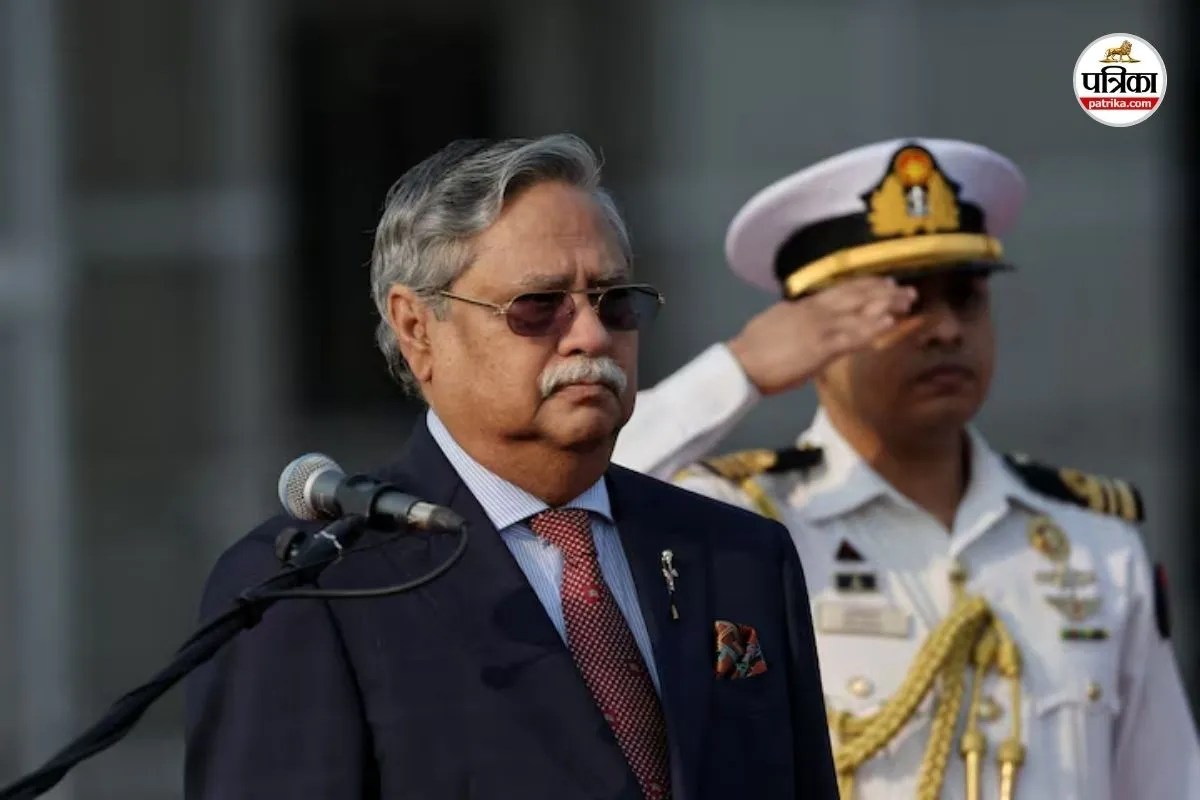
Mohammed Shahabuddin, the President of Bangladesh, found himself at the center of a escalating constitutional storm following the abrupt departure of former Prime Minister Sheikh Hasina. Shahabuddin, who took office as a loyalist appointee of the ruling Awami League, faced intense pressure from student-led protesters and opposition forces demanding his resignation midway through his five-year term. His precarious position underscores a deeper institutional crisis gripping the nation after decades of entrenched power dynamics crumbled in a matter of weeks. The fall of his presidency marks not just an individual exit, but the total dismantling of the regime structure that previously defined Bangladeshi politics.
The Cracking Foundation of the Bangabhaban
The presidency in Bangladesh is largely ceremonial, yet during political transitions, the office becomes the sole anchor of state legitimacy. Shahabuddin was elevated to the post in early 2023 without contest, a move engineered to ensure absolute political alignment between the executive head of state and Hasina’s cabinet.
When mass demonstrations forced Hasina to flee the country, the expectation was that Shahabuddin would facilitate a legally sound transition to an interim administration. Instead, contradictory statements regarding Hasina’s formal resignation letter triggered immediate public backlash. Shahabuddin initially claimed to possess the official document, only to state later in a media interview that he had no written record of her resignation.
That single contradiction ignited a fresh wave of street mobilization. Student leaders who spearheaded the anti-autocracy movement viewed his statement not as a administrative detail, but as a deliberate attempt to undermine the legal standing of the interim government. Protesters marched directly to the presidential palace, Bangabhaban, demanding his immediate step-down.
Institutional Betrayals and the Constitutional Vacuum
The crisis exposes a fundamental flaw in systems where partisan loyalty overrides institutional independence. Shahabuddin spent decades within the judicial and political apparatus tightly bound to the Awami League establishment. Expecting a loyalist president to neutrally oversee the dismantling of his own party's apparatus proved naive.
Key factors accelerating his downfall include:
- Erosion of Public Trust: Conflicting public statements regarding the executive transition destroyed his credibility among civil society and student groups.
- Loss of Military Backing: The armed forces, acting as guarantors of public stability during the transition, signaled an unwillingness to use force to protect a figurehead lacking popular support.
- Legal Dilemmas: Removing a sitting president without an active parliament creates unprecedented constitutional questions regarding who administers oaths and maintains executive continuity.
The interim administration led by Nobel laureate Muhammad Yunus faced a complex balancing act. Allowing Shahabuddin to remain threatened to alienate the street movement that brought down the previous regime. Forcing him out without legal precedent risked completely severing the state's continuity under the established constitution.
The Anatomy of an Unraveling Regime
Political transitions after autocratic rule rarely proceed smoothly. The mechanism that kept the previous government in power relied on systematic control across the judiciary, civil service, and security forces. Shahabuddin was an essential cog in that machine.
Consider a system where every oversight body is selected based on political fealty rather than institutional integrity. When the central pillar falls, the surrounding supports cannot adapt to neutral governance. They either collapse under public scrutiny or actively resist the new status quo to protect their own standing.
Shahabuddin's initial appointment was designed to guarantee total control over the electoral process ahead of national polls. When that process was swept away by popular revolt, the president's continued presence became an untenable contradiction for a nation attempting to rewrite its political rules.
The Street vs. The Statute
The conflict eventually boiled down to a fundamental question: Does legitimate authority derive from legal continuity or revolutionary necessity?
Student activists argued that the constitution itself had been compromised by years of unilateral amendments and managed elections. From their perspective, preserving Shahabuddin’s tenure in the name of constitutionalism was simply protecting the remnants of an ousted government. Legal scholars countered that abandoning constitutional framework entirely leaves the nation vulnerable to arbitrary rule or military intervention.
This tension left Shahabuddin completely isolated within the presidential palace. With opposition political parties quietly withdrawing support and revolutionary student groups surrounding the gates, his resignation became a foregone conclusion rather than a matter of political choice.
Beyond the Exit
The resignation of a president mid-term is a symptom, not the cause, of structural decay. Replacing the individual in Bangabhaban does not automatically repair the judicial, police, and electoral systems that were dismantled over the preceding fifteen years.
Future stability depends entirely on whether the interim government can establish clear rules for state governance that survive the exit of specific personalities. Without deep judicial and electoral reforms, any subsequent administration will simply inherit the same fragile structure that brought down the previous regime.