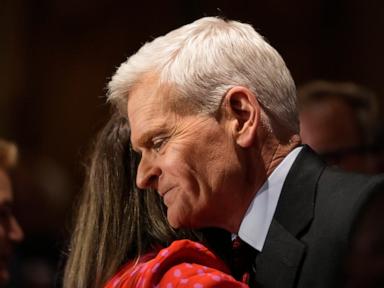
The defeat of a two-term incumbent U.S. Senator in a primary election is rare. The elimination of an incumbent who vastly outspends their opposition is a structural anomaly that signals a fundamental shift in political market dynamics. When Louisiana Senator Bill Cassidy placed third in the May 2026 jungle primary, failing even to qualify for the June runoff election despite a combined $22 million expenditure by his campaign and allied Super PACs, media analysis defaulted to standard narratives of personal grievance and political revenge.
A rigorous analysis reveals that Cassidy’s electoral failure was not merely the result of a single historic vote or a targeted presidential endorsement. Instead, it represents the execution of a precise political cost function. The outcome demonstrates how changes in primary voting structures, combined with asymmetric alignment penalties within modern political parties, make independent legislative action mathematically unsustainable for incumbent politicians in deeply partisan states. Meanwhile, you can read related developments here: The Anatomy of Post Assad Security Asymmetry: A Brutal Breakdown of the Bab Sharqi Detonation.
The Structural Mechanics of a Primary Collapse
The primary election data from Louisiana exposes an intense consolidation of the electorate against the incumbent. Representative Julia Letlow, backed by an endorsement from Donald Trump, captured 44.8% of the vote. State Treasurer John Fleming secured 28.3%, while Cassidy trailed in third place with 24.8%.
To understand how an incumbent with a significant cash advantage—exceeding the combined expenditures of Letlow and Fleming—could finish third, one must examine the institutional framework of the election. Louisiana historically utilized an open jungle primary system. This structure allowed candidates from all parties to appear on a single ballot, permitting cross-partisan voting where moderate Democrats and independents could act as a buffer for a centrist or independent-minded Republican incumbent. To see the bigger picture, we recommend the excellent analysis by NBC News.
The structural bottleneck for Cassidy occurred when the state altered its primary mechanics. By shifting toward closed primary inputs that narrowed the participating electorate to registered party members, the state government altered the voter composition. This optimization of the primary electorate concentrated the influence of high-ideology, high-salience voters. In a closed system, the utility function of an incumbent changes. Winning requires satisfying the core partisan base rather than building a broad coalition across the ideological spectrum.
The Asymmetric Penalty of Party Non-Conformity
Cassidy’s 2021 vote to convict Donald Trump during the second presidential impeachment trial serves as the primary independent variable in his political cost function. In conventional political strategy, an unpopular vote can be diluted over time through legislative delivery and local capital allocation. Cassidy attempted this exact mitigation strategy, focusing his campaign on structural delivery for Louisiana, including:
- Negotiating and defending federal infrastructure allocations for the state’s energy sector.
- Securing tax exemptions for low-margin service workers, such as barbers.
- Leveraging his position as Chairman of the Senate Health, Education, Labor, and Pensions (HELP) Committee to advance regional healthcare priorities.
This strategy failed because it assumed a linear trade-off between legislative performance and party loyalty. In the current political equilibrium, the penalty for high-profile non-conformity is highly asymmetric. Loyalty metrics operate as a strict gatekeeping mechanism. If a politician fails the foundational loyalty test, the perceived value of their legislative output among primary voters drops close to zero.
Cassidy even tried to signal compliance by voting to confirm high-profile executive nominees, such as Robert F. Kennedy Jr. as Health and Human Services Secretary, despite expressing public scientific reservations. This concession failed to alter his trajectory because the political market had already priced in his 2021 non-conformity. A singular act of defiance against party leadership establishes a permanent risk premium that subsequent compliance rarely offsets.
Capital Inefficiency in Modern Political Campaigns
The Louisiana primary illustrates the limits of financial capital when deployed against intense ideological alignment. The Louisiana Freedom Fund and Cassidy’s campaign committee deployed over $22 million, giving the incumbent an overwhelming financial advantage on television and digital media. In traditional campaign models, this level of spending creates a decisive advantage in name recognition and narrative control.
However, the return on investment for campaign spending diminishes sharply when voter preferences are deeply entrenched. In a closed primary dominated by high-salience issues, media spending cannot easily alter a voter's core identity or views on party loyalty.
When an external force—in this case, a direct presidential endorsement coupled with a $1 million issue-advocacy campaign from the Make America Healthy Again (MAHA) PAC—enters the race, it acts as a low-cost, high-efficiency shortcut for voters. The endorsement from a party's de facto leader serves as a powerful signal that instantly neutralizes tens of millions of dollars in conventional advertising. Ideological alignment scales organically through grassroots networks and social media, creating a cost advantage that paid media cannot replicate.
Institutional Implications for Legislative Governance
The removal of the first sitting senator to lose a primary since 2017 has clear implications for the internal operations of the U.S. Senate. Historically, the Senate functioned as an institution that insulated members from short-term populist pressures due to six-year terms. The systematic defeat or forced retirement of senators who break with party leadership indicates that this institutional buffer has eroded.
Of the seven Republican senators who voted for conviction in 2021, only two remain in office: Lisa Murkowski of Alaska and Susan Collins of Maine. Both survive due to unique structural conditions. Murkowski operates within a top-four ranked-choice voting system designed to reward cross-partisan appeal, while Collins represents a moderate, split-ticket northeastern state. In deep-red states, the electoral path for a non-conforming incumbent has effectively closed.
This dynamic creates a strong incentive for remaining legislators to avoid any independent action. When the institutional penalty for breaking with the party is certain career termination, rational actors choose absolute alignment. Consequently, the Senate's traditional role as a moderating body that checks executive power is replaced by a system that rewards party unity above all else.
The Strategic Path Forward for Internal Party Dissent
For political actors seeking to navigate deep-red or deep-blue electorates while maintaining independent policy positions, the Cassidy campaign offers a clear blueprint of what not to do.
First, attempting to obscure a high-profile break with party leadership through silence or subsequent over-compliance does not work. It alienates independent voters who value consistency while failing to appease partisan voters who demand absolute loyalty.
Second, relying on a financial advantage to overpower an endorsement from party leadership is a flawed strategy in a closed primary system. Financial resources are most effective for building name recognition or defining an unknown opponent; they are highly inefficient at changing deeply held views on party identity.
The only viable strategy for an independent-minded incumbent in a highly partisan state is to preemptively alter the electoral environment. This requires building institutional protections, such as open primary structures or ranked-choice voting, well before a primary challenge materializes. Without these structural safeguards, any calculation of legislative independence must factor in a terminal political cost.