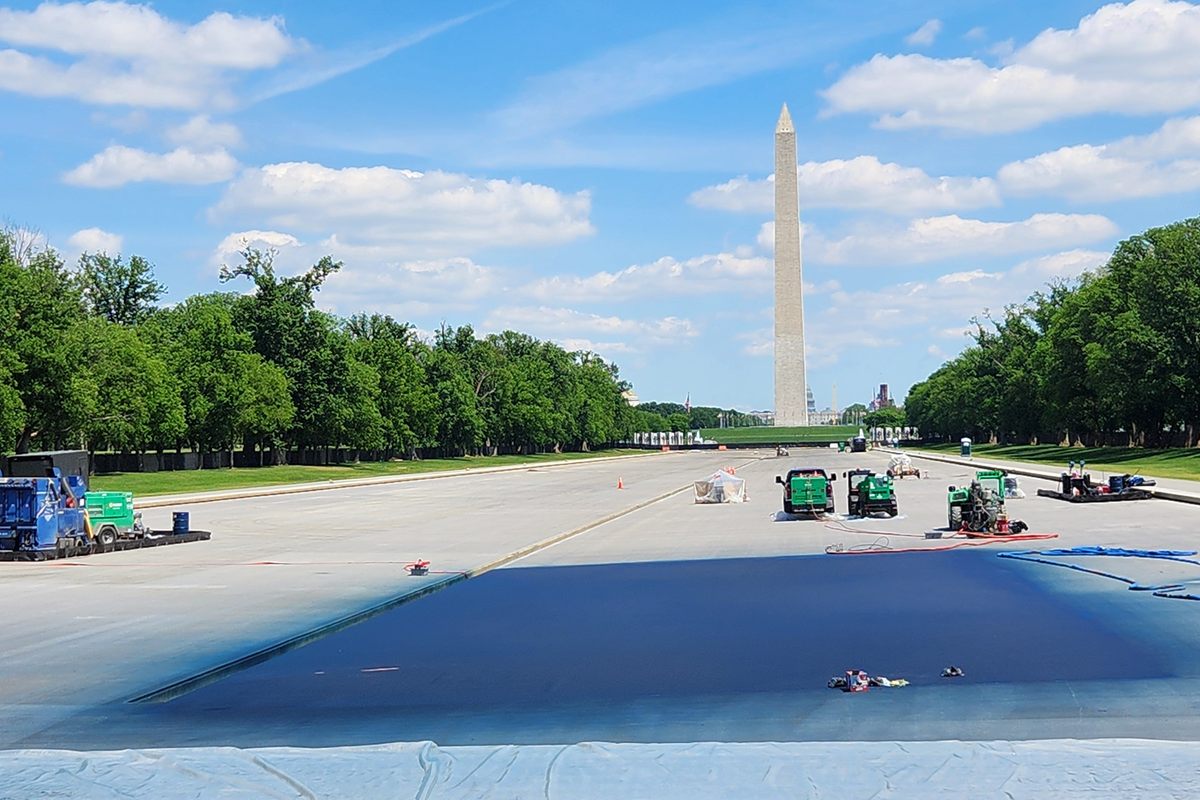
The Lincoln Memorial reflecting pool, a site typically reserved for national reflection and quietude, has become the latest canvas for targeted political vandalism. Park Rangers discovered the numbers and letters 86 47 scrawled across the granite coping and the surrounding walkway early Tuesday morning. This incident does not exist in a vacuum. It coincides with a period of intense legal and political volatility, specifically following the recent indictment of James Comey and the ongoing executive rebranding of the National Mall under the current administration.
Vandalism of national monuments often reflects the boiling point of the American psyche. While the National Park Service (NPS) began immediate abatement procedures using low-pressure power washing and specialized solvents, the stain on the national discourse remains more difficult to scrub away. The "86" shorthand, traditionally used in the restaurant industry to mean "eject" or "remove," coupled with "47," a direct reference to the 47th presidency, indicates a specific, targeted grievance. This is not the random graffiti of a bored teenager. It is a calculated act of political dissent performed on one of the most visible stages in the world.
Security Failures in the Heart of the District
The National Mall is one of the most surveilled patches of land on the planet. Between the United States Park Police (USPP), the Secret Service, and a web of high-definition cameras, a breach of this nature suggests a significant lapse in security protocols. How does an individual or group manage to deface the most iconic water feature in Washington D.C. without detection?
The answer likely lies in the current transition of the Mall’s management. Under the new administration's "makeover" plan, resources have been shifted toward massive structural renovations and aesthetic overhauls, potentially leaving a vacuum in foot-patrol presence during the overnight hours. The USPP has faced chronic underfunding and staffing shortages for years, a reality that clashes harshly with the grand visions of architectural renewal pushed by the executive branch.
The Logistics of Restoring Granite
Removing ink or paint from the pre-Civil War era stones and the newer granite installations requires a delicate touch. You cannot simply blast it with water.
Granite is porous. If a cleaning crew uses too much pressure, they risk driving the pigment deeper into the stone, creating a permanent "shadow" that will haunt the monument for decades. The NPS preservation teams utilize a specific series of chemical poultices designed to draw the ink out through capillary action. It is a slow, expensive process. Taxpayer dollars that were earmarked for infrastructure or educational programs are now being diverted to erase a few square feet of anger.
The Comey Indictment and the Catalyst of Rage
The timing of this vandalism is the most critical factor for any serious analyst. The recent indictment of former FBI Director James Comey has acted as a lightning rod for both ends of the political spectrum. To some, it represents a long-overdue accounting of "Deep State" overreach; to others, it is the weaponization of the Justice Department against a perceived enemy.
When legal battles move from the courtroom to the monuments, it signifies a breakdown in the belief that the system can resolve its own conflicts. The reflecting pool was built to mirror the sky and the Washington Monument, symbolizing a clarity of national purpose. Today, it mirrors a divided populace that views even the most sacred public spaces as fair game for ideological warfare. The "86 47" message is a direct response to this environment, a shorthand cry for the removal of a leader whom the vandal perceives as the architect of this chaos.
The Aesthetic Overhaul of National Memory
There is an irony in the fact that this vandalism occurred during what is being billed as the "Trump Makeover" of the National Mall. The administration has proposed several changes to the layout of the monuments, including new lighting schemes and upgraded visitor centers. Critics argue these changes prioritize "branding" over the somber, historical preservation that has defined the Mall since the McMillan Plan of 1902.
Rebranding the Sacred
The tension between preservation and modernization is palpable.
- Infrastructure upgrades: Necessary for the millions of visitors who tread these paths annually.
- Aesthetic shifts: Often viewed as a vanity project for whichever administration holds the keys to the White House.
- Security gaps: A direct byproduct of focusing on the "new" while neglecting the "now."
When an administration seeks to leave a physical mark on the landscape of the capital, it invites a physical response from those who feel excluded from that vision. The reflecting pool, situated between the Lincoln Memorial and the World War II Memorial, is the literal bridge between our greatest internal conflict and our greatest external victory. Defacing it is a way of attacking the very idea of American continuity.
The Cost of the Cleanup
The financial cost of the cleanup is estimated to be in the tens of thousands of dollars, but the cultural cost is higher. Every time a monument is gated off for repairs or scrubbing, the public’s access to their own history is restricted.
The NPS has not yet released footage of the suspects, leading to speculation about the efficacy of the current surveillance grid. If the most protected area in the country can be tagged with political slogans during a time of high alert, it raises uncomfortable questions about the safety of other, less-monitored historical sites across the nation. We are seeing a trend where historical literacy is being replaced by partisan iconography.
Historical Precedent for Monument Defacement
This is not the first time the Lincoln Memorial has been targeted. In 2013, green paint was splashed on the statue of Lincoln himself. In 2017, "Fuck Law" was written on a pillar. However, the "86 47" incident feels different because it is so intrinsically tied to an active, ongoing legal drama involving the nation’s former top law enforcement officer and the current sitting president.
We have entered an era where the monument is no longer an untouchable relic. It is a message board. The granite walls and the still waters of the pool are being treated as social media feeds—temporary, reactive, and loud. The danger is that as these acts become more frequent, the "sacredness" of the space erodes until it becomes just another park, and the gravity of what it represents is lost to the noise of the present.
The investigation into the graffiti remains open. The USPP has appealed to the public for information, but in a city currently defined by its secrets and its leaks, the perpetrator may never be found. The water in the pool will eventually be still again, but the undercurrent of resentment that fueled this act is only gaining speed.
Fixing the stone is the easy part. The real challenge lies in addressing the systemic erosion of respect for the institutions these monuments represent. If the National Mall is to survive as a symbol of unity, it cannot be treated as a trophy for the winners or a punching bag for the losers. It must remain a neutral ground where the only thing reflected is the truth of our shared history, unmarred by the slogans of the day.
The chemicals will dry. The "86 47" will fade under the pressure of the NPS technicians. But as long as the political climate remains this combustible, the next bottle of spray paint is already being shaken.