The stock market hates a vacuum, but it hates a countdown even more. Today, April 7, 2026, Wall Street felt like a pressure cooker. We watched the major indexes twitch with every notification, as President Trump’s 8 p.m. ET deadline for Iran to reopen the Strait of Hormuz loomed over every trade.
If you looked at your screen midday, you probably saw red. The S&P 500 took a 1.2% dive at its worst point. Investors weren't just selling; they were bracing for the possibility of seeing Iranian infrastructure "decimated," as the administration put it. But then, a late-day twist changed the math. Pakistan’s Prime Minister made a public plea for a two-week extension, and suddenly, the panic-selling turned into a cautious crawl back to the surface.
By the time the closing bell rang, the damage wasn't as bad as the headlines suggested. The S&P 500 actually managed a tiny 0.1% gain. The Nasdaq followed suit with a 0.1% bump, while the Dow Jones Industrial Average lagged, finishing down about 85 points, or 0.2%. It’s a classic "wait and see" market, where nobody wants to be the last one holding the bag if things go sideways tonight.
The Geopolitical Tax On Your Retirement
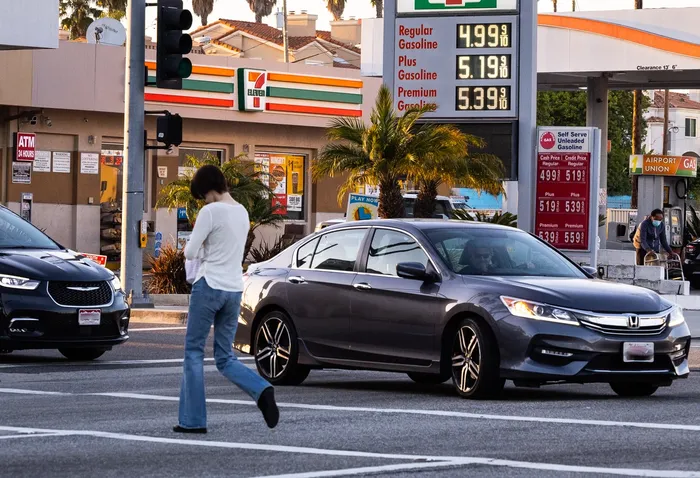
It’s easy to get lost in the noise of "deadlines" and "ultimatums," but for those of us managing portfolios, this is about energy and inflation. Oil is the primary lever here. West Texas Intermediate (WTI) crude is sitting around $112 a barrel. To put that in perspective, we were looking at $70 oil before this conflict started in February.
When the President threatens to destroy power plants and bridges, the market doesn't just see a military strike. It sees a permanent disruption to global energy flows. The "Liberation Day" tariffs from last year already recalibrated how we trade, but this conflict is a different beast. It’s more immediate. It’s more violent.
If the Strait of Hormuz stays closed, $112 oil is just the beginning. We’re looking at a scenario where shipping costs skyrocket, hitting everything from the price of your groceries to the bottom line of every multinational on the Dow. That’s why the Dow underperformed today—those industrial giants are the most sensitive to energy spikes and logistics nightmares.
Why Tech Is Moving On Its Own Logic
Interestingly, the Nasdaq isn't just a mirror of the war news. While the Iran deadline is the "macro" story, the "micro" stories in tech are creating their own weather systems. Take Apple, for example. The stock slid over 2% today on whispers that the first foldable iPhone is hitting engineering snags. Even in the middle of a potential military escalation, traders are still obsessed with whether a phone can bend.
Then you have Broadcom, which surged more than 6%. They announced an expanded partnership with Anthropic (the team behind Claude AI), proving that the artificial intelligence trade is still the primary engine for growth. If you're wondering why the Nasdaq didn't crater along with the Dow, look at the AI sector. It’s acting as a stabilizer, even when the rest of the world feels like it’s falling apart.
- Broadcom (AVGO): Up over 6% on AI collaborations.
- UnitedHealth (UNH): Up 9% thanks to better-than-expected Medicare Advantage rates.
- Apple (AAPL): Down 2% on foldable delay rumors.
- Arm Holdings (ARM): Down 3% after a Morgan Stanley downgrade.
The Pakistan Pivot And The Extension Gamble
The late-day rally wasn't a coincidence. It was a reaction to the Pakistani Prime Minister’s intervention. The market is betting that Trump might do what some have nicknamed "TACO"—Trump Always Chickens Out. It sounds harsh, but it’s a pattern investors have seen before: a hard deadline, a massive threat, and then a last-minute extension to allow for more "negotiation."
If we get a two-week extension, expect a relief rally tomorrow. The S&P 500 could easily claw back another percent or two. However, if 8 p.m. passes and the strikes begin, today’s volatility will look like a calm day at the beach. We’ve seen reports that Israel has already finalized its target list. The risk isn't just a "dip"—it’s a fundamental shift in the global security "landscape" that we haven't seen in decades.
How To Position Your Cash Right Now
Honestly, chasing the "headline of the hour" is a losing game. Most retail investors get burned trying to trade the 15-minute chart during a geopolitical crisis. If you’re looking for a move to make tonight, here is the reality:
- Check your energy exposure. If you’re light on energy stocks, you’re essentially betting on world peace. That’s a noble sentiment, but a bad hedge.
- Watch the VIX. The "fear gauge" is twitching. If it stays above 25, the swings are going to stay violent. Don’t use margin right now; the liquidations could be brutal.
- Ignore the foldable iPhone drama. Apple is a long-term play. A three-month delay on a niche product doesn't change the thesis, but it does provide a better entry point if you've been waiting to buy the dip.
The clock is ticking toward 8 p.m. ET. Whether it’s an extension or an escalation, the "buy and hold" crowd is about to have their conviction tested. Stick to your stop-losses and don't let the "deadline" make you do something emotional with your hard-earned money.