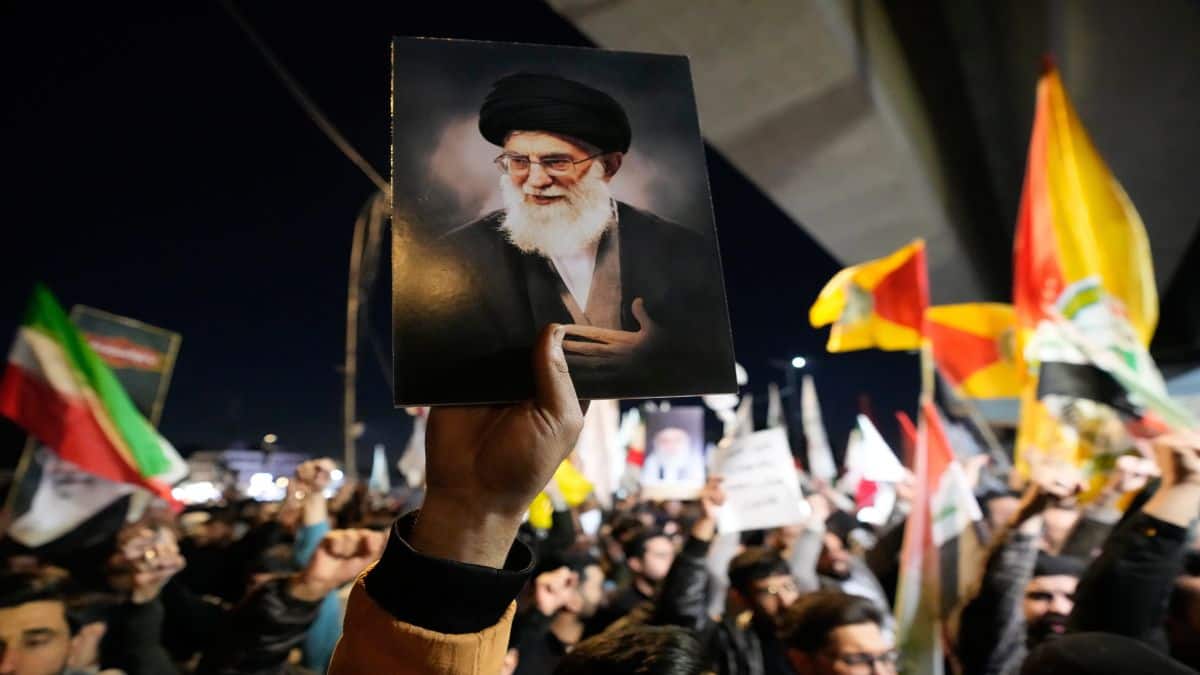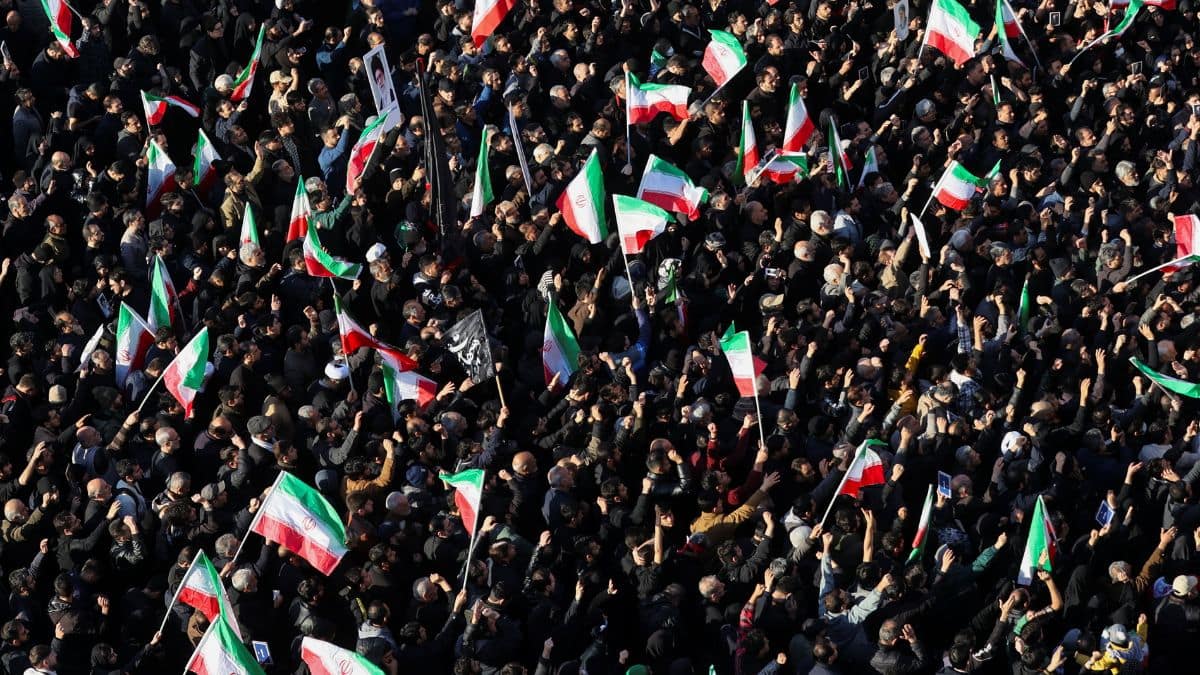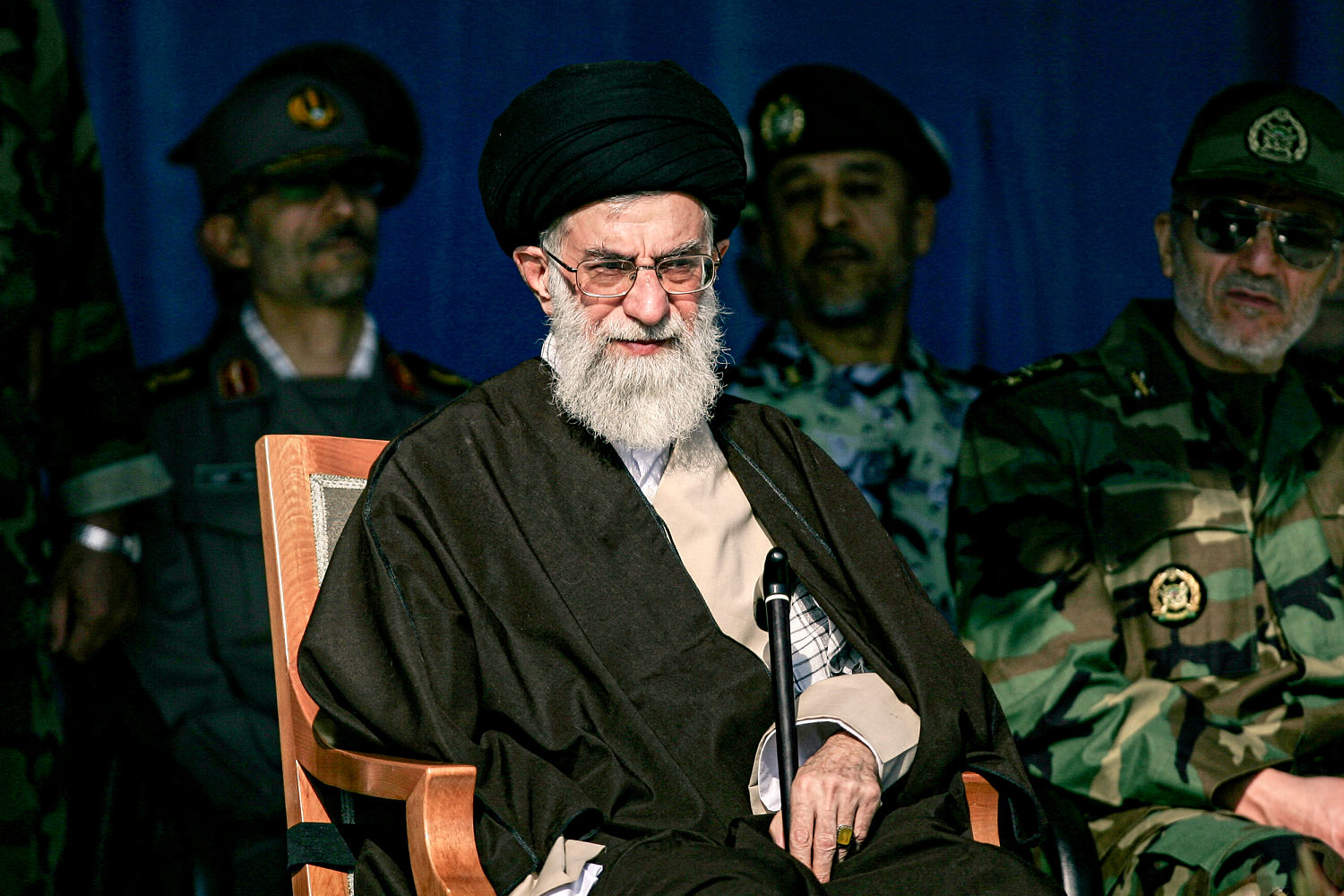
The death of Ayatollah Ali Khamenei via kinetic strike terminates the singular point of failure in the Iranian political architecture. This event is not merely a leadership transition; it is the instantaneous removal of the "Velayat-e Faqih" (Guardianship of the Jurist) around which all Iranian military, economic, and religious vectors are synchronized. The immediate result is a structural decoupling of the Islamic Revolutionary Guard Corps (IRGC) from the clerical establishment, creating a high-entropy environment where traditional succession protocols are likely to be superseded by raw paramilitary consolidation.
The Dual-Track Power Architecture
To understand the magnitude of this vacuum, one must quantify the two distinct power tracks Khamenei balanced for thirty-five years.
- The Clerical-Legal Track: This is the formal constitutional process managed by the Assembly of Experts. Its function is to provide theological legitimacy.
- The Shadow-Military Track: This is the IRGC’s control over the "Bonyads" (charitable trusts) and the "Setad" (Execution of Imam Khomeini's Order), which collectively control roughly 30% to 50% of Iran’s GDP.
Khamenei functioned as the exclusive bridge between these tracks. His removal triggers an immediate "Alignment Crisis." Without his personal arbitration, the IRGC lacks a legal mandate to suppress internal dissent, and the Assembly of Experts lacks the physical force to enact its choice of successor.
The Succession Bottleneck: Candidates and Constraints
The pool of viable successors is constrained by a "Triad of Legitimacy": revolutionary pedigree, religious seniority (Ijtihad), and IRGC endorsement.
The previous frontrunner, Ebrahim Raisi, was eliminated in a 2024 helicopter crash, leaving a depleted bench. The remaining contenders face significant structural headwinds:
- Mojtaba Khamenei: The son of the late Supreme Leader. While he holds significant influence over the security apparatus, his elevation risks transforming the Islamic Republic into a de facto hereditary monarchy—a direct contradiction of the 1979 Revolution’s anti-monarchical founding logic. This creates an ideological "Cognitive Dissonance" that could fracture the Basij paramilitary base.
- Alireza A'afi: A mid-ranking cleric with institutional ties. He represents the "Continuity Candidate" but lacks the charismatic authority to command the IRGC’s specialized units (Quds Force), which operate with significant autonomy in the Levant and Yemen.
The IRGC Cost Function: Stability vs. Ideology
The IRGC faces a binary choice: uphold the clerical system to maintain the veneer of legitimacy or transition to a direct military junta. This decision will be governed by the Economic Extraction Model.
If the IRGC perceives that a weak Supreme Leader will lead to civil unrest that threatens their control over the oil industry and port infrastructure (Bandar Abbas), they will likely bypass the Assembly of Experts. The "Cost of Suppression" increases exponentially when the religious justification for that suppression is absent.
In a post-Khamenei environment, the IRGC’s primary objective is the preservation of the "Resistance Axis" (Hezbollah, Houthis, PMF). These proxy networks rely on a direct, personalistic loyalty to the Supreme Leader. The death of the figurehead creates a "Command and Control Latency" where proxies may begin acting on local incentives rather than Tehran’s strategic requirements.
Kinetic Impact and the Intelligence Gap
The successful targeting of a figure as protected as Khamenei indicates a total compromise of the Iranian "Deep State" security protocols. This suggests a multi-layered failure in:
- COMSEC (Communications Security): The inability to shield high-level directives from external SIGINT.
- HUMINT (Human Intelligence): Infiltration at the inner circle level, likely within the Ansar-al-Mahdi Protection Corps.
This level of penetration creates an internal "Purge Reflex." In the hours following the strike, the Iranian security apparatus will likely prioritize internal liquidation over external retaliation. This internal focus provides a strategic window for regional adversaries to degrade Iranian proxy capabilities while the central node is offline.
The Economic Implications of a decapitated Command Economy
Iran’s economy is not a market; it is a series of monopolies held by the "Aghazadeh" (elite children) and the military. Khamenei’s death introduces "Systemic Risk" into all state-linked contracts.
- Currency Volatility: The Iranian Rial (IRR) will face immediate hyper-devaluation as capital flight accelerates.
- Supply Chain Disruption: If the IRGC shifts resources to internal security, the management of the "Bonyads" will suffer, leading to shortages in refined petroleum and basic foodstuffs.
- Sanctions Arbitrage: The informal networks used to bypass international sanctions are often held together by personal trusts. The removal of the ultimate guarantor (Khamenei) makes these networks fragile and prone to defection or seizure by foreign intelligence agencies.
Civil Unrest and the "Aspirations Gap"
The Iranian populace, particularly the demographic under 30, operates in a state of permanent friction with the "Morality Police" and the clerical elite. Historically, the Supreme Leader’s "Aura of Infallibility" served as a psychological deterrent. With that aura shattered by a successful strike, the "Fear Threshold" drops.
The state’s ability to manage a "Two-Front Conflict"—internal popular uprising and external military pressure—is theoretically zero. If the IRGC is forced to deploy the army (Artesh) against civilians, the risk of "Unit Defection" increases, as the Artesh traditionally views itself as a national defender rather than a regime protector.
Strategic Forecast: The Rise of the Secularized Guard
The most probable outcome is the emergence of a "Military-Technocratic Council." This entity would likely appoint a figurehead Supreme Leader with severely curtailed powers, effectively transitioning Iran from an absolute theocracy to a praetorian state.
This transition will be characterized by:
- A "Pivot to the East" (Russia and China) for immediate technological and intelligence support to stabilize the domestic surveillance grid.
- A temporary tactical de-escalation with Western powers to secure the release of frozen assets, offset by asymmetric "Gray Zone" attacks to prove continued relevance.
- The intensification of the "Domestic Intelligence Filter," where AI-driven surveillance is used to compensate for the loss of the Supreme Leader’s ideological influence.
The removal of the keystone does not mean the arch collapses instantly, but it does mean the weight is redistributed onto pillars (the IRGC) that were never designed to hold it alone. The friction generated by this weight redistribution will define the next decade of Middle Eastern geopolitics.
Immediate priority: Monitor the movement of the 15th Khordad Foundation assets and the deployment patterns of the IRGC-Ground Forces in Tehran's District 1. These are the leading indicators of whether the transition is being managed through consensus or combat.