The Fortress of Sand Fallacy
The mainstream media loves a "David vs. Goliath" narrative. When reports surface about Taiwan beefing up defenses on the Pratas Islands (Dongsha), the reaction is predictably lazy. Analysts talk about "red lines" and "deterrence" as if we are still living in the 1940s. They see a few hundred Marines and some upgraded anti-armor rockets and call it a "fortress."
It isn't a fortress. It's a liability.
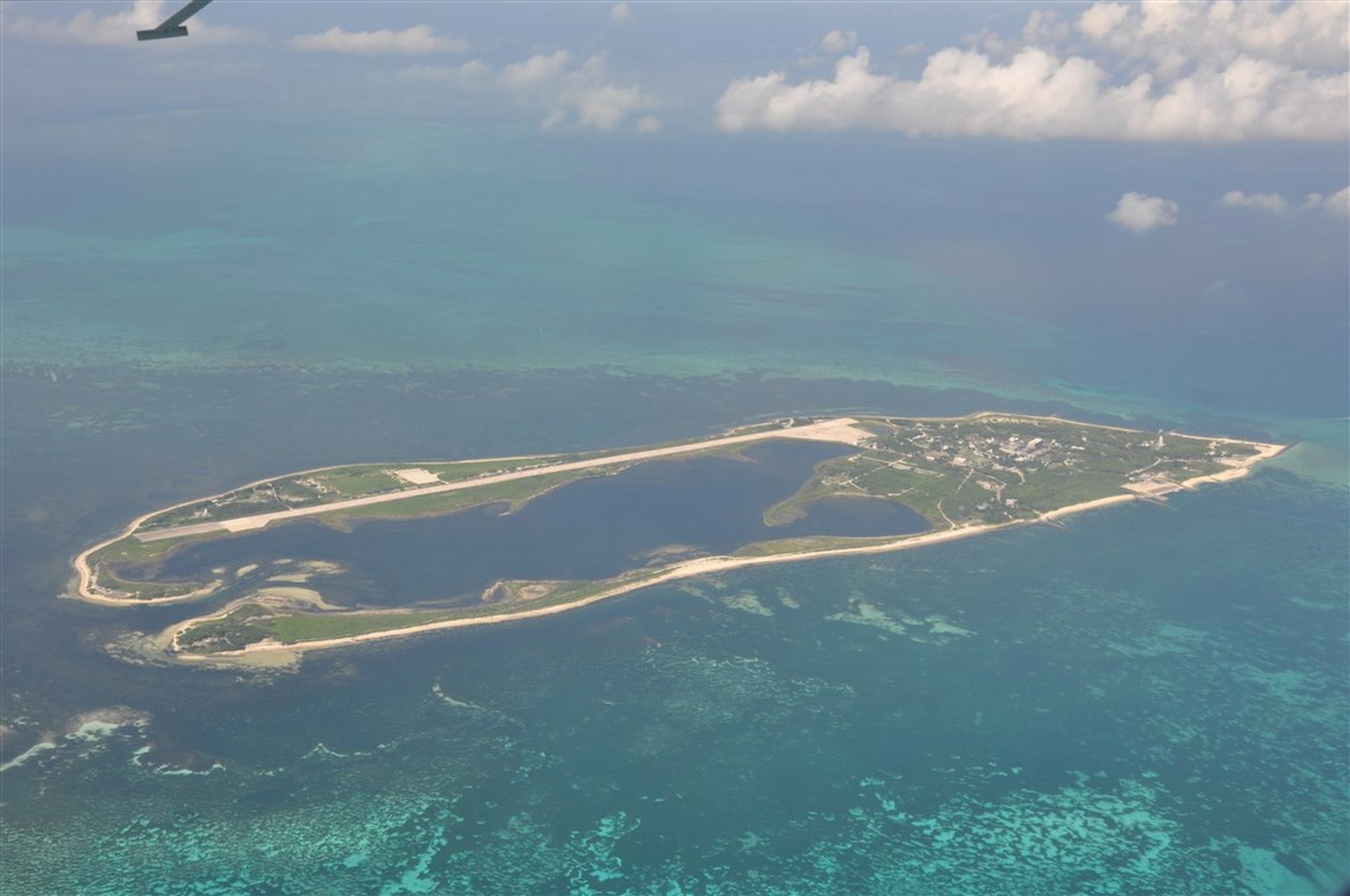
The Pratas Islands are roughly 450 kilometers from Kaohsiung but only 300 kilometers from mainland China. Look at a map. It’s an isolated speck of coral in a sea controlled by the People’s Liberation Army (PLA) Navy. Doubling down on its defense is not "strengthening" Taiwan’s position; it’s hand-delivering a hostage to Beijing. We need to stop pretending that 1.7 square kilometers of flat sand can be defended against a modern superpower determined to take it.
The Math of a Massacre
Let’s talk about the cold physics of the South China Sea. Defense thinkers often cite the "porcupine strategy"—making Taiwan too prickly to swallow. That works for the main island. Taiwan is mountainous, urbanized, and packed with millions of people who don't want to live under the CCP.
Pratas is different. It’s a pancake.
There is zero high ground. There is zero strategic depth. There is no civilian population to complicate an engagement. In military terms, it is "indefensible."
Imagine a scenario where the PLA decides to move. They don't need a full-scale invasion force. They need a blockade. They can sever the supply lines from Kaohsiung in an afternoon. No food, no fresh water, no ammunition. If they choose a kinetic route, the Pratas garrison is within range of standard Chinese rocket artillery and short-range ballistic missiles.
By sending more troops and better hardware to Pratas, Taipei is merely raising the "price" of an island that Beijing can pay for with pocket change. You don't win a war of attrition by putting your best assets on an exposed, static target.
The Electronic Warfare Blind Spot
The "lazy consensus" assumes that "defenses" mean physical weapons: Stinger missiles, Kestrel anti-armor rockets, and reinforced bunkers. This is 20th-century thinking applied to a 21st-century problem.
In any actual escalation, the first thing to die on Pratas won't be a soldier; it will be the spectrum. The PLA’s electronic warfare (EW) capabilities in the Southern Theater Command are designed to turn the South China Sea into a digital black hole.
- Communication Isolation: Satellite links and radio frequencies will be jammed instantly.
- Sensor Blindness: Land-based radar on the islands becomes a giant "hit me" sign for anti-radiation missiles.
- Drone Swarms: Small, cheap, autonomous units can overwhelm the limited kinetic interceptors on the island.
The "experts" shouting for more hardware ignore the fact that a disconnected garrison is a useless garrison. If you can’t see the enemy and you can’t tell your headquarters you’re under attack, you aren't a defense force—you're a tripwire that already snapped.
The Gray Zone Trap
Beijing isn't looking for a "hot" war over a coral atoll. They are masters of the "Gray Zone"—actions that stay just below the threshold of armed conflict but exhaust the opponent.
Every time Taiwan sends a C-130 transport or a coast guard vessel to Pratas, it’s a logistical drain. Every time the PLA flies a Y-8 electronic warfare plane or a J-16 fighter near the island, Taiwan has to scramble or go on high alert.
By over-investing in Pratas, Taiwan is letting China dictate the tempo of the conflict. Taipei is burning fuel, airframe hours, and personnel morale to defend a patch of sand that has zero impact on the survival of the Republic of China.
The contrarian truth? The more value Taiwan places on Pratas, the more leverage China gains. If Taipei signals that Pratas is "vital," then China can trigger a crisis there whenever they want to distract from a move elsewhere—or to test the nerves of the U.S. Seventh Fleet.
Misunderstanding "Deterrence"
People ask: "If we don't defend it, won't they just take it?"
Yes. They might. And that’s the hard truth nobody wants to say out loud.
True deterrence isn't about holding every inch of dirt. It’s about making the cost of the ultimate goal—the main island of Taiwan—prohibitively high. Diverting high-end assets like the F-16V or elite Marine units to an outpost that will fall in the first six hours of a conflict is a strategic blunder.
I’ve seen military planners fall into the "Sunk Cost" fallacy time and again. They think that because they've held a position for decades, it must be kept at all costs. But real strategy requires the cold-blooded ability to trade space for time.
A Better Way: The "Ghost Garrison"
If I were advising the Ministry of National Defense, I’d stop the fortification immediately.
Instead of more troops, move to a "Ghost Garrison" model. Automate the sensors. Use undersea cables for data instead of vulnerable radio links. Keep a skeleton crew—just enough to maintain the sovereignty claim—and spend the millions saved on mobile, land-based anti-ship missile batteries on Taiwan’s coast.
Don't give the PLA a target they can destroy to claim a "victory." If China wants to seize a deserted sandbar and deal with the international diplomatic fallout for zero tactical gain, let them. Don't give them the satisfaction of capturing or killing hundreds of Taiwan's bravest soldiers in the process.
The Reality of the US Factor
The competitor article likely implies that the U.S. would care about Pratas. Let’s be real. Washington is barely committed to the defense of the main island under "strategic ambiguity." There is zero chance an American President starts World War III over an atoll with more birds than people.
By pretending Pratas is a vital defensive node, Taiwan is betting on a level of international support that simply does not exist for uninhabited rocks. It’s a bluff that Beijing has already called.
The Brutal Truth
Stop looking at the Pratas Islands through the lens of sovereignty and start looking at them through the lens of survival.
The obsession with fortifying these outposts is a symptom of a reactive military culture. It’s defensive crouch theater. It makes for a great headline—"Taiwan Stands Firm"—but it’s a tactical disaster waiting to happen.
Every dollar spent on a concrete bunker in the Pratas is a dollar not spent on sea mines, mobile SAMs, or civilian resilience programs in Taipei. We are watching a nation prepare for the wrong war in the wrong place.
The Pratas Islands aren't a shield. They're a target. And in a real fight, the first thing you do is drop the weight that’s slowing you down.
Stop reinforcing the trap.