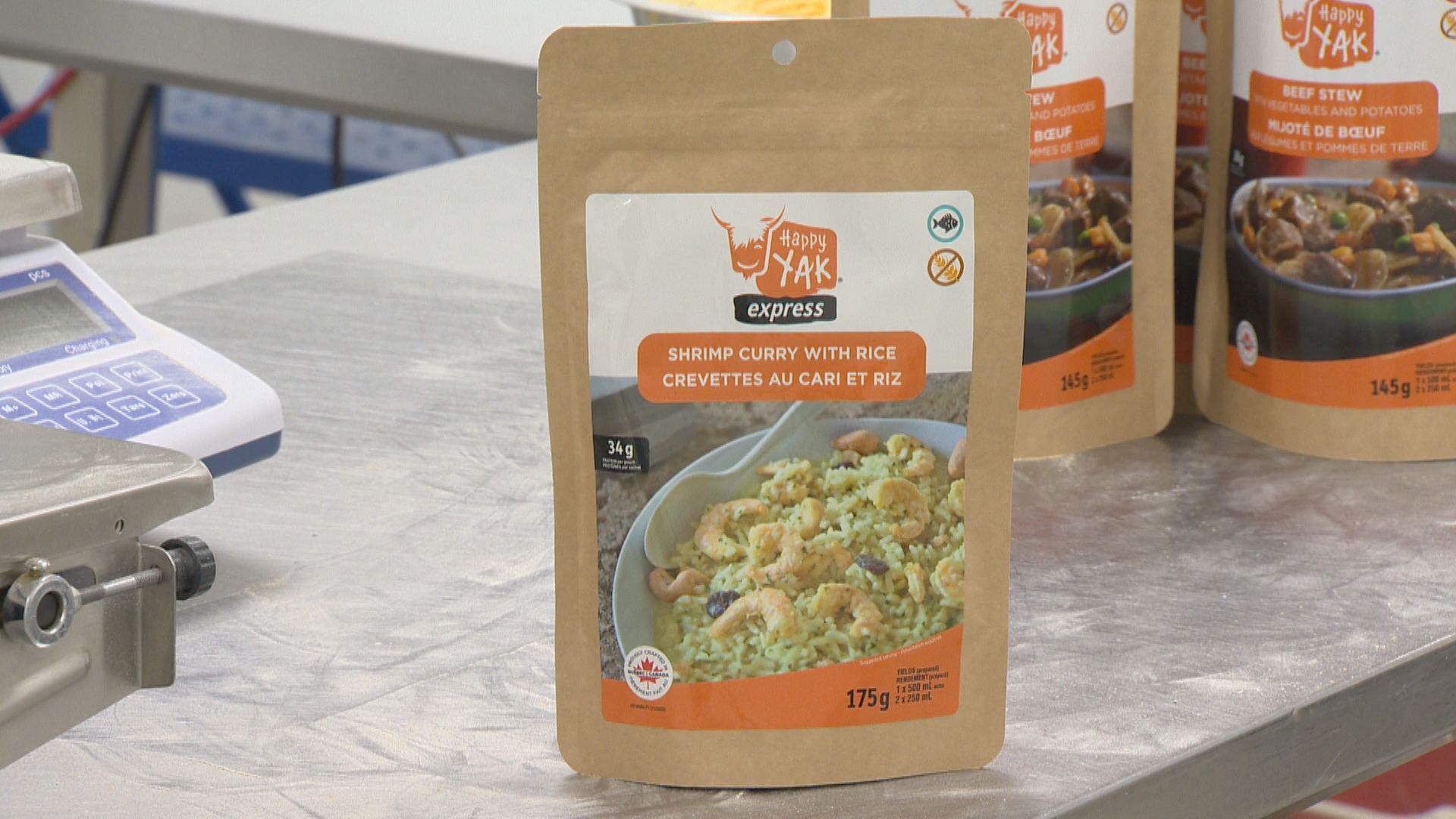
The success of the Artemis II mission hinges on a logistical bottleneck often overshadowed by propulsion physics: the physiological maintenance of the human crew in a closed-loop environment. While the aerospace industry focuses on Delta-V and heat shield integrity, the selection of Saint-Hyacinthe-based Ro-Main—traditionally an agricultural technology firm—to provide nutritional solutions reveals a shift in NASA’s procurement strategy. This is not a matter of catering; it is a rigorous exercise in shelf-life stability, metabolic optimization, and psychological regulation.
The integration of terrestrial food technology into the Orion spacecraft represents a transition from "survival rations" to "performance fuel." To understand the significance of a Quebec-based SME securing a spot on a lunar flyby, one must analyze the three critical constraints of deep-space nutrition: mass-to-nutrient density, the chemical degradation of micronutrients under radiation, and the sensory requirements of long-duration microgravity. If you found value in this post, you should check out: this related article.
The Tri-Factor Constraint Model of Space Food
Space-grade nutrition is governed by a rigid cost-benefit analysis where every gram of weight must justify its presence through caloric yield or psychological utility. The participation of Ro-Main, through its food division, highlights a specific mastery of these variables.
Mass Efficiency and Dehydration Logic
Launching weight into orbit costs thousands of dollars per kilogram. Standard wet-pack food is heavy due to water content. The strategic advantage lies in advanced freeze-drying techniques that preserve cellular structure while eliminating 98% of moisture. This allows the mission to utilize the spacecraft’s onboard water reclamation systems to reconstitute meals, effectively "decoupling" the weight of the food from the weight of the water needed to consume it. For another angle on this event, check out the latest coverage from Forbes.Micronutrient Half-Life in High-Radiation Environments
Deep space is not a static environment. Outside the protection of Earth’s Van Allen belts, solar particle events and galactic cosmic rays accelerate the oxidation of lipids and the degradation of Vitamins B1, C, and K. A "masterclass" in food design requires stabilizing these compounds without the use of heavy lead shielding. This is achieved through modified atmosphere packaging (MAP) and oxygen scavengers that reduce the oxidative potential inside the pouch to near-zero levels.The Fluid Shift and Sensory Attenuation
In microgravity, bodily fluids shift toward the head, causing nasal congestion and a dulled sense of taste—a phenomenon known as "space sniffles." Food that tastes balanced on Earth becomes bland and unappealing in orbit. To maintain caloric intake, the chemical profile of the food must be aggressive. The Quebecois contribution utilizes high-acidity and high-umami profiles to bypass the crew's diminished olfactory capacity, ensuring they don't experience "menu fatigue," which leads to unintended weight loss and cognitive decline.
Engineering the "Comfort" Variable: The Business of Psychological Retention
The selection of specific items—like the maple-infused products from Ro-Main—serves a function beyond glucose delivery. In high-stress, isolated, and confined environments (ICE), food is the primary "zeitgeber" or time-giver. It provides a biological rhythm and a psychological anchor to Earth.
From a strategic consulting perspective, the "Maple Syrup" component is a calculated application of Identity-Linked Palatability. NASA and the CSA (Canadian Space Agency) recognize that food serves as a social lubricant. By providing a cultural touchstone, the mission planners are mitigating the risks of "Third-Quarter Phenomenon," a documented dip in morale that occurs after the midpoint of a mission. The Quebec firm isn't just selling calories; they are selling a mitigation strategy for crew burnout.
The Technical Specification Gap
Most observers miss the stringent validation process required for Artemis II. A product does not simply "get chosen." It must pass the Hazard Analysis and Critical Control Points (HACCP) for spaceflight, which are significantly more rigorous than terrestrial standards.
- Crumb Prevention Architecture: In a $100 billion spacecraft, a single crumb of dry bread is a catastrophic risk. It can float into an air filtration intake or be inhaled into an astronaut's lung. The Ro-Main products had to be engineered for "structural integrity upon bite," ensuring that the mechanical breakdown of the food does not produce loose particulates.
- Viscosity Control: Liquids and semi-solids must exhibit specific surface tension properties to remain in their containers or on a utensil. The rheology of the sauces provided by the Quebec team is tuned to behave predictably in 0g.
Industrial Implications: From Lunar Flybys to Terrestrial Scaling
The participation of a firm like Ro-Main—which has roots in porcine health and agricultural automation—signals a convergence of AgTech and AeroTech. This is a diversification play. By proving their hardware and chemistry in the "ultimate harsh environment" of a lunar mission, the company establishes a gold-standard credential for terrestrial applications, specifically:
- Emergency Response and Disaster Relief: The technology used to feed Jeremy Hansen on Artemis II is directly transferable to high-density, low-logistics disaster zones where cold-chain infrastructure is non-existent.
- Military Logistics: The "Pack-to-Energy" ratio perfected for Orion is the blueprint for the next generation of individual meal rations (MREs) that require longer shelf lives without refrigeration.
- Longevity and Bio-Hacking: The precise macro-nutrient tracking required for astronauts—who are monitored down to the milligram of sodium—creates a data set that can be commercialized for personalized nutrition markets on Earth.
The Strategic Play for Canadian Aerospace
Canada’s contribution of a "food system" alongside the Canadarm3 is a move to secure a permanent seat at the table of the Lunar Gateway. While the US provides the rockets and the heavy lift, Canada is carving out a niche in Specialized Mission Support. The bottleneck in space exploration is no longer just "how do we get there," but "how do we sustain the biology once we arrive." The Quebec firm’s success proves that the competitive advantage in the 2020s space race lies in Biomedical and Nutritional Engineering. The second limitation often overlooked is the "Return on Investment" (ROI) of such partnerships. For a mid-sized firm, the R&D costs to meet NASA’s "Flight-Ready" status are astronomical. However, the intellectual property (IP) generated—specifically in the realms of enzymatic stabilization and vacuum-sealing polymers—creates a moat that competitors in the standard food industry cannot easily cross.
Operational Forecast
As Artemis II approaches its launch window, the focus will shift from the chemistry of the food to the biological feedback of the crew. We should expect a data-driven validation of Ro-Main’s nutritional profile. If the crew maintains peak cognitive load and bone density throughout the 10-day mission, the "Quebec Model" of space nutrition will become the standardized procurement template for the subsequent Artemis III lunar landing and the eventual Mars transit.
The strategic play here is clear: transition from being a "vendor" to an "integrated systems partner." For firms looking to enter this space, the entry point is not the food itself, but the data-backed assurance of physiological stability under extreme environmental stress. The era of the "space snack" is over; the era of the "metabolic mission component" has begun. Firms that fail to treat nutrition as a hard engineering discipline will be excluded from the deep-space supply chain. Every calorie must be accounted for as a unit of mission success.