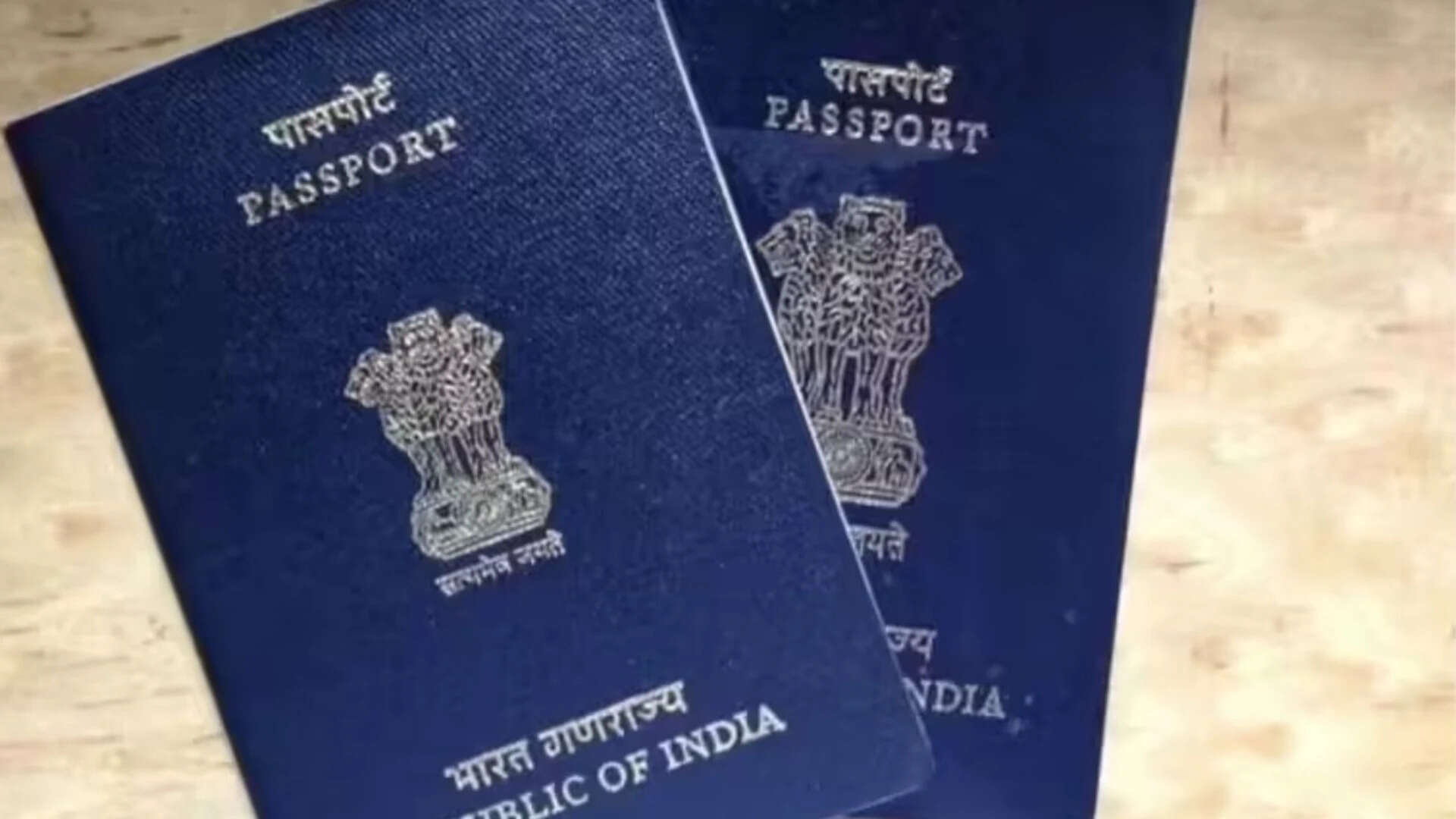
The small, blue booklet sits on a laminate counter in a crowded hall. To anyone else, it is just a stack of bound paper, a bureaucratic ledger of a single life. But to the three and a half million Indian nationals who live, sweat, and build their futures in the United Arab Emirates, that booklet is a lifeline. It is the tether connecting a construction worker in Sharjah, a tech executive in Dubai Internet City, or a home nurse in Abu Dhabi back to the soil they still call home. It is their permission to stay, their right to leave, and their shield in a foreign land.
For more than twelve years, that lifeline carried a predictable price tag. The cost of renewing it was just another line item in the family budget, unchanged since 2012. But a sudden tectonic shift in consular operations has fundamentally altered the math of migration.
Consider a hypothetical citizen named Ramesh. He represents the everyday reality of the migrant experience. Ramesh works six days a week as a mechanic in Dubai’s Al Quoz industrial area, sending three-quarters of his salary back to a village outside Mangalore to pay for his daughter’s schooling. For over a decade, his calculation for survival was static. When his passport expired, he knew exactly what it would cost to fix.
Not anymore.
Under the newly instituted Passports Amendment Rules, the cost of keeping that vital connection to India has jumped significantly. For an adult applying for a standard 36-page passport under the normal scheme, the statutory government fee has risen from Dh285 to Dh450. A 60-page booklet, essential for frequent business travelers or those whose work requires constant border crossings, has moved from Dh380 to Dh630.
To a high-earning consultant in a Dubai Marina penthouse, a difference of Dh165 is the price of a modest weekend breakfast. To Ramesh, and to hundreds of thousands of workers like him, it represents days of labor. It is a sudden, sharp tax on their very identity.
The increase becomes even steeper when urgency enters the frame. Life in the diaspora rarely moves in slow, predictable cycles. Emergencies happen. A parent falls ill back in Kerala; an unexpected legal hurdle requires an immediate flight to New Delhi. When time is the enemy, migrants turn to the Tatkaal system, the expedited route designed to cut through bureaucratic delays.
But fast-tracking a passport now requires a much deeper pocket. A 36-page Tatkaal application has crept up to Dh900, while a 60-page urgent passport now commands a premium of Dh1,080.
The emotional weight of these numbers hits hardest when things go wrong. Imagine the sheer panic of a young retail worker who misplaces her purse on the Dubai Metro, only to realize her passport was inside. Losing a passport in a foreign country is already an isolating, terrifying ordeal that induces immediate anxiety. The financial penalty for that misfortune has now grown far heavier. Replacing a lost or damaged 36-page passport under normal processing now costs Dh900. If that stranded citizen needs it urgently via Tatkaal to preserve their employment status or catch an emergency flight, the fee skyrockets to Dh1,350. For a damaged 60-page document under Tatkaal, the fee reaches a staggering Dh1,530.
Even the paperwork required to transition between jobs or secure a new residency visa has been affected. The Police Clearance Certificate, a mundane yet entirely mandatory document for anyone trying to build a career in the Gulf, has seen its fee adjusted to Dh145. The same rate now applies to surrender certificates and Global Entry Program verifications.
There is a small, compassionate caveat buried within the new global fee schedule. The government has introduced a ten percent discount for fresh passport applications for young children up to eight years of age, bringing the base fee down to Dh295 under the normal scheme. It is a minor gesture of relief for young families starting their journey abroad, though it notably does not apply to passport reissues or renewals. For minors between the ages of eight and eighteen, a standard 36-page passport now costs Dh325 under normal processing and Dh775 for Tatkaal.
But the financial adjustment is only half the story. The entire infrastructure supporting the Indian diaspora in the Emirates has been stripped down and rebuilt.
For years, the names BLS International and SGIVS Global were etched into the daily routines of any Indian expat who needed a visa stamped or a document attested. Their offices were the physical gateways to Indian sovereign bureaucracy. At the end of June, those gateways quietly closed their doors.
A massive logistical handover took place behind the scenes. The government transferred its entire outsourced consular operation to Alhind Tours and Travels LLC. During that delicate five-day transition window, routine appointments across the country evaporated entirely. For several tense days, any citizen facing a genuine passport emergency had to bypass the traditional centers entirely, walking straight into the Indian Embassy in Abu Dhabi or the Consulate General in Dubai, carrying physical envelopes of exact cash to pay the new rates directly to consular officers.
Now, as the newly minted Indian Consular Application Centres begin to open their doors under the management of Alhind, a lingering uncertainty remains. The published fee increases represent only the raw government tariff. The final, out-of-pocket cost for expats will inevitably include the service provider’s processing fees and the mandatory Indian Community Welfare Fund levy.
This is the reality of living between two worlds. The global standardisation of fees brings the cost of an overseas Indian passport into alignment with modern administrative realities, updating a system that had been frozen since the start of the previous decade. Yet, for the millions of people who form the human bridge between India and the UAE, these shifting numbers are not merely statistics on a government website.
They are the price of keeping a suitcase packed. They are the cost of knowing that, no matter how far you travel or how high you build, the road back home remains open.