The dust in the Gulf has a specific taste. It is metallic, thick with the ghost of salt from the sea and the dry grit of the interior. For those living in the shadow of the Strait of Hormuz, this dust is a constant companion. But lately, it carries something else. It carries the scent of a fraying world.
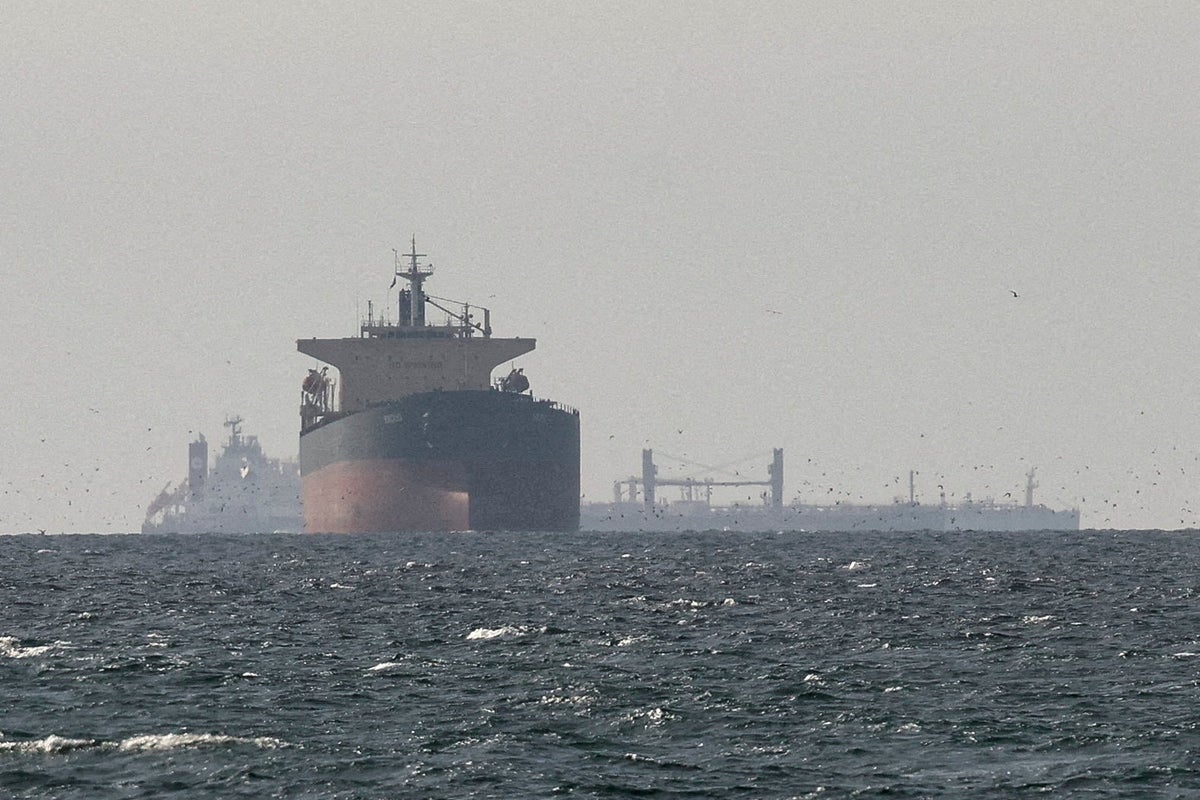
Think of a man named Ahmed. He isn't a headline. He is a shopkeeper in a coastal town, perhaps in Oman or the Emirates, who has spent twenty years watching the tankers glide like slow, steel whales across the horizon. To Ahmed, those ships were once the pulse of a healthy planet. Now, they look like targets. When the United Nations warns that four million people are about to be shoved over the edge of the poverty line, they aren't talking about abstract numbers. They are talking about Ahmed’s ledger. They are talking about the moment he has to decide if his youngest daughter stays in school or starts working the registers because he can no longer afford the help.
Conflict is rarely just about the fire. The fire is the easy part to photograph. The real tragedy is the cold that follows—the freezing of trade, the hardening of borders, and the sudden, violent evaporation of a middle class that took decades to build.
The Invisible Net
Geography is a trap. The Gulf is a glittering miracle of modern engineering and ancient trade routes, but it breathes through a very narrow straw. That straw is the flow of goods, energy, and human capital. When the drumbeat of war between major regional powers like Iran and its neighbors grows loud, that straw begins to pinch.
The UN’s recent projections aren't just guesses; they are a map of a falling house. We often think of poverty as something that happens to "other" places, or something that has always existed. We forget how fragile the "almost-comfortable" life is. For the four million people standing on the precipice, poverty isn't a lack of effort. It is a mathematical certainty dictated by the price of wheat and the cost of shipping insurance.
Imagine the logistics of a simple loaf of bread. In a region that imports the vast majority of its calories, food security is a delicate dance. If insurance premiums for cargo ships triple overnight because of the risk of missile strikes or naval blockades, that cost doesn't vanish. It travels. It moves from the shipping magnate to the wholesaler, then to the baker, and finally to the mother who realizes her weekly grocery budget now only covers five days of food.
This is the "poverty creep." It starts with luxuries. It ends with the basics.
The Shadow of the Strait
The Strait of Hormuz is a choke point, but not just for oil. It is a psychological artery. When tension spikes, investment flees. The skyscraper projects that dot the skylines of Doha or Dubai aren't just built of glass and steel; they are built of confidence.
If you are a foreign investor looking at a region where a full-scale war involving Iran feels "inevitable," you don't build. You wait. Or you leave. When that money stops flowing, the construction worker from Kerala or the architect from London or the local subcontractor from Muscat all lose their footing simultaneously. The ripple effect is brutal.
Consider the hypothetical case of a small logistics firm in Kuwait. For years, they have managed the flow of spare parts for desalination plants. It’s a quiet, vital business. If the region slides into conflict, their supply lines vanish. Without those parts, the very water the city drinks becomes a luxury. The cost of living surges while the ability to earn stays stagnant. This is how a family goes from "managing" to "destitute" in the span of a single fiscal quarter.
The Migration of Despair
We have seen this pattern before, but the scale currently being warned of is staggering. Four million people is the population of a small country. It is more than the population of many major global cities.
When people lose their livelihoods, they don't just sit still. They move. A regional war wouldn't just create a poverty crisis; it would create a displacement crisis that would make previous decades look like a rehearsal. The pressure on neighboring countries—those not even directly involved in the kinetic fighting—would be immense.
Resource competition is a silent killer. When millions are suddenly unable to afford the basics, the social contract begins to shred. People who were once neighbors start looking at each other’s water tanks and grain sacks with suspicion. The emotional toll of this uncertainty is a weight that statistics can’t capture. It is the sound of a father crying in a darkened kitchen because he cannot explain to his son why there is no meat for dinner. Again.
The Architecture of a Collapse
To understand why the UN is ringing this specific bell, you have to look at the interconnectedness of the regional economy. Iran is not an island. Its economic health, or lack thereof, bleeds into Iraq, into Afghanistan, and across the water to the GCC.
Sanctions have already hollowed out the Iranian middle class, pushing millions into a struggle for survival. If this shifts from economic pressure to physical warfare, the remaining safety nets will disintegrate. But it’s the "collateral poverty" in the surrounding nations that remains the most overlooked factor.
- Tourism Death Spiral: Who books a holiday to a region under the threat of long-range ballistic missiles? The hospitality industry, which employs millions of low-to-mid-wage workers, would collapse overnight.
- Capital Flight: Wealthy elites move their money to Swiss banks or New York real estate at the first sign of smoke. The local banks, left with dwindling deposits, stop lending to small businesses.
- Infrastructure Degradation: When budgets are diverted to defense and emergency aid, the roads, schools, and hospitals that keep a population productive begin to rot.
This isn't a slow decline. It is a cliff.
The Human Cost of High Stakes
Statistics are a way of hiding the truth while technically telling it. "Four million into poverty" sounds like a line on a graph.
It is actually a girl named Fatima having to sell her laptop—the one she used for her coding classes—to pay for her grandmother’s insulin because the price of imported medicine has spiked by 400 percent.
It is a taxi driver who realizes his daily earnings no longer cover the cost of the fuel he needs to drive the car.
It is the crushing, ego-destroying realization that the life you worked thirty years to build can be dismantled by a decision made in a room you will never enter, by people who will never know your name.
The warnings from the UN are an attempt to make us look at the "hidden" casualties of war. We are good at counting the dead. We are terrible at counting the living who have been robbed of their futures. The poverty being described is a form of slow violence. It doesn't leave craters in the street, but it leaves holes in the lives of everyone it touches.
The sun sets over the Gulf, turning the water into a sheet of hammered gold. It looks peaceful. It looks eternal. But for the four million people hanging by a thread, that beauty is a mask. Behind it lies a tally of lost dreams and empty cupboards. The war hasn't even fully begun, and yet, the casualties are already being minted in the currency of hunger and fear.
Ahmed closes his shop for the night. He counts the till twice. The numbers are smaller than yesterday. The ships on the horizon are fewer. The dust tastes more like iron than ever before.