The white envelope sat on Sarah Miller’s kitchen table for three days. It looked identical to the notices she received every October, but the window inside the paper revealed a different number this time. Sarah is a freelance graphic designer in Ohio. She does not have a corporate human resources department managing her benefits. She has a laptop, a modest portfolio of local clients, and a silver-tier plan through the Affordable Care Act marketplace.
For three years, that plan was her safety net. It allowed her to treat her asthma without choosing between an inhaler and groceries. But the notice in the white envelope informed her that her monthly premium was increasing by nearly two hundred dollars.
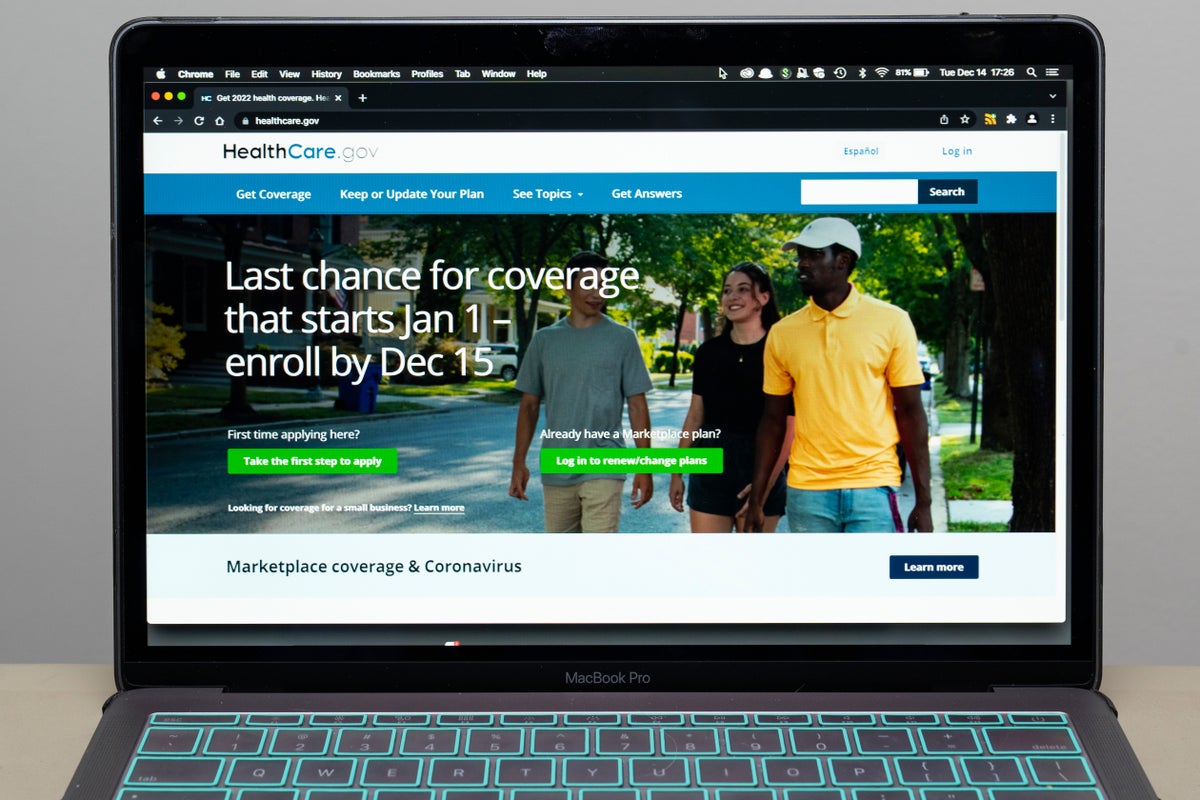
Sarah did what millions of Americans do every autumn. She logged into the healthcare portal, typed in her income, and waited for the system to calculate her tax credits. The screen loaded. The subsidy was gone. Her income had crept up by just three thousand dollars the previous year—a minor victory in her professional life that the system rewarded with a crippling financial penalty. She closed the laptop. She did not renew her coverage.
She is not an isolated case. She is a data point in a quiet, nationwide exodus.
New data covering all fifty states reveals a sharp, systemic drop in Affordable Care Act enrollment. On paper, these adjustments look like normal market corrections or bureaucratic cleanup. In the policy briefings circulated throughout Washington and state capitals, the trend lines are discussed with cold, statistical detachment. Analysts point to the end of pandemic-era policy extensions, changes in eligibility verifications, and shifting subsidy structures.
But spreadsheets cannot bleed. They do not sit awake at 3:00 AM wondering if a persistent cough warrants a bankrupting trip to the emergency room. When you strip away the administrative jargon, the reality is stark. People are walking away from their health insurance because the math of staying covered no longer makes sense.
The Friction of the Redetermination Wave
To understand why people are vanishing from the insurance rolls, look at what policymakers call the unwinding process. During the public health crisis of the early 2020s, the federal government prohibited states from removing people from Medicaid. This policy created a continuous coverage buffer. It kept families insured regardless of minor fluctuations in their monthly wages.
When those protections expired, states began the massive administrative task of re-evaluating millions of files. The goal was simple: ensure only those who qualified remained on the public dime.
The execution was a disaster of red tape.
Imagine a single mother working two jobs in Texas. She moves to a cheaper apartment to cope with rising rent. The state sends a renewal form to her old address. She never receives it. When she misses the deadline, the state drops her from the system automatically. This is not a theoretical scenario. Administrative churn—where individuals lose coverage not because their income changed, but because of paperwork errors, long call-center wait times, and lost mail—accounts for a massive portion of the recent enrollment declines.
Some of these individuals were supposed to transition smoothly from Medicaid to the Affordable Care Act marketplace. The system was designed to catch them as they fell. Instead, they slipped through the floorboards. The state-by-state data shows that the expected migration from public assistance to subsidized commercial plans did not happen at the scale experts predicted. The bridge between the two systems was broken by design, heavy with bureaucratic friction that proved insurmountable for people already working sixty hours a week.
The Mirage of the Affordability Index
For those who never qualified for Medicaid but relied on marketplace subsidies, the problem is different. It is an issue of shifting thresholds.
The federal government temporarily expanded premium tax credits, making coverage remarkably cheap for a brief period. It felt like a permanent shift. It changed expectations. But when those expanded subsidies began to sunset or adjust against the backdrop of broader inflation, the baseline cost of care snapped back like a rubber band.
Consider the mechanics of the marketplace. The system calculates your aid based on the cost of the second-lowest silver plan in your local area. If insurance companies adjust their pricing or pull out of a specific county, that baseline shifts. Suddenly, a plan that cost ninety dollars a month shoots up to three hundred.
The official economic narrative suggests that because wages have risen, consumers can absorb these costs. This assumption ignores the reality of working-class budgets. If your rent increases by fifteen percent, your utility bills double, and your weekly grocery bill jumps by forty dollars, a higher health insurance premium is not an inconvenience. It is an impossibility.
People look at the premium, look at the five-thousand-dollar deductible they must meet before the insurance pays for anything at all, and they perform a dangerous calculation. They bet on their own health. They decide that the certainty of keeping the lights on today outweighs the risk of getting sick tomorrow.
The Fifty-State Variance
The decline is not uniform across the country, which makes the comprehensive fifty-state data uniquely revealing. The drops tell fifty different stories about local politics, administrative competence, and regional economies.
In states that resisted the expansion of Medicaid from the beginning, the drops are catastrophic. Residents in these regions have fewer safety nets. When they lose marketplace eligibility due to a minor raise, they plunge into the coverage gap—earning too much for regular Medicaid but too little to afford commercial premiums without heavy federal assistance.
In contrast, states with dedicated, state-run marketplaces fared slightly better, but only because they spent millions on hyper-local marketing and targeted outreach. Yet even there, the numbers are slipping. The overarching trend indicates that the marketplace is losing its appeal for the middle class—the very group it was designed to protect from predatory medical debt.
This is the hidden crisis within the data. The people leaving the system are often the healthiest individuals. They are the young professionals, the gig workers, and the healthy families who can afford to take the gamble. As they exit the risk pool, the people left behind are those who cannot afford to drop coverage: the chronically ill, the elderly, and those requiring expensive, continuous treatment.
Any insurance actuary can tell you what happens next. When a risk pool becomes older and sicker, premiums must rise to cover the expenses. The exodus of the healthy accelerates the financial pressure on everyone else. The drop we are witnessing now is not just a temporary dip in a chart. It is the first pull on a thread that could unravel the stability of the entire market.
The Choice in the Living Room
We talk about healthcare as a systemic challenge, a legislative puzzle, or a line item in a federal budget. This framing detaches us from the visceral reality of the policy choices made in distant hearing rooms.
Go back to Sarah Miller. Two months after she let her policy lapse, she developed a severe sinus infection that moved into her chest. In previous years, she would have booked a twenty-dollar copay visit with her primary care physician. Instead, she spent three weeks buying over-the-counter decongestants, hoping her body would fight it off. Her work suffered. She couldn't sleep.
When the fever reached 103 degrees, her brother drove her to an urgent care clinic. The visit, the chest X-ray, and the generic antibiotics cost her four hundred and fifty dollars out of pocket. She paid it with a credit card she had just managed to clear.
"I felt like a failure," she said later, sitting in the office of a local community health advocate who was trying to help her find an alternative clinic. "I worked hard, I earned more money, and my reward was losing the ability to see a doctor without going into debt."
The system functions perfectly on paper. The data shows fewer people on the rolls, which some commentators spin as a sign of economic independence—proof that people are moving on to employer-sponsored coverage. The fifty-state data refutes that comforting narrative. The numbers show people dropping off the grid entirely. They are moving into the shadows of the uninsured, joining the millions of Americans who navigate the world with fingers crossed, praying they don't trip on a curb or catch a virus.
The real cost of these declining enrollment numbers will not be measured in the next fiscal quarter. It will be measured in the delayed diagnoses of preventable diseases. It will be seen in the ballooning uncompensated care costs absorbed by rural hospitals, many of which are already on the brink of closure. It will be felt in the quiet anxiety that settles over a home when someone feels a lump or an irregular heartbeat and decides to wait until next year to get it checked.
We have built a system where health security is treated as a luxury that can be turned off or adjusted based on macroeconomic indicators. The current data drop is a warning light on the dashboard of the American healthcare infrastructure. It is telling us that the engine is overheating, that the price of entry has outpaced the value provided, and that everyday citizens are quietly opting out of a contract they can no longer afford to sign.
Sarah still has the white envelope. It is tucked into a drawer now, underneath her tax forms and old utility bills. She looks at it occasionally when she plans her monthly budget. For her, and for millions of others across fifty states, that piece of paper is a reminder of a system that looked at their livelihood, calculated their value down to the last decimal point, and decided they weren't worth the subsidy.