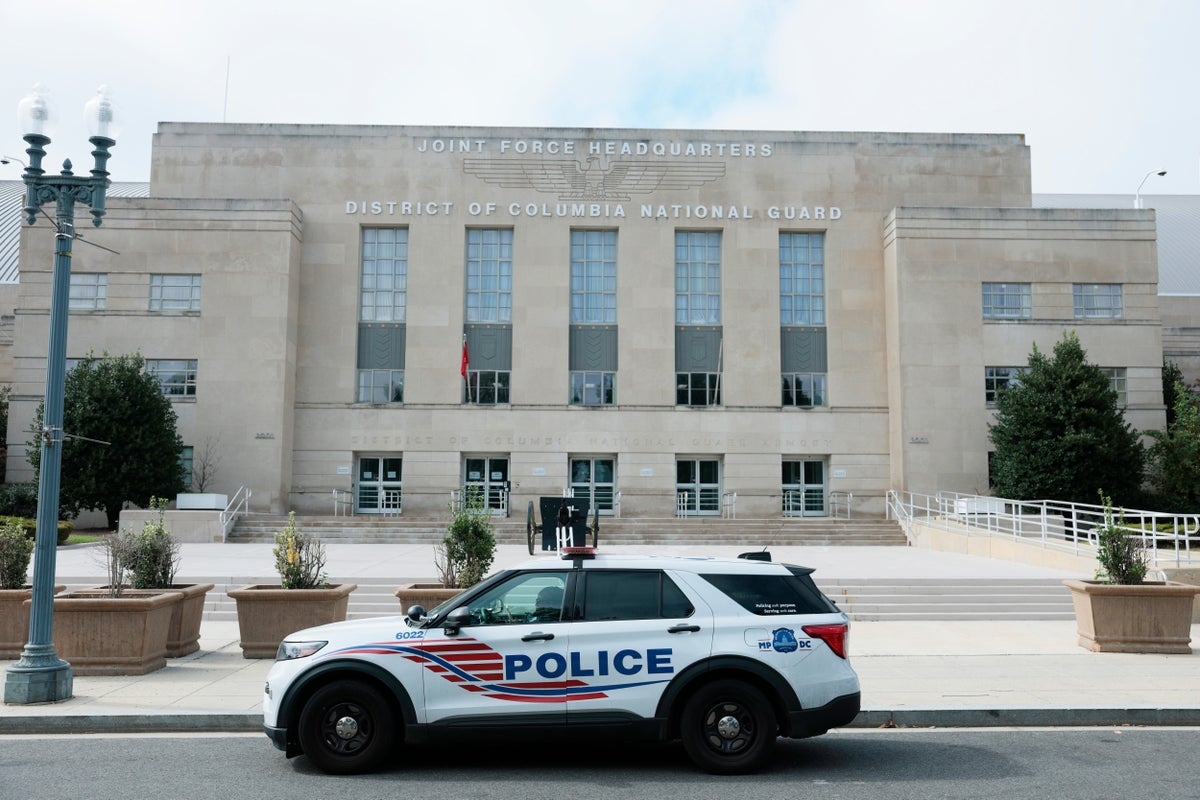
The polished wood of the drill floor stretches out like an open highway inside the District of Columbia National Guard Armory. For decades, this massive structure on East Capitol Street has smelled of floor wax, heavy wool uniforms, and diesel exhaust. It is a place built for the heavy lifting of democracy. Here, citizens transformed into soldiers, mobilizing for world wars, civil rights marches, presidential inaugurations, and pandemic responses.
Step inside on a crisp autumn morning, and you can hear the ghosts of the city’s complex history echoing off the high steel rafters. But outside, a different kind of noise is growing louder. It is the sound of heavy machinery, corporate negotiations, and the unstoppable momentum of a multi-billion-dollar sports franchise coming home.
The DC National Guard is packing its bags. The historic Armory, the bedrock of the district's local defense and emergency response for nearly a century, is being cleared out. The reason is simple, expensive, and deeply American. The city wants the land back to build a shiny new playground for the Washington Commanders.
It is a trade that encapsulates the modern American city. In one corner stands public service, historical memory, and the gritty reality of emergency preparedness. In the other stands the promise of economic revitalization, Sunday afternoon adrenaline, and the prestige of the National Football League. When those two forces collide on the urban gridiron, history rarely wins the match.
The Iron and the Echo
To understand what is being lost, you have to look at the bones of the building itself. Opened in 1943, the Armory was never meant to be pretty. It was meant to be indestructible. It was designed to hold thousands of troops, their equipment, and their vehicles, serving as a fortress of stability just blocks away from the United States Capitol.
Consider a hypothetical young private walking through those doors for the first time in the winter of 1968. Call him James. James isn't a career soldier. He is a kid from Northeast DC who spends his weekends training to assist his neighbors during floods or blizzards. When the city erupted in flames following the assassination of Martin Luther King Jr., James didn’t fly in from a distant base. He walked out of the Armory doors straight into his own burning neighborhood, carrying a rifle he hoped he wouldn't have to use, tasked with keeping a fragile peace in the place he called home.
For men and women like James, the Armory was not just an office building. It was a anchor. The cavernous main hall didn't just host military formations; it became a cultural mixing bowl for a segregated and transitioning city. It hosted the broadways of mid-century entertainment, from professional basketball games to boat shows, auto expos, and legendary concerts by the likes of James Brown and Louis Armstrong.
The building lived a double life. By day, it was the logistical nerve center for national security events. By night, it was the heartbeat of the community.
But buildings age. Roofs begin to leak. Heating and cooling systems designed during the Roosevelt administration start to fail. Over the years, maintaining a massive, drafty fortress became an expensive administrative headache. The Department of Defense looked at the repair bills and saw a money pit. The city looked at the location and saw a goldmine.
The Gravity of the Gridiron
Just a stone's throw from the Armory sits the decaying carcass of Robert F. Kennedy Memorial Stadium. RFK was once a place of violent, beautiful energy. It was where the Washington football team won championships, where the stands literally bounced under the rhythmic stamping of fifty thousand fanatical feet.
When the team packed up and left for the Maryland suburbs in 1997, they left behind a ghost town. The asphalt parking lots cracked, weeds pushed through the concrete, and the stadium became a concrete monument to nostalgia. For nearly three decades, the site has been a gaping wound in the city's geographical footprint, a massive tract of underutilized land in a city desperate for space, housing, and tax revenue.
The return of the Commanders to the District has become a political obsession. For city leadership, bringing the team back to its historic home is about more than just football. It is about civic pride. It is about capturing the massive economic engine that comes with modern sports infrastructure, the restaurants, the hotels, the sportsbooks, and the luxury condos that sprout like mushrooms around modern stadiums.
To make that vision a reality, the federal government had to step in. Congress began moving legislation to transfer control of the federally owned RFK campus over to the District of Columbia on a long-term lease. But there was a catch. The footprint of a modern NFL entertainment district is enormous. It requires acres of space for tailgating, retail villages, practice facilities, and transit hubs.
The old Armory was sitting directly in the path of progress. The playbook was written, the audibles were called, and the Guard was told to prepare for relocation.
The Invisible Cost of Logistics
Moving a military headquarters is not like moving out of a two-bedroom apartment. You do not just rent a truck and buy a few pizzas for your friends.
The DC National Guard houses complex command and control systems within those thick brick walls. It holds secure communication networks, armories filled with weapons and ammunition, and the logistical machinery required to coordinate with the Pentagon, the Secret Service, and the Metropolitan Police Department at a moment's notice.
Think about what happens when a major security crisis hits the nation's capital. When the flashbangs go off and the sirens wail, the response is managed by people who need to be close to the action. Relocating the Guard means moving these vital assets further away from the urban core, trading proximity for real estate development.
Military officials insist that readiness will not suffer. They talk about new, modernized facilities that will better serve the needs of twenty-first-century soldiers. They point out that a modern force needs digital infrastructure that a 1940s concrete fortress simply cannot support without hundreds of millions of dollars in renovations.
They are right, of course. Objectively, a shiny new facility somewhere else makes sense on a spreadsheet.
But spreadsheets do not capture the emotional weight of displacement. The DC National Guard holds a unique status. Unlike state guards, it reports directly to the President of the United States, yet its members are deeply rooted in the local community. For generations of Washingtonians, the Armory was a physical manifestation of their dual identity: uniquely local, profoundly national.
Moving the headquarters out of the city center chips away at that connection. It turns a visible, physical presence into a distant, abstract concept. The soldiers become outsiders coming in, rather than neighbors standing watch.
The Trade We Always Make
This is the classic bargain of the modern American metropolis. We consistently choose the temporary spectacle over the permanent institution. We trade the quiet, unglamorous infrastructure of public service for the loud, lucrative promise of entertainment.
A stadium brings crowds, noise, television cameras, and economic activity eight to ten times a year, plus a handful of summer concerts. It creates jobs, even if many of them are low-wage, seasonal positions selling overpriced beer and hot dogs. It gives a city a brand, a logo to plaster on hats and t-shirts, a collective identity to rally around on Sunday afternoons.
The Armory offered none of those things. It offered safety. It offered history. It offered a place to store blankets for the homeless during a blizzard and a staging ground for troops when the regular order broke down.
Walk past the Armory today, and you can feel the transition already underway. The shadows are lengthening across the old brick facade. The decisions have been made in backrooms and committee hearings, far away from the citizens who will live with the consequences. The uniforms are being packed into crates. The historic photos are being taken down from the walls.
Soon, the bulldozers will arrive. The air will fill with the smell of pulverized concrete and old plaster. In a few years, a new generation of fans will sit in luxury suites, drinking craft beer and cheering on a touchdown pass, completely unaware that they are standing on the exact spot where soldiers once slept on green canvas cots, waiting to defend the city they loved.