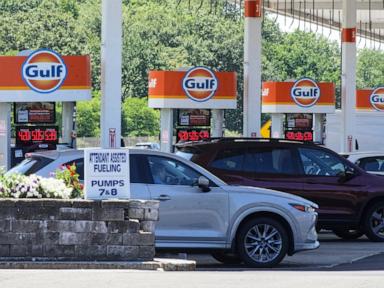
The bell on the gas station door chimes. It is a hollow, tinny sound that cuts through the steady hiss of the morning commute. Marcus stands on the cracked asphalt of a corner station in Ohio, staring at the digits spinning upward on the green digital display.
Three dollars and ninety-five cents. Four dollars. Four dollars and ten cents.
He squeezes the handle, feeling the mechanical vibration jolt through his hand. Every click of the meter feels like a small puncture in his family budget. He remembers when filling the tank of his sedan felt like a minor errand, an afterthought between grocery shopping and the weekend. Now, it requires a mental calculation. It requires looking at the utility bills coming due next week and wondering which line item shrinks to accommodate the local refinery's sudden arithmetic.
Confidence is a fragile construct. Economists talk about consumer sentiment as if it were a weather pattern, something tracked by satellite and predicted by algorithms. But sentiment is actually just a collection of moments like this one. It is the sudden tightening of the chest at the register. It is the quiet realization that the ground beneath your feet is shifting, driven by forces thousands of miles away that you cannot see, cannot control, and certainly did not vote for.
Right now, that shift has a name. Iran.
The Anatomy of a Shock
Gasoline is the heartbeat of the American consumer economy. When the price of crude oil ticks upward, the ripple effects do not stay confined to the highway. They travel down every supply chain, embedding themselves in the cost of a head of lettuce, a pair of sneakers, and the freight charges for small businesses trying to keep their doors open.
The latest geopolitical flashpoints involving Iran have sent shockwaves through global energy markets. To understand why Marcus feels the pinch in Ohio, we have to look past the local pump and toward the narrow waters of the Strait of Hormuz. (Note: The following geographic breakdown is based on historical trade data and maritime logistics). Roughly a fifth of the world's petroleum passes through this narrow maritime chokers point daily. When tensions flare in the Middle East, shipping insurers panic, traders recalibrate risk, and oil futures surge.
Markets hate uncertainty more than they hate bad news. And right now, the news is a thick fog of military posturing, drone threats, and diplomatic standoffs.
The result is an immediate spike in crude prices. Refineries pass those costs along. Retailers follow suit. Within days, the cost of getting to work climbs by twenty percent, while wages remain stubbornly anchored where they were last month. This is the wedge driven straight into the heart of consumer confidence.
The Psychology of Uncertainty
Confidence drops not because people read trade reports, but because they feel vulnerable.
Consider a hypothetical household budget, let us call it the Millers. Sarah Miller manages the finances for a family of four. She operates on a spreadsheet that leaves roughly two hundred dollars of breathing room at the end of every month. That buffer is meant for dental checkups, school supplies, or the occasional pizza night.
When fuel prices jump, that buffer evaporates. Sarah does not respond by calling her stockbroker. She responds by canceling the family trip to see her parents two states over. She buys store-brand cereal instead of the one her kids like. She checks the thermostat before she leaves for her shift at the clinic.
Multiply the Millers by one hundred million.
Suddenly, consumer spending—the engine that drives roughly two-thirds of the United States gross domestic product—hitches, stutters, and slows down. People stop buying discretionary goods. Retailers see foot traffic decline. Factories scale back production shifts. The psychological weight of a higher gas price acts as a tax on everyday life, draining enthusiasm out of the marketplace long before an official recession is ever declared.
The Ripple Across Main Street
Walk down any Main Street in America, and you will find businesses caught in the middle of this squeeze. Take Jim, who runs a local independent courier service with a fleet of three delivery vans.
Jim cannot simply absorb a dollar-per-gallon increase in fuel costs. His profit margins are razor-thin, dictated by local competition and corporate contracts that lock in rates for six months at a time. When gas prices surge due to overseas conflicts, Jim faces an impossible choice. He can raise his delivery fees and risk losing his clients to larger national logistics firms, or he can absorb the loss and watch his own salary shrink to zero.
He chooses the middle path: he freezes hiring, delays maintenance on his oldest van, and works seventy hours a week himself to cut down on driver overtime.
This is where the macroeconomics of oil meet the microeconomics of survival. The conflict in Iran feels abstract when viewed through a television screen showing grainy footage of naval ships and desert skies. But it becomes intimately concrete when Jim sits at his kitchen table at midnight, calculator in hand, wondering how long he can keep his business afloat while the cost of energy acts as a relentless anchor dragging him down.
Looking Beyond the Meter
Economists often debate whether consumer confidence is a leading or lagging indicator. Does falling confidence cause a downturn, or is it merely a thermometer reflecting an illness that has already set in?
The truth is, it is both. Confidence shapes reality. When Americans feel insecure about their financial future, they hoard cash. They stop taking risks. They hold off on buying homes, starting businesses, or upgrading their cars. The economy cools not because of a sudden lack of ideas or labor, but because of a pervasive, creeping dread.
And that dread is fueled every single time a driver pulls up to a pump, watches the numbers fly past a reasonable threshold, and realizes that the world outside is broken in a way that directly taxes their daily bread.
The bell on the gas station door chimes again. Another car pulls in. The driver steps out, glances at the price board overhead, and shakes their head. They insert their card, grab the nozzle, and the invisible tax of global conflict is collected once more, one gallon at a time.