The air in the Great Hall at Stormont has a specific weight. It is thick with the scent of floor wax, old stone, and the echoing murmurs of a century’s worth of political friction. But just down the corridor, in the rooms where the actual mechanics of governance find their fuel, a different kind of atmosphere has been brewing. It is the scent of fresh paint, high-grade laminate, and the distinct, metallic tang of a budget spinning quietly out of control.
Most people see a canteen as a place of utility. You grab a tray, you slide it along a metal rail, and you eat a sandwich while scrolling through your phone. For the civil servants, journalists, and Members of the Legislative Assembly (MLAs) who haunt the halls of Parliament Buildings, the canteen is something else. It is a neutral zone. It is where the hard edges of partisan debate are supposed to soften over lukewarm tea.
When the decision was made to renovate the basement refreshment area, it wasn't just about replacing cracked tiles. It was about modernization. It was about creating a space that reflected a forward-looking Northern Ireland.
Then the bill arrived.
The original estimate for the project sat at a relatively modest £450,000. It was a significant sum, certainly, but one that could be justified as an investment in the infrastructure of a historic landmark. But as the plastic sheeting went up and the jackhammers began to ring through the basement, that figure began to drift. By the time the dust settled and the final invoices were tallied, the cost had climbed to nearly £650,000.
A £200,000 overspend.
In the grand theater of national debt, £200,000 might seem like a rounding error. To a family in West Belfast struggling with the rising cost of heating, or a nurse in Derry calculating the distance between paychecks, it is a fortune. It is the price of four or five houses. It is a lifetime of savings. It is the physical manifestation of a disconnect between those who manage the purse strings and those who provide the coins.
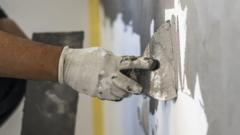
Consider the hypothetical journeyman electrician tasked with wiring the new coffee stations. He sees the high-spec finishes and the designer lighting. He knows that in a building this old, nothing is simple. You pull back one layer of plaster and find a crumbling mess of mid-century piping that wasn't on the blueprints. You try to install a modern ventilation system and realize the stone walls are three feet thick and stubborn as a mule. This is the "hidden tax" of heritage. Every nail driven into a building like Stormont carries the weight of history and the premium of specialized labor.
But the public doesn't see the crumbling pipes. They see the bottom line.
The Northern Ireland Assembly Commission, the body responsible for the building's upkeep, pointed toward the usual suspects: inflation, the surging cost of raw materials, and the unforeseen complexities of working within a Grade A listed building. These are valid points. Steel is more expensive. Timber is a luxury. The very act of moving a pallet of bricks through those corridors requires a level of care that slows progress to a crawl.
However, there is a psychological threshold for public spending. When a project exceeds its budget by nearly 50%, it stops being a news story about construction and starts being a story about stewardship.
We live in an era of intense scrutiny. Every penny spent by the government is viewed through a lens of extreme skepticism, and for good reason. For years, the political machinery at Stormont was stalled, the engines silent, while the public watched their services fray at the edges. When that machinery finally hums back to life, the first thing people notice isn't the legislation being passed; it’s the fact that the place where the politicians eat cost a quarter of a million pounds more than promised.
It feels like a metaphor for the struggle of governance itself. You start with a plan. You have a vision of a polished, efficient space where everyone can sit down and find common ground. You set a price. But then reality intervenes. The "unforeseen" becomes the "unavoidable." The budget expands, the timelines stretch, and the people standing outside the gates are left wondering why everything is so much harder and more expensive than it was supposed to be.
The kitchen staff who now work in this £650,000 space are likely grateful for the upgrades. The old facilities were tired. They were relics of an era that didn't demand the same standards of efficiency or hygiene. There is a human dignity in having a functional workplace. If we want our institutions to work, we have to maintain the physical shells that house them.
Yet, the ghost of that £200,000 lingers in every corner of the new dining room. It sits at the table during every meeting. It is the invisible guest at lunch.
The real cost isn't just the money. It's the erosion of a very specific kind of social contract. When the government asks the public to tighten their belts, to accept cuts to libraries, to wait longer for elective surgeries, or to watch their schools struggle for basic supplies, the government must be seen to be doing the same. It is not enough to be efficient; you must be visibly, almost painfully, frugal.
A canteen is a place of sustenance. But when the price of a seat at the table becomes this high, the food can start to taste a little bitter.
The mahogany and the chrome are polished now. The lights are bright. The coffee flows. But as the MLAs walk past the display cases and the new seating areas, they are walking through a monument to miscalculation. They are inhabiting a space that reminds everyone who enters that while the stone of Stormont is permanent, the trust of the people who pay for it is incredibly fragile.
Every time a tray slides along that new rail, there is a silent tally being kept. The taxpayers are the ones who bought the trays, the rails, and the very air in the room. They are watching. They are waiting to see if the work being done in the offices upstairs is worth the premium they just paid for the basement.
The renovation is finished. The builders have packed up their tools. The invoices have been signed. But the conversation about what we value, and what we are willing to pay for the appearance of progress, is only just beginning.
There is a window in the basement that looks out toward the sprawling green of the estate. From that vantage point, the grandeur of the building is hidden. You only see the grass, the trees, and the people walking their dogs in the rain. They are the ones who paid the extra £200,000. They are the ones who expect that every pound spent within those walls is a pound spent for them.
As the sun sets over the hills of Down, the lights in the new canteen flicker on, casting a warm, expensive glow onto the pavement. It is a beautiful room. It is a modern room. It is a room that cost more than it should have, in a world that can afford it less than ever.
The ledger is open. The ink is dry. The seat is waiting.



