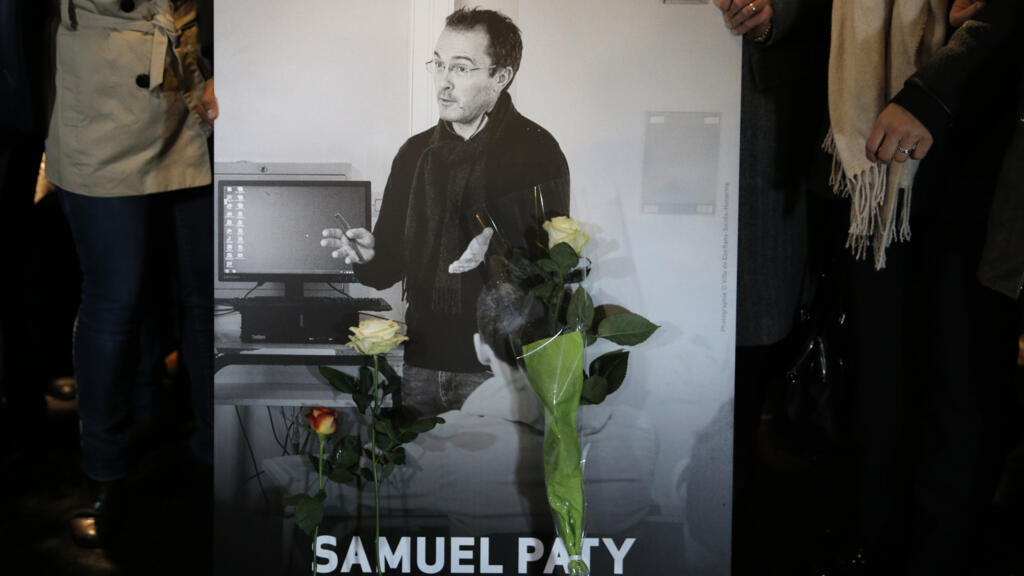
The air inside a French courtroom carries a specific, heavy stillness. It is a scent of old wood, floor wax, and the suffocating weight of history. For those who loved Samuel Paty, that air has been unbreathable for years. Paty was a history teacher who believed that a classroom was a sacred space for difficult questions. He believed in the Enlightenment. He believed in the power of a drawing to spark a debate about liberty. For those beliefs, he was beheaded in a Parisian suburb in 2020.
Now, the legal system has offered its latest accounting of that tragedy. It feels less like a resolution and more like a ledger where the numbers don't quite add up.
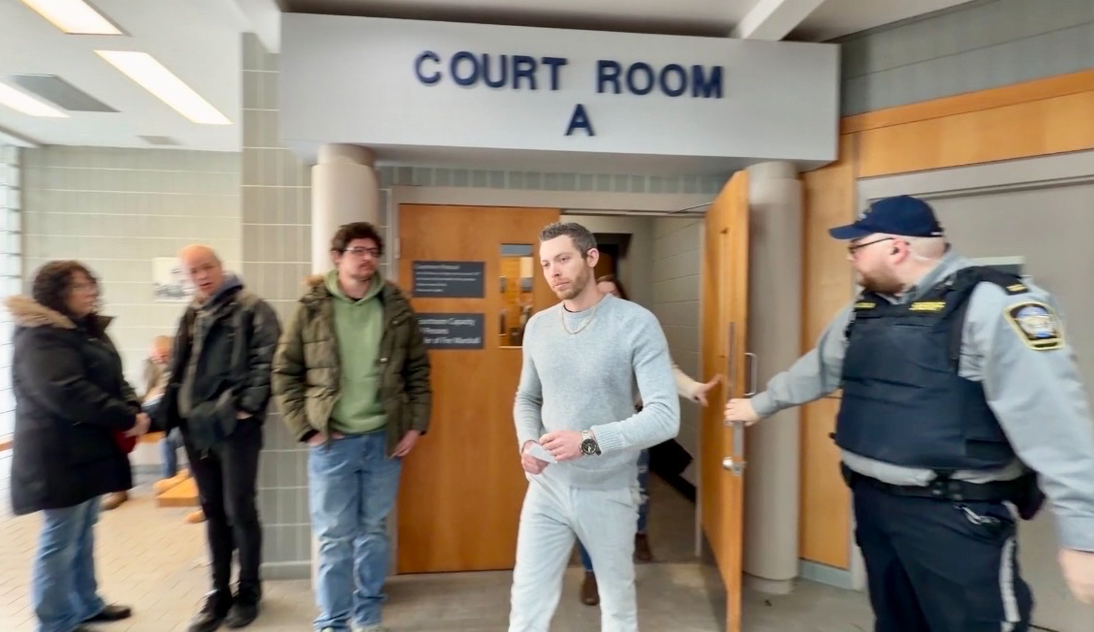
A French appeals court recently took the cases of three men involved in the machinery of Paty’s death. These were not the men who held the knife. They were the ones who provided the oxygen for the fire. Naïm Boudaoud, Brahim Chnina, and Abdelhakim Sefrioui stood before the bench, seeking a reduction in their initial sentences. They found it.
The court slashed their jail terms.
To understand why this feels like a punch to the gut for the French educational community, you have to look past the legal jargon and into the eyes of a teacher standing before thirty teenagers.
The Anatomy of an Online Storm
Consider a hypothetical teacher named Marc. Marc works in a school similar to the one where Paty taught. Every morning, he enters a room filled with the chaotic energy of youth. He is there to teach them how to think, not what to think. When a teacher like Marc—or Paty—brings a caricature into a lesson on free speech, they are performing a high-wire act. They are betting on the idea that civilization is stronger than offense.
Brahim Chnina and Abdelhakim Sefrioui were the ones who cut the wire.
Chnina was the father of a schoolgirl who lied. She told her father that Paty had asked Muslim students to leave the room before showing the Prophet Muhammad cartoons. It was a fabrication; she wasn't even in class that day. But Chnina didn't check the facts. He went to the internet. He teamed up with Sefrioui, an Islamist activist, to film videos that painted Paty as a monster. They named him. They named the school. They broadcast his identity to a digital coliseum hungry for a villain.
In the first trial, Chnina and Sefrioui were seen as the architects of the atmosphere that led the 18-year-old killer, Abdoullakh Anzorov, to Paty’s door. Chnina originally received six years. Sefrioui received four.
The appeals court had a different perspective. They reduced Chnina’s sentence to five years, with one year suspended. Sefrioui saw his four-year sentence cut to two and a half years, with time already served potentially meaning he walks free much sooner than anyone expected.
The legal logic is precise and cold. The judges argued that while their actions were inflammatory, they did not technically constitute a "terrorist conspiracy" in the way the lower court had defined it. It is a distinction of law that feels like an erasure of reality. When you put a target on a man's back and scream for justice in a digital town square, is the resulting violence an accident or a foreseeable conclusion?
The Man Who Bought the Knife
Then there is Naïm Boudaoud. He was a friend of the killer. He accompanied Anzorov to a shop to buy the knife. He drove him to the school. In the initial trial, he was sentenced to fourteen years for complicity in a terrorist murder.
The appeals court looked at the same evidence and saw a different shadow. They reclassified his crime. They decided he wasn't a "terrorist accomplice" because, in their view, he didn't know exactly what Anzorov was planning to do with that knife. His sentence plummeted from fourteen years to nine.
Justice, in this case, is wearing a blindfold that seems to shield it from the context of the era. We live in a world where a social media post is a projectile. To judge these men based on 20th-century definitions of conspiracy is to ignore the way radicalization actually functions in the 21st century. It isn't always a secret meeting in a basement. Sometimes, it’s a shared video and a ride to the store.
The Invisible Stakes of the Classroom
Every teacher in France is watching this. They aren't just watching the clock; they are watching the precedent.
When a sentence is reduced, a message is sent. It tells the faculty rooms and the lecture halls that the "digital lynching" which preceded Paty’s death is perhaps not as grave a crime as we once thought. It suggests that the people who stir the pot are less responsible for the boil than the hand that turns the heat.
For a teacher, the stakes are not abstract. They are as real as the chalk dust on their hands. If the legal system cannot or will not fully punish those who incite violence against educators, the classroom becomes a front line without a shield. The "human element" here is the creeping silence that begins to inhabit schools. It is the teacher who chooses not to show a controversial image because they remember what happened to Samuel. It is the self-censorship that dies a thousand small deaths every day in the name of safety.
The reduction of these sentences isn't just a legal adjustment. It is a ripple in the water that makes every teacher feel a bit more alone. We talk about "slashing jail terms" as if we are talking about budget cuts or a clearance sale. But we are actually talking about the perceived value of a human life and the protection of the values that life represented.
The Ledger of the Law
The defense lawyers, of course, call this a victory for the rule of law. They argue that passion and emotion should not dictate the length of a prison stay. They are right, in a narrow, technical sense. We do not want a mob to decide the fate of the accused. We have the courts to ensure that the punishment fits the specific, proven intent of the individual.
But there is a gap between a "fair trial" and a "just outcome" that the public can feel in their marrow.
Samuel Paty’s family sat through these proceedings. They listened to the technicalities. They watched as the men who helped orchestrate the final days of their brother, their son, their father, were given a lighter burden to carry. They watched as the law carefully separated the spark from the explosion.
The court’s decision rests on the idea of individual culpability. It asks: Did this specific man know that this specific murder would happen at this specific time? If the answer is "no," the law retreats. But history asks a different question: Could this murder have happened without these men?
The answer to that is a resounding no.
The Echo in the Hallway
Imagine a school hallway after the final bell. It’s usually a place of noise, of banging lockers and retreating footsteps. But after a verdict like this, the silence in the corridors of the Conflans-Sainte-Honorine school feels different. It feels like a question.
If the "inciters" are treated with such leniency, who is truly safe?
The French state prides itself on Laïcité—secularism. It is the bedrock of their republic. Samuel Paty was the personification of that bedrock. He was the man tasked with passing those values to the next generation. When he was killed, the Republic wept. When the first sentences were handed down, there was a sense that the Republic had bared its teeth.
With this appeal, those teeth feel blunted.
The three men will eventually leave prison. They will return to their lives, to the sunlight, and to the streets of France. Samuel Paty will never return to his classroom. He remains a symbol, a name on a plaque, a memory in the minds of his students.
The legal system has finished its work on these three files. The paperwork is filed. The sentences are recorded. But for the teachers of France, the case is never closed. They are the ones who have to go back into the rooms where the lights are bright and the questions are hard, wondering if the law truly understands the danger of a lie told loudly enough to be heard by a killer.
In the end, the court didn't just slash jail terms. It recalculated the cost of a teacher's courage, and many fear the price has been set far too low.