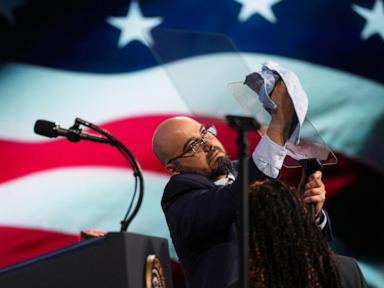
The room smells of stale coffee, expensive wool, and the quiet panic of a deadline. Beneath the glare of television lights, the text scrolls upward at a carefully calculated rhythm. Sixty words a minute. Ninety words a minute. The human eye tracks the amber letters against dark glass, translating political passion into smooth, uninterrupted cadence.
For the person behind the machine, the teleprompter is not merely a tool. It is a shield. It is the invisible boundary between a stuttering thought and a polished decree.
Imagine, for a moment, sitting in that seat. (This is a hypothetical lens to understand the pressure, not a verified account of the individual in question). Your fingers rest on the manual scroll control. Your breath syncs with the breathing of a leader addressing a nation. You know the secrets before they hit the evening news. You hold the pacing of history in the palm of your hand.
Then, the red light goes off. The broadcast ends. The room empties.
And a different kind of calculation begins.
The Weight of Whispers
Power leaves an unmistakable residue. It clings to the corridors of Washington like cigar smoke in an old library. When you spend your days operating the machinery of executive communication, you absorb the rhythm of influence. You learn how announcements shift markets. You notice the microscopic pause before a policy is signed.
For a former White House teleprompter operator, that proximity proved to be an expensive education.
Information is a currency with a terrifying half-life. In the rarefied air of federal oversight, certain details possess explosive gravitational pull. When those details migrate from a secure briefing room to the open market before the rest of the world wakes up, the rules of the game snap into sharp focus.
The Commodity Futures Trading Commission does not care about the eloquence of a speech. It cares about fairness. It cares about the sanctity of a level playing field. And when the federal watchdog looked into the actions of this former insider, the findings painted a picture far removed from the polished podiums of Pennsylvania Avenue.
A civil enforcement action arrived with the quiet brutality of a certified letter. The core of the matter came down to a settlement of one hundred seventy-two thousand dollars. No dramatic perp walk. No televised courtroom drama. Just a ledger, a penalty, and the stark realization that trading on non-public government insights carries a catastrophic invoice.
Behind the Ledger
Why do people who stand so close to the center of power risk everything for a margin?
Consider the psychological gravity of proximity. When you are the one scrolling the words for the most powerful people on earth, it is easy to feel like an author rather than an instrument. The illusion of ownership takes root. You watch fortunes pivot on decisions you helped articulate. The barrier between observing power and wielding it blurs until it vanishes entirely.
This is where the narrative splits from political theater into financial reality.
The regulatory machinery of the federal government operates on cold, unyielding metrics. The CFTC investigation laid bare the mechanics of the alleged transgression. It was not a grand conspiracy worthy of a spy thriller. It was a series of choices made in the gray margins of access.
We often romanticize proximity to authority. We assume that breathing the air of the Oval Office confers some sort of immunity, or at least a protective obscurity. But the modern regulatory apparatus is built to track the footprints left by sudden, perfectly timed financial maneuvers. Algorithms do not care who you worked for. They only care about anomalies.
The settlement figure of one hundred seventy-two thousand dollars represents more than a financial disgorgement and civil penalty. It is the exact cost of forgetting where the stage ends and the audience begins.
The Quiet Aftermath
The television screens in the West Wing go dark every night. New operators sit at the consoles. New speeches are loaded into the software. The machinery of state moves forward with the relentless indifference of a glacier.
Out in the wider world, a former operator writes a check.
There is a profound loneliness in disgrace that lacks the theatricality of a prison sentence. It happens in lawyers' offices and conference rooms with drop ceilings. It is measured in wire transfers and signed consent orders. The noise of Washington fades, replaced by the crushing silence of accountability.
We tell stories about villains and masterminds because they are easy to digest. They fit neatly into the moral architecture of our entertainment. But real breaches of trust are usually much quieter. They start with a whisper, an opportunity, and the dangerous belief that nobody is watching the person who usually controls the screen.
The amber text keeps scrolling, somewhere. Another voice takes the cue. The world keeps turning, indifferent to the friction it leaves behind.