Everybody is reading the headline backward.
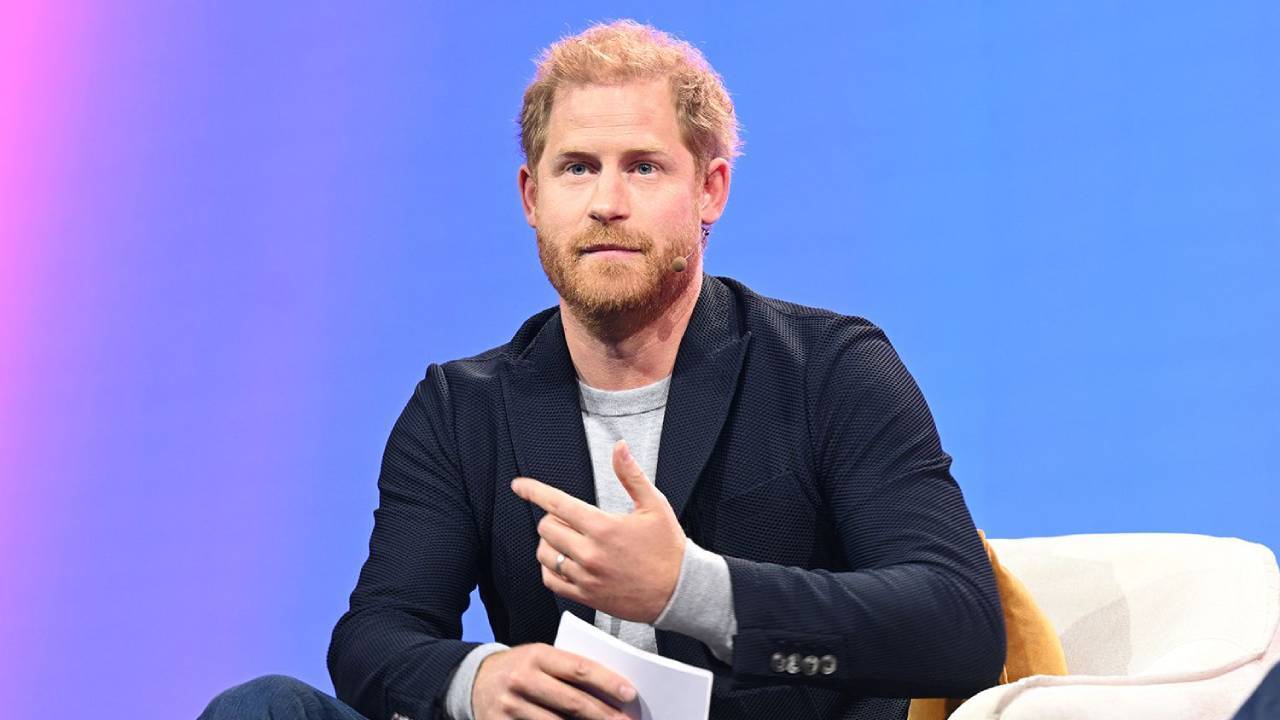
When news broke that Prince Harry stepped down as BetterUp’s Chief Impact Officer after five years—allegedly walking away from a $1 million annual payday to become a "senior adviser"—the internet did what it always does. Critics called it a firing. Tabloids framed it as another Hollywood failure. Business pundits sneered that the novelty of a royal mascot had finally worn off for a Silicon Valley unicorn struggling to justify its bloated 2021 valuation.
They are all wrong. Completely, fundamentally wrong.
If you look past the palace intrigue and examine the cold, hard mechanics of late-stage venture capital, executive compensation, and celebrity equity plays, this wasn't a demotion. It was a textbook financial extraction. Harry didn't get pushed out of the C-suite; he executed the exact exit strategy every savvy celebrity investor prays for when a startup hits the dreaded pre-IPO plateau.
The Myth of the $1 Million "Salary"
Let’s dismantle the biggest lie in the coverage first: the idea that Harry was clocking in for a $1 million cash salary and just gave up a sweet paycheck.
In Silicon Valley, nobody takes a celebrity onto the cap table for a straight cash salary. That is rookie thinking. Cash burns runway. Venture-backed companies—especially mental health tech firms trying to survive the post-pandemic correction—hoard cash like oxygen. When BetterUp hired Harry in March 2021, right before raising a $300 million Series E at a $4.7 billion valuation, they didn't hire an employee. They bought a megaphone. And you don't pay a megaphone in W-2 wages; you pay it in restricted stock units (RSUs) and stock options.
I’ve sat in the room when founders structure these "Chief Impact Officer" or "Creative Director" deals for A-list talent. The press release always floats a sexy seven-figure number to make the celebrity look serious and the company look flush. In reality, the cash component is usually minimal—enough to cover security and travel—while the bulk of that "million-dollar package" is phantom paper wealth tied to a standard four-year vesting schedule with a one-year cliff.
Do the math. March 2021 to 2026. Five years.
Harry’s initial equity grant is fully vested. Every single share he was promised when he signed on the dotted line now belongs to him outright. Staying in an operational C-suite role after your equity finishes vesting is the financial equivalent of working for free, especially when the company’s secondary market valuation has taken a beating since the zero-interest-rate peak of 2021. By shifting to a "senior adviser" post, Harry keeps his vested equity, drops the exhausting obligations of corporate appearances and internal town halls, and frees up his calendar to monetize his time elsewhere. That isn't losing a job. That is graduating.
Why "Chief Impact Officer" Was Always a Poison Pill
To understand why this transition makes sense for both sides, you have to understand what a Chief Impact Officer actually does—and why the role has become a liability in modern corporate governance.
Five years ago, tech companies were drunk on Environmental, Social, and Governance (ESG) metrics and purpose-driven branding. Hiring a royal to talk about "mental fitness" was peak 2021 marketing. It opened doors to massive enterprise contracts, got BetterUp's CEO Alexi Robichaux into rooms at Davos, and generated billions of earned media impressions that no performance marketing budget could ever buy.
Fast forward to today. The corporate appetite for celebrity-led moralizing has evaporated. Chief Financial Officers buying enterprise software in 2026 do not care if a prince endorses your coaching app; they care about hard ROI, retention metrics, and whether your AI coaching tools actually reduce healthcare costs. Worse, having a lightning-rod public figure inside your C-suite creates massive fiduciary headaches.
Whenever Harry released a memoir, sat for a tell-all interview, or got dragged into a tabloid feud, BetterUp’s enterprise sales team had to answer awkward questions from conservative corporate buyers. A C-suite title implies governance, liability, and operational control. When you are trying to clean up your balance sheet for an eventual public offering or a strategic buyout, institutional investors hate messy optics. They want boring, predictable operators in the executive suite, not global celebrities whose personal brand fluctuates with every news cycle.
Moving him to an advisory role solves BetterUp’s biggest headache overnight. They get to keep his name on the masthead for legacy prestige without having to answer for his personal PR battles during investor roadshows.
The Real Reason Startups Hate Celebrity Executives
There is a dirty secret in venture capital that nobody puts in a TechCrunch press release: celebrity executives almost always become net negatives after year three.
I've seen startups blow millions chasing star power, convinced that an actor, athlete, or royal will magically solve their customer acquisition cost problem. Here is how the lifecycle actually plays out:
- The Sugar High (Months 1–12): The announcement drops. Website traffic spikes 400%. Enterprise leads flood the inbox. Everyone pops champagne.
- The Friction (Months 13–24): Reality sets in. The celebrity’s handlers want total control over messaging. The internal product team resents that a non-operator gets paid more than the VP of Engineering. The celebrity gets bored of attending quarterly business reviews.
- The Diminishing Returns (Months 25–48): The press stops caring. A headline about the celebrity speaking at a company summit generates zero clicks. Meanwhile, the company is still paying out massive equity tranches for a marketing channel that has gone completely cold.
- The Quiet Pivot (Month 49+): Both sides realize the marriage is over, so they invent a face-saving title like "Senior Adviser" or "Brand Ambassador" to unwind the relationship without tanking the company's valuation.
BetterUp and Harry followed this exact trajectory down to the letter. They extracted every ounce of PR value out of the partnership during the boom years, rode out the post-pandemic mental health slump, and quietly restructured the deal the exact moment the vesting schedule allowed it.
What Everyone Gets Wrong About Harry’s Business Acumen
The prevailing narrative around Prince Harry in America is that he is a clueless dilettante getting fleeced by Hollywood agents and Silicon Valley sharks. Look at the Spotify deal collapse, critics say. Look at the Netflix struggles. Look at BetterUp.
Look closer at the numbers, not the headlines.
In five years, Harry took a position that required zero technical expertise, zero management of profit-and-loss statements, and zero day-to-day operational stress, and turned it into a fully vested stake in a multi-billion-dollar enterprise software company. Even if BetterUp’s valuation gets cut in half from its $4.7 billion peak when it eventually goes public or sells, a fraction of a percent of equity in a unicorn still clears tens of millions of dollars.
Compare that to traditional royal duties, where you cut ribbons for forty years in exchange for an allowance controlled by your relatives and zero personal equity. Whatever mistakes Harry has made in media production, his bet on Silicon Valley equity was ruthless and smart. He traded his royal title—a depreciating asset in the modern media market—for hard ownership in the B2B SaaS sector.
Admittedly, there is a glaring downside to this strategy: liquidity. Paper wealth in a private company is worth exactly zero dollars until an exit event happens. If BetterUp stalls out, gets crushed by AI-native competitors, or gets acquired in a fire sale where preferred shareholders wipe out common stock, Harry’s five years of brand-lending could end up worth far less than the rumored $1 million a year. Betting on private tech equity is always a gamble against liquidation preferences.
Stop Confusing Titles With Leverage
If you are watching this play out from the sidelines—whether you are a founder, an executive, or just someone trying to figure out how power actually works in corporate America—stop reading press releases at face value.
Titles are cheap. Startups hand out "Chief" titles like candy because words cost nothing on a balance sheet. Leverage, however, is entirely about ownership and optionality.
When a high-profile figure steps down from an operational role to become an "adviser," the amateur observer sees a loss of status. The seasoned operator sees someone who just locked in their upside, eliminated their downside risk, and walked away with their time intact.
Harry didn't get demoted. He cashed out his time, kept his chips on the table, and left BetterUp to figure out how to survive the AI software bloodbath on its own. That isn't a royal failure—it's the most Silicon Valley move he has ever made.