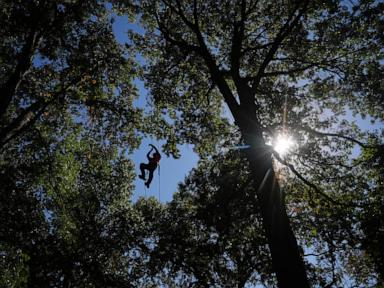
Fifty years ago, a niche gathering of arborists changed professional tree care forever by launching a competitive championship in St. Louis. Fast forward to today, and that same event brought nearly 100 elite climbers from 22 countries right back to its birthplace at Tower Grove Park.
If you picture tree climbing as just a kid's weekend hobby, you're missing the entire point. This is a high-stakes, physically punishing professional sport where gear management, split-second safety checks, and absolute vertical endurance dictate who walks away with the gold.
The Serious Reality Behind Competitive Tree Climbing
Nobody travels across oceans just to hang out in a sweetgum tree for fun. The International Tree Climbing Championship serves as a rigorous testing ground for the exact skills working arborists need to survive on the job.
Tree care remains an intensely dangerous occupation. Federal safety data and industry figures routinely highlight that professional trimmers face fatality rates vastly higher than standard construction work, with falls from height standing out as a primary hazard.
That's why events like the Aerial Rescue challenge aren't just for show. Competitors must race against a strict clock to evaluate hazards, execute first aid protocols, and safely lower a weighted dummy representing an injured colleague suspended high in the canopy. When you watch professionals navigate those branches under pressure, you're looking at real-world muscle memory in action.
Inside the Core Events That Separate Amateurs From Elites
The competition splits athletes across multiple grueling preliminary categories before narrowing the field down to the elite Masters Challenge. Each station targets a specific physical discipline.
- The Ascent: Climbers scale a dangling rope using specialized mechanical ascenders or traditional foot-locking techniques, racing to ring a bell at the absolute top.
- The Work Climb: Competitors move dynamically through different canopy stations, utilizing handsaws and lanyards while judges grade their efficiency, safety compliance, and fluid movement.
- Throwline Accuracy: Often considered the ultimate equalizer, this event tests a competitor's ability to accurately toss weighted bags high into complex branch unions to set climbing lines without tangling.
Witnessing international competitors fly through these stages reveals an astonishing level of physical conditioning. They make grueling vertical maneuvers look entirely effortless.
Why St. Louis Holds a Legendary Status in Arboriculture
Choosing Tower Grove Park for the 50th anniversary carried deep symbolic weight. Established originally through a land donation by botanist Henry Shaw back in the nineteenth century, the park operates as an accredited Level-II Arboretum boasting thousands of mature trees.
When the championship started locally five decades ago at the Missouri Botanical Garden, few anticipated it would blossom into a massive global circuit. Bringing the milestone event back home allowed longtime veterans to honor the pioneers of modern arborist techniques while introducing thousands of local spectators to the sport through the accompanying Arbor Fair.
Beyond the medals and personal records, the community aspect drives this unique subculture forward. Competitors who battle against each other on the ropes spend their evenings swapping gear modifications, discussing safety updates, and forging cross-continental friendships that last for decades.
The ropes come down and the gear gets packed away until the next global showdown, but the standards set in the St. Louis canopy will continue shaping how trees get safely managed across the planet all year long.