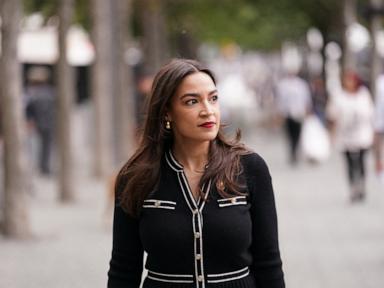
Every political cycle follows the exact same script. Alexandria Ocasio-Cortez stands before a room of cheering donors in New York City, warns about the existential stakes for the progressive movement, and lays out a familiar manifesto. The mainstream media dutifully copies the notes, frames it as a turning point, and normalizes the fiction that grassroots energy alone builds durable political power.
Let us stop pretending this strategy works.
I have spent years watching political operations burn through millions of dollars in campaign donations, mistaking viral social media moments for structural leverage. The lazy consensus among left-leaning strategists is that sheer volume of turnout and moral clarity will override institutional inertia. It is a comforting myth. It feels good to believe that shouting louder at the establishment forces compliance.
History shows it just entrenches the opposition while leaving the base with empty rhetoric.
The Myth of Moral Purity in Electoral Politics
Let us define terms immediately. Political power does not stem from ideological purity. It stems from transactional leverage and institutional control.
When progressives gather at high-priced Manhattan fundraisers to discuss the stakes of upcoming local and federal elections, they focus almost exclusively on messaging. They talk about who said what, who crossed the picket line, and who represents the true voice of the working class. They miss the plumbing. Politics is not a seminar; it is a municipal plumbing contract. If you do not control the committees, the precinct chairs, and the budget line items, your moral clarity is just expensive background noise.
Imagine a scenario where a progressive firebrand wins a high-profile congressional primary by mobilizing thousands of disaffected renters. It feels like a revolution. Yet, six months later, that same politician cannot pass a basic housing stabilization bill because the local county committees—completely ignored during the glamorous fundraising circuit—are entirely controlled by machine regulars who answer to real estate developers.
The strategy failed long before election day because the architects confused an audience with an infrastructure.
Dismantling the Fundraiser Echo Chamber
The standard narrative around these events treats them as bellwethers for national change. That is lazy journalism. New York City is a political universe unto itself, plagued by hyper-local machine politics that dwarf national ideological battles.
When insiders talk about the stakes for progressives, they point to national talking points: healthcare, climate change, wealth inequality. These are vital issues, but treating them as local campaign levers in a city dominated by entrenched municipal unions and real estate capital is political malpractice. The voters in these rooms want to feel righteous, but righteousness does not pay for ward heelers, localized data operations, or primary challengers who can win outer-borough state senate seats.
Let us look at the data. In districts where progressive candidates rely purely on small-dollar national fundraising without building precinct-level neighborhood machines, down-ballot collapse is nearly absolute. You can raise ten million dollars from across the country via digital ads, but if you cannot find three volunteers to knock on doors in Ozone Park on a rainy Tuesday, you will lose to a candidate backed by a local trade union every single time.
The Uncomfortable Downside of the Contrarian Path
Admitting this truth hurts the progressive brand. Here is the part nobody wants to say out loud: grassroots digital organizing has a massive ceiling and a devastating floor.
When you bypass traditional party infrastructure to run pure outsider campaigns, you alienate the very institutional players you eventually need to govern. You create an environment of perpetual permanent campaign mode where compromise is treated as treason, rendering actual legislative wins impossible. I have watched brilliant organizers burn out because they spent two years tweeting about systemic change while losing every single local zoning board battle that actually dictates whether working-class families can afford to stay in their neighborhoods.
The contrarian truth is that progressives in New York need to stop acting like cultural insurgents and start acting like ruthless political operators.
What You Should Be Asking Instead
People ask: How do we get more progressives elected to high office?
That is the wrong question. It assumes getting someone with the right badge into a seat changes the machinery of power.
The real question is: How do you systematically capture county committees, municipal boards, and local judicial delegates where real power is brokered away from the cameras?
Until the movement stops treating local precinct politics as beneath them and starts treating fundraising banquets as vanity metrics, every high-stakes speech will remain what it is today: a brilliantly catered exercise in losing slowly.