Rain hits bamboo like a drumroll before a verdict.
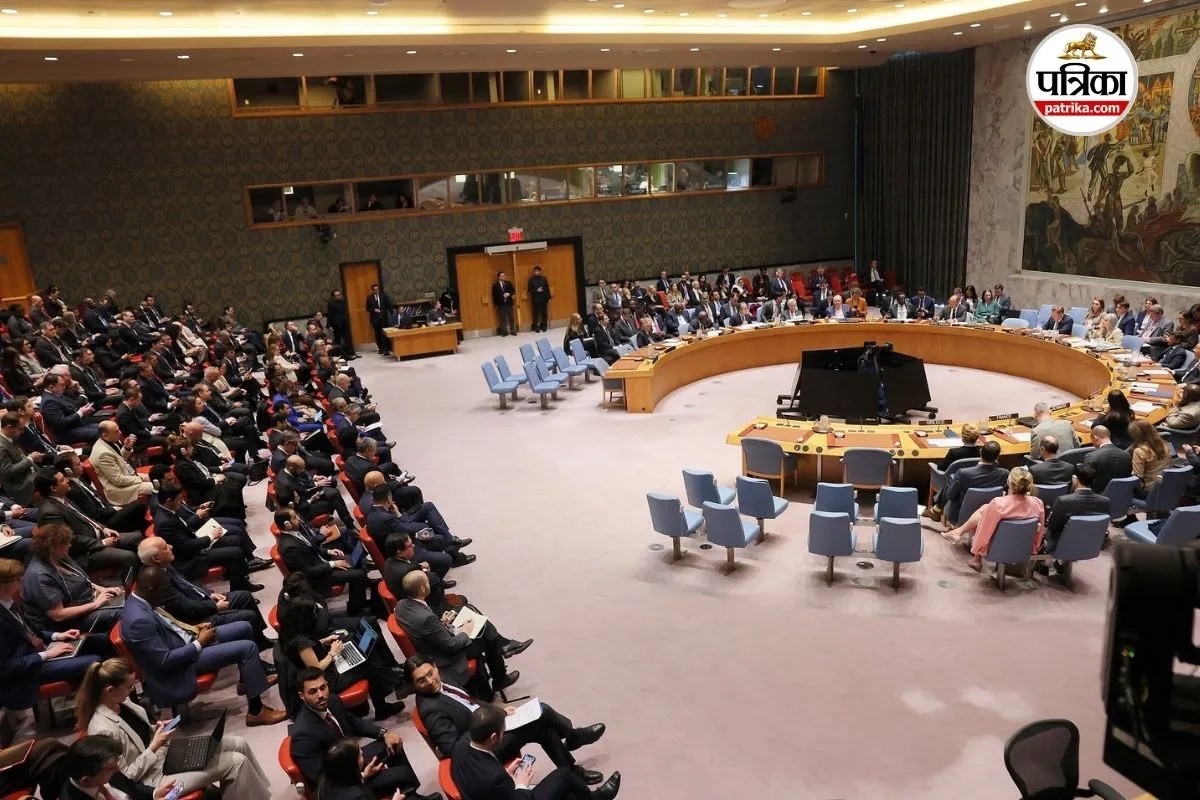
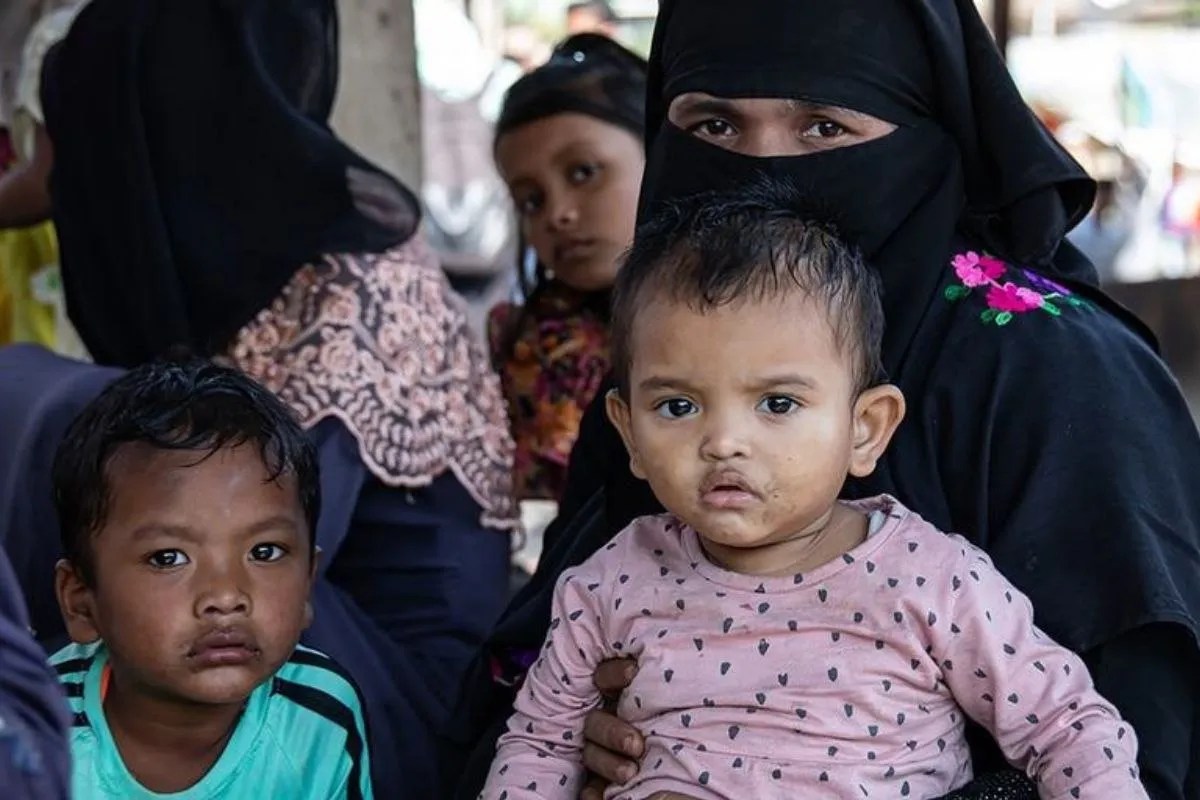
On a damp morning in Cox’s Bazar, where hills of red earth have been scraped raw and stitched together with tarpaulin, plastic sheeting, and split bamboo, the sound carries further than any speech ever delivered inside a wood-paneled chamber in New York. It gets into your clothes. It pools at your ankles. After a few hours of walking the narrow, uneven lanes between shelters, you stop noticing the mud on your shoes and start noticing the weight in the air—the heavy, unmistakable stillness of people waiting for a door to open that has been locked for nearly a decade. Building on this theme, you can find more in: Why Giving Putin’s National Guard Heavy Tanks Is Actually a Sign of Regime Panic.
When the President of the United Nations General Assembly steps onto that terrain, the contrast is immediate and jarring. Suites and microphones are replaced by crowded lanes, wet earth, and eyes that have watched too many visitors arrive with notebooks and leave with press releases. Out of that visit comes a sharp warning aimed at Myanmar’s military authorities: ignore the binding orders of the International Court of Justice, and consequences will follow.
Words like "consequences" and "binding orders" sound clean on paper. They look tidy in diplomatic dispatches. Yet standing in a camp where hundreds of thousands of Rohingya live in suspended animation—unable to work legally in their host country, unable to return safely to Rakhine State, and unable to build a true future behind woven walls—those phrases can feel dangerously distant from daily survival. Experts at Al Jazeera have also weighed in on this trend.
I have spent enough time listening to displaced families and observing international institutions up close to admit something uncomfortable. International justice moves slowly. Sometimes painfully slowly. There are moments when even those of us who believe in law, diplomacy, and human rights feel a cold knot of doubt in our stomachs. We have seen resolutions passed. We have seen condemnations drafted. We have seen headlines flare and fade while children grow up inside temporary camps that no longer feel temporary at all.
Why should a warning from the UN General Assembly president or a ruling from the International Court of Justice matter this time? What makes a legal judgment in The Hague or a visit to Bangladesh more than another chapter in a long, exhausting story?
To answer that, we have to strip away the jargon and look at what is actually at stake—for the people living under those tarpaulins, for the neighboring countries carrying the strain, and for the credibility of global law itself.
The Weight of a Paper Shield
Think of international law like a smoke alarm in an apartment building. A smoke alarm does not put out the fire by itself. It does not carry a hose or break down a locked door. What it does is sound an unmistakable warning, record what is happening, and make it impossible for everyone inside to pretend nothing is burning.
The International Court of Justice—often called the World Court—sits at the center of that alarm system when disputes arise between states, including cases brought under the Genocide Convention. In the case concerning Myanmar and the Rohingya, the court has already issued provisional measures requiring Myanmar to take all measures within its power to prevent genocidal acts, ensure its military and armed groups do not commit them, and preserve evidence.
Let us use a brief hypothetical scenario to make the mechanics clear. Imagine a neighbor builds a dam upstream that threatens to flood your courtyard, and a respected court orders them to stop raising the water level while the full case is heard. The court does not have its own police force to march up the hill and wrench the floodgates shut. Instead, the order changes the legal reality of every action that neighbor takes from that moment forward. Every sandbag placed higher becomes a documented defiance of an explicit legal duty.
That is the reality confronting Myanmar’s authorities. When the UN General Assembly president visits Rohingya camps in Bangladesh and warns that failing to abide by ICJ rulings will bring consequences, the message is not coming from a single rival nation pursuing a narrow border dispute. It echoes a global legal framework that binds states regardless of who currently holds power in Naypyidaw.
Still, skepticism is earned, not given. Anyone watching the conflict in Myanmar knows how deeply entrenched the crisis has become. Fighting across Rakhine State and other regions has shifted front lines, displaced millions inside Myanmar as well, and complicated humanitarian access. When bombs fall or villages burn, a legal citation from Europe can seem fragile.
Why, then, do diplomats keep returning to the ICJ and the UNGA? Because without legal accountability, power writes the only history that counts. And when history is written solely by force, atrocities are easier to repeat and easier to deny.
Inside the Lanes of Cox's Bazar
To understand why a UNGA president’s visit carries emotional force, picture a hypothetical resident we will call Tariq, a young father living in one of the sprawling camps near Cox’s Bazar.
Tariq is not a statistic on a donor dashboard, though his household is counted in every relief tally. Before the violence forced him across the border, he knew the rhythm of seasons in Rakhine—the smell of wet soil before planting, the sound of neighbors calling across fences, the ordinary pride of earning enough to buy books for his younger siblings. Now his world is measured in ration schedules, monsoon drainage channels, and narrow bamboo walkways slick with rain.
When Tariq wakes before dawn, the first thing he hears is not an alarm clock. It is wind pushing against plastic sheeting and the low murmur of families stirring in neighboring shelters. Inside a cramped space shared by several relatives, space is scarce and privacy is a memory. Cooking smoke lingers in the morning damp. Children head toward learning centers with notebooks tucked under their shirts, carrying hopes that far outgrow the rooms they sit in.
Now imagine a delegation arriving in the camp. Security tightens along the dirt paths. Cameras click. Officials walk past shelters where faces peer through gaps in bamboo slats.
For someone like Tariq, a visiting UN official represents a rare moment when the outside world looks directly at what has been hidden away. He does not expect a magic key to unlock the border that very afternoon. He has lived too long for easy illusions. What he looks for—what any human being in his position looks for—is recognition that his family’s displacement was not an accident of weather, and that their right to safe, voluntary, and dignified return has not been forgotten.
That is the human core behind every diplomatic statement. A warning from the UN General Assembly president is not merely a procedural talking point between capitals. In the camps, it is a test of whether global institutions still see the people behind the crisis as full human beings with legal rights, rather than permanent wards of charity.
And for Bangladesh, which has shouldered the immense humanitarian, social, and economic burden of hosting over a million Rohingya refugees for years, the stakes are equally real. Aid fatigue is a constant threat. Funding gaps squeeze food rations and services. A camp system built for emergency shelter cannot remain a permanent holding pen forever without straining local communities, environment, and stability. Return with safety and guarantees is not just a humanitarian ideal; it is the only sustainable resolution.
What "Consequences" Actually Mean in Global Politics
Whenever a senior UN figure warns of consequences for ignoring the International Court of Justice, sharp-eyed readers immediately ask a fair question: What kind of consequences?
Let’s be honest. The UN General Assembly does not command an army, and its resolutions are generally recommendatory rather than enforcement orders in the way a domestic court enforces a fine. If Myanmar’s military ignores an ICJ directive, there is no instant global bailiff knocking on the doors of government ministries.
So where do the teeth come from?
Consequences in international affairs rarely arrive as a single lightning bolt. Usually, they accumulate like pressure behind a cracked wall—legal, diplomatic, financial, and evidentiary.
First comes legal and evidentiary weight. Findings and orders from the ICJ shape how other international bodies, national courts, and prosecutors view events on the ground. Under universal jurisdiction or international criminal mechanisms, documented violations and non-compliance build a paper trail that outlasts political shifts. Regimes change. Generals retire or fall. Legal records stay on the books.
Second comes diplomatic and political isolation. A state that openly flouts rulings of the World Court makes it harder for allies and neighbors to defend its actions in international forums. Even countries that prefer quiet engagement or economic ties face higher reputational costs when a court’s orders are brushed aside.
Third come sanctions, arms restrictions, and economic friction. Individual governments and regional blocs often tie targeted sanctions, arms embargoes, or trade and investment restrictions to human rights findings and non-cooperation with international justice. While sanctions alone rarely force sudden policy reversals overnight, they raise the cost of doing business, restrict access to international finance and weaponry, and limit diplomatic maneuvering room.
Fourth comes aid and legitimacy. Humanitarian assistance is meant to be impartial and needs-based, driven by human suffering rather than politics. Yet political accountability shapes broader donor confidence and long-term diplomatic backing for reconstruction or engagement.
None of these mechanisms is effortless. None works automatically. They require sustained follow-through by member states, regional actors, and international institutions. When a UNGA president spells out that ignoring the ICJ carries consequences, they are reminding Myanmar’s authorities—and watching capitals around the world—that defiance is not cost-free.
The Trap of Short Memories
We live in a fast-moving information cycle where one crisis crowds out another before the dust even settles.
A week of intense coverage gives way to a new election, a new conflict, a new economic shock. For people sitting comfortably thousands of miles away, it is easy to treat a protracted refugee crisis as background noise—something tragic, complicated, and stuck on pause.
Yet stagnation is an illusion. Time does not pause inside a refugee camp.
A child who entered a camp at age seven is now approaching adolescence. A young adult who dreamed of studying or opening a small shop has spent years watching opportunities narrow. Skills rust when people are barred from working. Trauma deepens when uncertainty stretches across a decade. Every year without a credible path to safe return in Rakhine State—where citizenship rights, security, and freedom of movement are core grievances—cements a deeper wound.
History shows us a pattern we ought to recognize by now. When the world looks away from unresolved persecution and mass displacement, the cost rarely shrinks. More often, it spills outward: destabilizing borderlands, fueling illicit networks, deepening regional tensions, and eroding faith in the rules meant to keep peace.
That is why visits to the camps matter even when they do not produce instant miracles. They interrupt forgetting. They force cameras, diplomats, and public attention back onto ground truth—where mud clings to boots and human resilience is stretched thin.
Law Without Will Is Just Ink
If there is one hard truth we must face without flinching, it is this: international law is only as strong as the willingness of powerful and influential states to back it up.
The International Court of Justice can interpret treaties and issue binding orders. The President of the UN General Assembly can stand before world leaders and in front of refugee shelters and speak plain warnings about accountability. Civil society groups and journalists can document every abuse and every broken promise.
None of that replaces political will in capitals across Asia and beyond.
If neighboring countries, major powers, and UN member states treat ICJ orders as optional inconveniences whenever strategic or commercial interests feel convenient, the warning loses its edge. On the other hand, if states align diplomatic pressure, humanitarian support, arms controls, and accountability measures behind those legal rulings, the pressure becomes real.
Think back to our earlier analogy of the smoke alarm. A loud alarm is vital, especially when people are sleeping. Still, someone has to pick up the phone, call for help, and take action before the roof caves in.
For the Rohingya, justice cannot be a distant abstraction debated in polite diplomatic language while their lives remain on hold. Safe, voluntary, and dignified return requires concrete conditions on the ground in Myanmar—ending violence against civilians, protecting communities, restoring rights, and creating genuine security so people are not returning to another trap.
Until those conditions exist, forcing people back would be cruelty disguised as a solution. Leaving them trapped indefinitely in limbo is a failure of global responsibility.
What Remains After the Delegation Leaves
Visit days end. Dignitaries board aircraft. Security along the camp roads loosens. The hum of generators and the chatter of neighbors return to their usual pitch.
Back in the shelter, Tariq sits near the entrance as late afternoon light filters through wet leaves. Somewhere in a distant capital, diplomats are parsing sentences from a speech, weighing statements, drafting cables, and calculating responses to a warning about the International Court of Justice.
The gap between those two worlds—the quiet room where legal phrases are weighed and the crowded hillside where families wait for tomorrow—is vast. Yet they are bound together by a single question that refuses to go away: whether law and human dignity still carry weight when tested by power.
Rain begins to fall again, soft at first, then steady against the bamboo roof, counting out another hour in a long, unfinished wait.