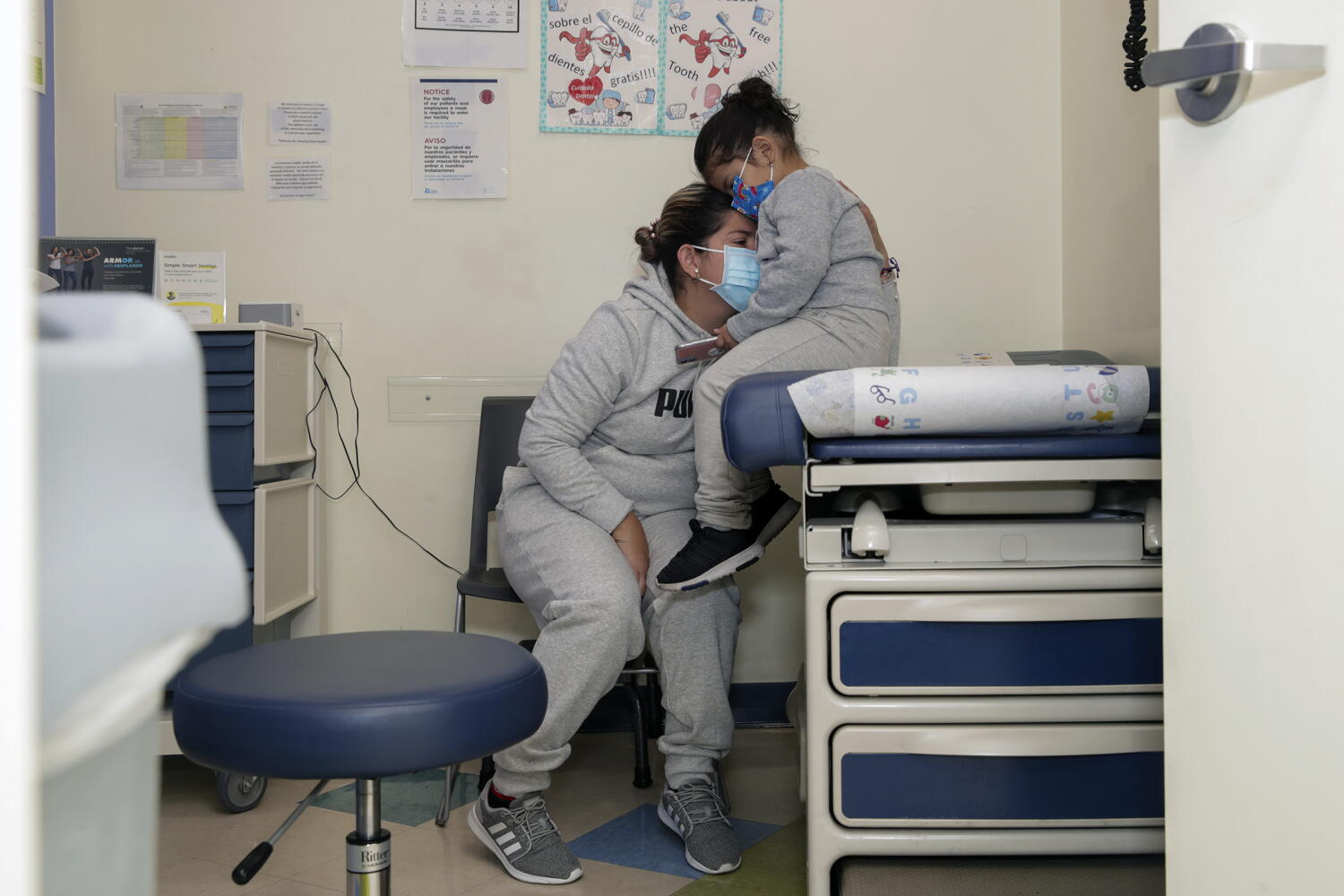
Voters staring at a ballot measure titled "Proposition 44: Health center spending" usually treat it like a binary morality test. Either you want clinics funded, or you want sick people turned away at the door.
According to standard voter guides, healthcare advocacy coalitions, and municipal budget analysts, ballot measures governing community health center allocations are routinely framed around top-line funding guarantees, clinic expansion targets, and administrative cap percentages. Supporters argue that locking in dedicated spending streams protects vulnerable populations from legislative budget cuts. Opponents and fiscal watchdogs counter that rigid spending mandates reduce municipal flexibility, lock in administrative overhead, and fail to address underlying care bottlenecks. If you found value in this post, you might want to read: this related article.
Both sides are arguing over the wrong spreadsheet.
When ballot initiatives dictate how community health centers spend their dollars, the public debate fixates on the size of the pie. Policy analysts and health economists who study Federally Qualified Health Centers (FQHCs) and municipal clinic networks point out that throwing mandated capital at brick-and-mortar clinics—or slapping arbitrary caps on administrative overhead—frequently worsens the exact access problems voters think they are solving. For another perspective on this development, refer to the recent coverage from National Institutes of Health.
The Myth of the "Administrative Overhead" Cap
Almost every health center spending ballot measure includes a crowd-pleasing mechanism: a strict cap on administrative costs, usually pegged around 10% to 15%, paired with a mandate that the remaining 85% to 90% go directly to "patient care."
On paper, this looks like common sense. In practice, charity and healthcare watchdog organizations like Charity Navigator and the Better Business Bureau Wise Giving Alliance have spent years warning donors and policymakers about the "nonprofit starvation cycle."
When you legally restrict a health center from spending money on administration, you aren't cutting executive bonuses. Community health center directors rarely make private-sector hospital executive salaries. Instead, you are starving the clinic of:
- Revenue cycle specialists: The people who actually know how to bill Medicaid, Medicare, and private insurers properly so the clinic collects the reimbursements it is legally owed.
- Electronic Health Record (EHR) engineers: The staff required to keep patient data compliant, interoperable, and secure from ransomware attacks.
- Grant writers and compliance officers: The personnel needed to unlock federal matching funds that multiply local tax dollars by three or four times.
A health center forced to run on a shoestring administrative budget loses millions in uncollected federal reimbursements. The clinic ends up with shiny new exam rooms that sit empty because nobody is funded to process the paperwork that keeps the lights on.
Capital Spending Without Operational Runway
Another staple of health center spending propositions is the capital earmark—money dedicated specifically to building new facilities, buying diagnostic machines, or renovating waiting rooms.
Politicians love ribbon cuttings. Voters love tangible concrete. Health economists hate unfunded operational liabilities.
According to analyses from organizations like the Kaiser Family Foundation (KFF) and the National Association of Community Health Centers (NACHC), the primary bottleneck in community healthcare is rarely a lack of physical square footage. It is a severe, structural shortage of primary care physicians, nurse practitioners, behavioral health clinicians, and medical assistants.
Imagine a scenario where a municipality passes a $100 million bond or spending mandate to build five new neighborhood health centers. Construction finishes on schedule. The exam tables are pristine. Then the clinic tries to hire staff at public-sector pay scales while competing against private hospital networks offering signing bonuses and lower patient-to-provider ratios.
The result is predictable:
- Delayed openings: Facilities sit vacant for months or years after construction wraps.
- Cannibalized staffing: The new clinics poach nurses and doctors from existing neighborhood clinics two miles away, creating zero net gain in patient appointments.
- Burnout churn: Understaffed clinics force remaining clinicians to see 25 to 30 patients a day in 15-minute blocks, driving turnover rates above 30% annually.
Physical capacity means nothing without clinical labor. A ballot measure that funds buildings without sustainably funding competitive clinician salaries is buying a fleet of ambulances without paying for paramedics or fuel.
The Medicaid Reimbursement Trap Nobody Mentions
Mainstream voter guides treat local ballot measures as self-contained financial ecosystems. They rarely explain how local health center spending interacts with state and federal reimbursement formulas.
Community health centers operate under the Prospective Payment System (PPS) established by Congress for Medicaid and Medicare. Under PPS, clinics receive a fixed, predetermined per-visit rate based on historical costs, adjusted annually for medical inflation.
Here is the catch that ballot summaries gloss over:
- Local tax dollars can accidentally supplant federal dollars. If a local ballot measure injects unrestricted local funds into a clinic without careful structural separation, state Medicaid auditors may treat those funds as offsetting local match requirements rather than net-new healthcare capacity.
- Visit-based billing punishes preventive coordination. Under traditional PPS rules, a clinic gets paid when a patient physically walks through the door for a face-to-face encounter with a billable provider. A nurse spending two hours on the phone coordinating housing, insulin refrigeration, and specialist referrals for a diabetic patient generates zero billable PPS encounters.
When voters approve a proposition assuming it will fund holistic, preventive street medicine and care coordination, they often discover two years later that the money was absorbed into standard clinical operations just to cover the gap between Medicaid PPS rates and the actual cost of delivering care.
What Ballot Summaries Leave Out About Patient Volume
Proponents of health center spending measures consistently point to rising uninsured rates, emergency room overcrowding, and long wait times for primary care appointments. Critics point to rising municipal debt, tax burdens, and the lack of strict performance audits.
Both arguments miss how emergency room diversion actually works.
According to research published in Health Affairs and analyses by the Agency for Healthcare Research and Quality (AHRQ), simply opening more primary care slots during standard weekday business hours (9:00 AM to 5:00 PM) makes only a marginal dent in non-urgent emergency department visits.
Patients do not go to the ER at 11:00 PM on a Tuesday because they prefer hospital waiting rooms. They go because:
- Hourly wage workers cannot take unpaid time off during weekday clinic hours without risking their jobs.
- Urgent diagnostic lab work and imaging are unavailable on-site at standard neighborhood clinics, meaning a clinic visit just results in a referral to the hospital anyway.
- Acute behavioral health and substance use crises rarely happen on a scheduled appointment calendar.
If a health center spending measure does not explicitly mandate and fund extended evening/weekend hours, on-site urgent diagnostics, and walk-in behavioral health stabilization, it will not relieve hospital ER congestion. It will simply serve the exact same daytime demographic more comfortably.
What Voters Should Actually Look For in the Fine Print
Before casting a vote on any health center funding measure, ignore the endorsements on the mailer and read the actual legislative text for four specific mechanisms.
1. Inflation Indexing vs. Fixed Dollar Allocations
If the measure locks in a fixed dollar amount rather than indexing to the Medical Care Consumer Price Index (CPI-M) or a dedicated percentage of revenue, its purchasing power will erode within four years. Medical labor and pharmaceutical costs consistently outpace general inflation.
2. Maintenance-of-Effort (MOE) Clauses
Without an ironclad Maintenance-of-Effort provision, city councils and county boards routinely use new voter-approved healthcare funds to backfill general fund deficits. They cut existing health department budgets by $20 million, add $20 million from the new proposition, and tell voters they expanded healthcare—when total spending stayed completely flat.
3. Workforce Pipeline and Retention Eligibility
Check whether the spending rules explicitly allow funds to be used for loan repayment, clinical residency slots, medical assistant apprenticeships, and retention bonuses. If the text restricts spending strictly to "direct patient services and capital improvements," the clinics will struggle to staff the very programs voters are paying for.
4. Auditable Access Metrics, Not Just Spending Audits
Standard ballot measures require an annual financial audit proving the money wasn't stolen. Financial compliance is a low bar. Meaningful accountability requires public reporting on third-next-available appointment wait times, patient panel retention, and after-hours urgent care capacity.
The Trade-Offs of Saying Yes—and Saying No
There is no risk-free vote on health center spending propositions.
Voting yes on an imperfectly drafted spending measure locks in dedicated funding that politicians cannot easily raid during an economic downturn. For safety-net clinics operating on razor-thin 1% to 2% operating margins, predictable multi-year funding can prevent sudden clinic closures and preserve vital primary care access for low-income families. The downside is accepting rigid spending rules, potential administrative inefficiencies, and higher local tax or bond obligations that limit future budget flexibility.
Voting no enforces fiscal discipline, rejects flawed administrative caps or unfunded capital expansions, and forces lawmakers to go back to the drawing board to write smarter legislation. The downside is immediate: safety-net clinics face budget shortfalls right now, and waiting two years for the next election cycle means delayed screenings, unmanaged chronic diseases, and higher uncompensated care costs absorbed by local hospitals anyway.
The next time a voter guide tells you a health center proposition is a simple choice between supporting healthcare or saving taxpayer money, recognize the framing for what it is. Funding clinics is easy to put on a ballot; building a system where doctors stay, bills get collected, and patients can actually get an appointment after 5:00 PM is the real work.