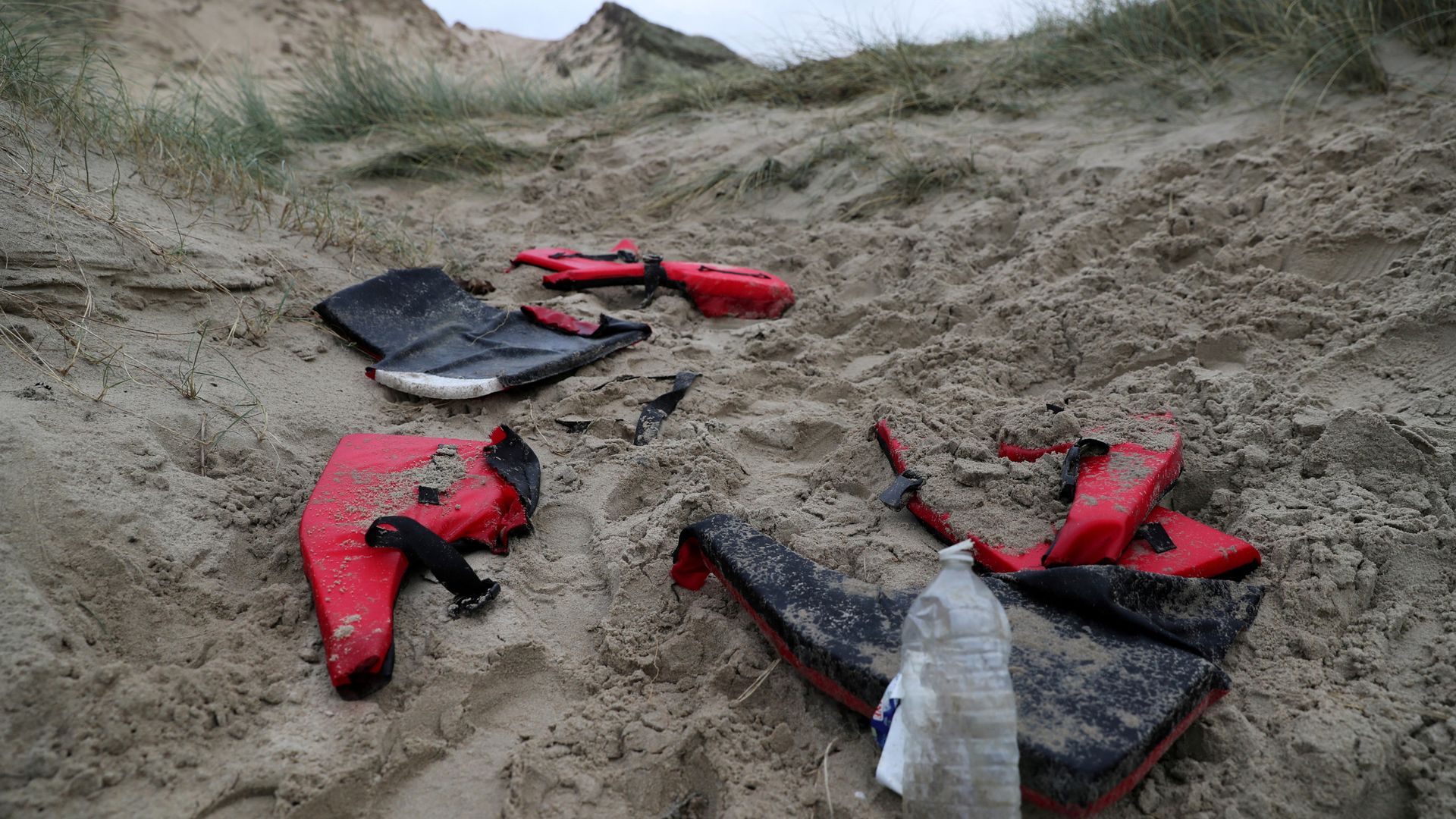
The courtroom in Paris fills with the quiet hum of moral theater. Fourteen men sit in the dock, accused of a tragedy that claimed over thirty lives in the freezing waters of the English Channel half a decade ago. The media cycles churn out the predictable narrative. They call these defendants traffickers, monsters, the architects of human misery. Prosecutors demand decades behind bars. Politicians wave the verdicts as proof that justice works, that the border is defended, that accountability has arrived.
It is a comforting illusion. And it is entirely useless.
Locking up fourteen low-level boat handlers, fixers, and translators does nothing to alter the economic and geopolitical gravity pulling desperate people toward the British coastline. I have spent years tracking supply chains, illicit black markets, and enforcement failures. When you treat the symptom while ignoring the systemic engine, you are not fighting a crime wave. You are managing a queue.
The Flawed Logic of Supply Side Deterrence
The entire premise of prosecuting dinghy pilots rests on a foundational economic misunderstanding. Law enforcement agencies operate as if the Channel crossing market obeys standard retail economics. Smash the distribution network, arrest the suppliers, and the product becomes too expensive to move.
The math fails completely here.
Imagine a scenario where a family in a war-torn or economically devastated region liquidates every asset they own to scrape together five thousand euros. They do not have the luxury of choosing a safe alternative. They are fleeing active conscription, systemic persecution, or destitution. To them, the smuggler is not a criminal mastermind preying on their vulnerability. The smuggler is a high-priced logistics contractor offering the only available exit visa from hell.
When police arrest fourteen men in Paris or Calais, they create a momentary vacuum. They do not destroy capital. They do not reduce demand. Within forty-eight hours, replacement labor steps into the void. Higher risk commands a higher price, which merely incentivizes more aggressive operators to enter the trade.
Prosecuting the bottom tier of a billion-dollar underground transit network is the administrative equivalent of mopping the floor while the ceiling pipe remains wide open.
The Dangerous Myth of the Deterrence Trap
Politicians love show trials because convictions look like competence. They allow governments to point to a high-profile court case and claim they are getting tough on organized crime. But watch what happens outside the courtroom doors. The boats keep launching. The death toll refuses to drop to zero.
Why? Because the legal architecture of European asylum policy guarantees the survival of the smuggling industry.
Under current international law, an asylum seeker must physically set foot on British or European soil to lodge a claim. There are virtually no functional, legal pathways to apply for asylum from outside the borders of the destination country. Combine this reality with tightly enforced airline visa restrictions—where carriers face massive fines if they board a passenger without correct entry documents—and you have engineered a monopoly for illicit transport.
When you outlaw safe, legal application methods while maintaining a moral or legal obligation to process arrivals, you hand a captive market directly to criminal syndicates on a silver platter. The smugglers did not invent this demand. Lawmakers designed the regulatory framework that makes their services indispensable.
What Real Reform Looks Like
If we actually cared about stopping Channel deaths instead of performing moral outrage for the evening news, we would abandon the courtroom spectacles and dismantle the structural incentive.
First, regional processing centers must be established outside destination borders. If an applicant can securely and legally file an asylum claim from a consulate in a transit country, the economic foundation of the dinghy trade vanishes overnight. Why would anyone pay thousands of euros to risk drowning in icy water if a safe, legal alternative exists?
Second, enforcement agencies need to pivot away from low-level scapegoats. The men caught steering rubber boats are almost always economic migrants themselves, coerced into piloting the vessels under the threat of violence to secure their own free passage. True disruption requires following the capital flows. It means targeting the shell companies, the cryptocurrency wallets, and the procurement networks in Turkey and China that supply the engines and hulls in bulk.
Yet, governments rarely target the high-level financial infrastructure because doing so requires international cooperation that is politically inconvenient and diplomatically complex. It is much easier to drag fourteen broken men into a Parisian court, hand down heavy sentences, and pretend the border is secure.
The verdict in Paris will change nothing. The boats will launch tomorrow morning, steered by new hands, carrying new desperate buyers, navigating the exact same systemic failure. Justice is not served by punishing the desperate for using the only door left unlocked.
Stop prosecuting the deckhands of a broken system while the architects walk free.