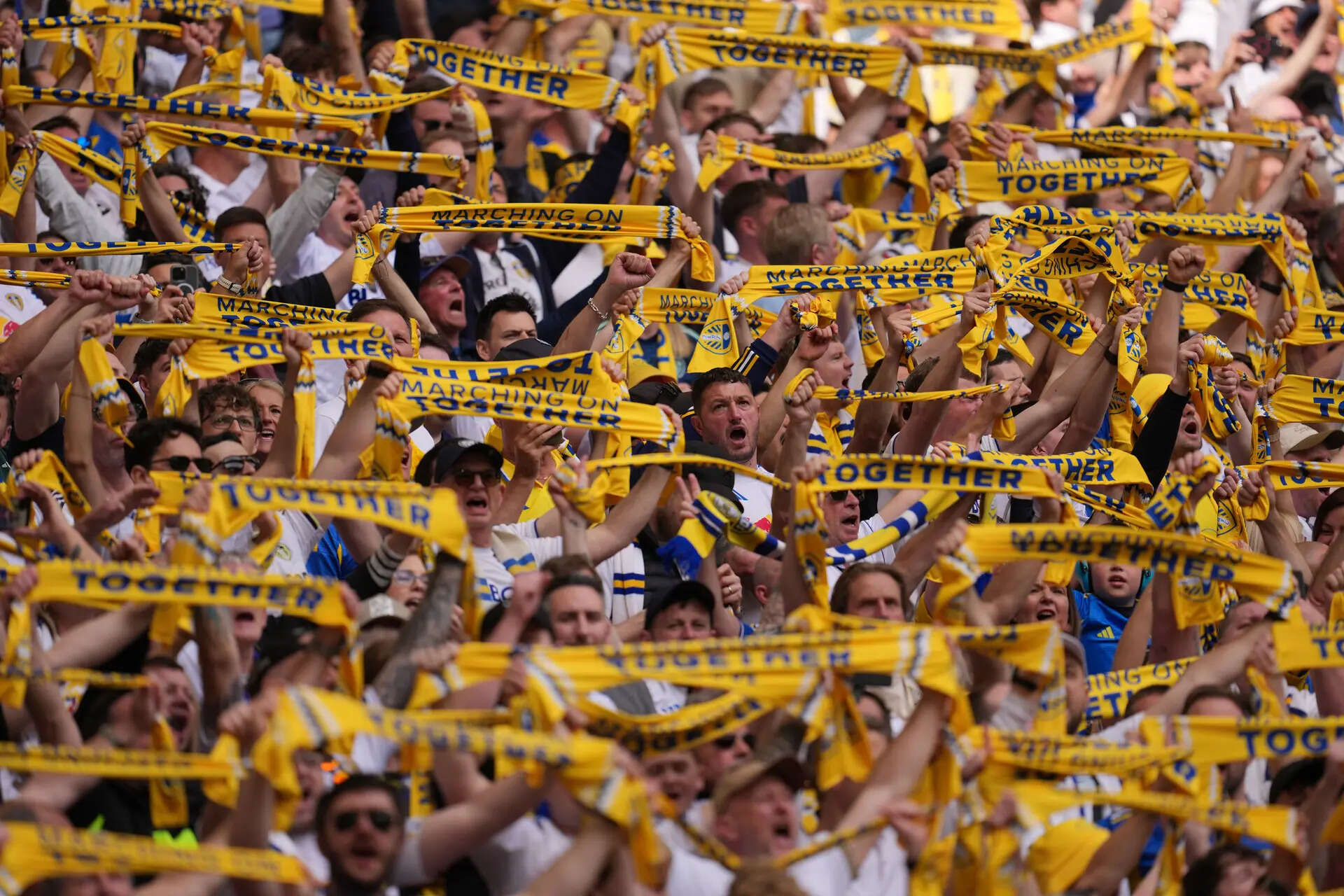
The headlines are predictable. The outrage is manufactured. Another high-stakes match at Wembley, another round of arrests for "homophobic chanting," and another wave of journalists patting themselves on the back for condemning the obvious.
Leeds United fans targeted Chelsea supporters with the "Rent Boy" chant during an FA Cup semi-final. Now, the Crown Prosecution Service is involved. The bans are coming. The moral grandstanding is at a fever pitch. But if you think a few criminal records and lifetime bans from Elland Road will solve the cultural rot in English football, you haven't been paying attention to the last thirty years of terrace psychology.
Prosecution is the ultimate lazy solution. It allows the FA, the clubs, and the police to claim victory while the underlying tribalism remains untouched. We are treating a systemic cultural addiction with a handful of aspirin and wondering why the fever won't break.
The Myth of the Deterrent
The standard argument goes like this: if we prosecute fans and shame them in the national press, others will stop. This assumes that the person screaming abuse in a pack of five thousand peers is making a rational cost-benefit analysis.
They aren't.
Football fandom is a regression to a primitive state. Within the confines of a stadium, the individual ego dissolves into the collective. In that space, the "law" isn't the UK Statute Book; it’s the approval of the people in the rows behind you. I have stood in these concourses. I have seen men who are otherwise functional members of society—accountants, plumbers, teachers—transform into conduits for pure, unadulterated tribal hatred the moment the whistle blows.
When you prosecute ten fans out of a crowd of thirty thousand, you don't create a deterrent. You create martyrs for the "anti-woke" brigade and a sense of arbitrary injustice among the rest. It reinforces the "us vs. them" mentality that fuels the chanting in the first place.
The Chelsea Rent Boy Fallacy
Let’s be precise about the terminology. The "Rent Boy" chant has been legally classified as a homophobic hate crime. This is technically accurate under current law, but the way we talk about it misses the point entirely.
The fans singing it don't necessarily hate gay people in their daily lives. They hate Chelsea.
This isn't an excuse; it's a diagnosis. The chant is used because it is known to be the most effective "trigger" for the opposition. In the warped logic of the terrace, the goal isn't to express a political stance on sexuality; it is to find the sharpest knife and twist it. By focusing solely on the homophobic nature of the slur, the authorities are ignoring the competitive machinery of tribalism that generates these slurs.
If you ban one phrase, the collective hive mind of the stadium will simply invent a new one that bypasses the legal filters while retaining the same venom. We are playing a game of linguistic Whac-A-Mole that the authorities are destined to lose.
The Failure of Top-Down Moralizing
The FA loves a campaign. "Kick It Out," "Love Football, Protect the Game," and a dozen other slogans plastered on LED boards.
These campaigns are ignored by the very people they target. Why? Because they feel like corporate HR seminars delivered by a billionaire class that has priced the working-class fan out of the game. When a multi-billion-pound organization tells a guy who spent half his weekly wage on a train ticket and a pie how to behave, he doesn't listen. He rebels.
True change in football culture has never come from a memo at Wembley. It comes from the fans themselves. Look at how racism was (mostly) pushed to the fringes of the English game in the 90s. It wasn't just police intervention; it was groups of fans making it socially unacceptable within their own ranks.
By turning every instance of offensive chanting into a police matter, we have stripped the fanbases of their own agency. We’ve told them, "Don't worry about policing your own; the state will do it for you." The result? A vacuum of accountability where the only people talking about ethics are the ones the fans already despise.
Why the Prosecution Numbers are a Lie
The CPS and the police love to release "record numbers" of football-related arrests. It looks great in an annual report. It suggests a "robust" (to use their favorite meaningless word) response to the problem.
But look at the data. Most of these prosecutions are low-hanging fruit. They catch the drunk kid who filmed himself on TikTok or the guy who was unlucky enough to be standing right next to a steward with a body cam. The organized, systemic core of the "firms" and the long-term instigators are rarely the ones facing the judge.
We are harvesting the leaves and wondering why the tree keeps growing.
The Economic Irony of the Semi-Final
There is a dark irony in the fact that this happened at Wembley—the home of the "gentrified" game. The FA Cup semi-final is a cash cow. The tickets are overpriced, the sponsors are global, and the atmosphere is curated.
The authorities want the atmosphere of a gladiatorial arena with the manners of a garden party. You cannot market "the passion of the English game" to global broadcasters while simultaneously trying to sanitize the raw, often ugly emotions that produce that passion.
The tribalism that leads to a Leeds fan screaming a slur is the exact same tribalism that makes them buy the shirt, pay for the subscription, and travel 200 miles on a Wednesday night. The clubs want the money that comes from obsession, but they want to lobotomize the obsessed.
Stop Prosecuting and Start Disrupting
If we actually wanted to stop homophobic chanting, we would stop relying on the courts and start using the mechanics of the game.
- Financial Collective Responsibility: Stop banning individuals. Start hitting the clubs where it hurts—not with fines, which are just a "bad behavior tax," but with points deductions. If Leeds United faced a three-point deduction because their fans couldn't stop singing a specific chant, the fans sitting next to the chanters would shut them up within thirty seconds. Peer pressure is a more powerful tool than a magistrate's warning.
- The "Closed Doors" Reality: We need to admit that some fanbases are currently toxic. If a club's away support repeatedly engages in hate speech, ban away fans for that fixture for three years. No appeals.
- End the Victim Narrative: Every time a fan is prosecuted, the fanzines and forums erupt with talk of "free speech" and "the game is gone." We need to stop making these people the stars of their own courtroom dramas.
The Uncomfortable Truth
The Leeds vs. Chelsea incident isn't a "shame" for Wembley. It’s a mirror. It shows that despite decades of investment and "awareness" campaigns, the core of the footballing public hasn't moved as far as the marketing departments want us to believe.
Prosecuting a handful of Leeds fans is the easy way out. it allows the media to write their "disgraceful scenes" columns and the police to fill their quotas. But it does nothing to address the fact that for many, football is the last sanctuary where they feel they can be their most tribal, aggressive, and prejudiced selves.
You don't fix a culture by putting a few of its members in handcuffs. You fix it by making the culture itself reject the behavior. Right now, the terraces are laughing at the prosecutions. They see them as a badge of honor, a sign that they are still "real" fans who haven't been tamed by the corporate machine.
Until we stop treating football fans like criminals to be managed and start treating the clubs like organizations responsible for the monsters they feed, Wembley will continue to see these "shameful" scenes every single year.
The law is a blunt instrument for a surgical problem. Put down the handcuffs and start taking away the points. That is the only language the stadium understands.